Parents who care about ingredients
For regular breakfasts or snacks, you want to compare sugar content, enrichment and allergenic ingredients, rather than choosing on taste alone.


For back-to-school breakfasts, choose your almond drink according to what matters most to you: compare sugar content for everyday use, or explore intense and roasted varieties if taste is your priority. If it usually takes the place of a dairy drink, check the enrichment information on the label too. According to Manger Bouger, plant-based drinks are not automatically nutritionally equivalent to milk.
For regular breakfasts or snacks, you want to compare sugar content, enrichment and allergenic ingredients, rather than choosing on taste alone.
You’re looking for an intense or roasted variety and want to see how the recipe differs, particularly in its almond content and sugars.
You compare the drinks stocked by retailers, along with their pack sizes and ingredients, without assuming that two varieties in the same range have the same recipe.
When choosing an almond drink for back to school, start with how you’ll use it at breakfast or as a snack. Then check the specific recipe instead of relying only on claims such as “intense” or “no added sugars”.
| What to compare | What to check | Who it matters to |
|---|---|---|
| Enrichment | Look for the calcium and vitamins listed for the product you’re considering. Their presence doesn’t automatically make the drink equivalent to milk. | If this drink often takes the place of a dairy drink at breakfast, its ingredients matter more than its flavour; around 40% of consumers make this nutritional check a priority. |
| Sugars | Compare the “of which sugars” figure per 100 ml and the ingredients list, including for flavoured or intense varieties. | For regular consumption, some people want to keep track of the sugars listed without making assumptions based on the product name; around 30% of consumers prioritise this. |
| Almond flavour | Check the variety described, the proportion of almonds if it’s shown on the label, and the sugar content of the same recipe. | If a more pronounced almond flavour is what you’re after at breakfast, the difference between two recipes matters more; around 20% of consumers put this taste first. |
| Regular purchases | Check which product is available in your store, its pack size and the storage instructions after opening. | For back-to-school shopping, finding a recipe that suits you and using the carton within the stated time makes planning easier; around 10% of consumers prioritise this practical aspect. |
According to Manger Bouger, plant-based drinks have a different nutritional composition from animal milk. So you can’t tell what nutrients a drink provides from its name alone.
If it regularly replaces a dairy drink, check the nutritional information and look separately for calcium and vitamins, taking the rest of your diet into account too.
At E.Leclerc, the Bio Village intense drink shown contains 7% almond purée and cane sugar, compared with 2.8% almond purée in the no-added-sugars variety in the same range. This difference between two products doesn’t describe all intense almond drinks.
Use the almond content to compare recipes, then check the sugars per 100 ml and the ingredients list separately.
Almond is an ingredient to look out for if you have an allergy. Refrigeration instructions and how soon to consume the drink after opening also vary by product.
Read the label on the carton you buy. For the Auchan no-added-sugars drink shown, Auchan advises keeping it between 0 °C and +6 °C after opening and consuming it within 5 days.
Alpro varieties featured by Carrefour and Auchan include roasted almond, no-added-sugars and vanilla options.
Carrefour offers almond drinks in its Sensation and Bio ranges, among others.
E.Leclerc’s Bio Village range includes a no-added-sugars almond drink and an intense variety.
Auchan offers a no-added-sugars almond drink as well as separate organic varieties, including one with an intense flavour.
Aldi offers My Vay organic plant-based almond drink in a 1 L carton.
These almond drinks include options presented as lower-sugar choices, as well as others for those looking for a stronger flavour. Compare the recipe on each carton before choosing one for back-to-school breakfasts.
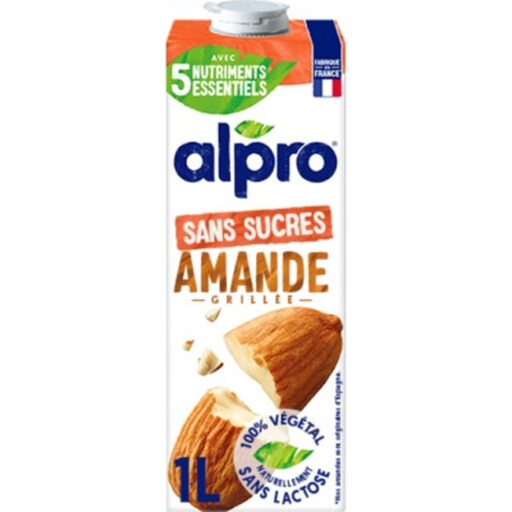 Image unavailable
Worth considering if you’re looking for an almond drink for cereal and want to compare sugars and enrichment. The name indicates a 1 L pack and UHT treatment. Check the ingredients and allergen information on the carton.
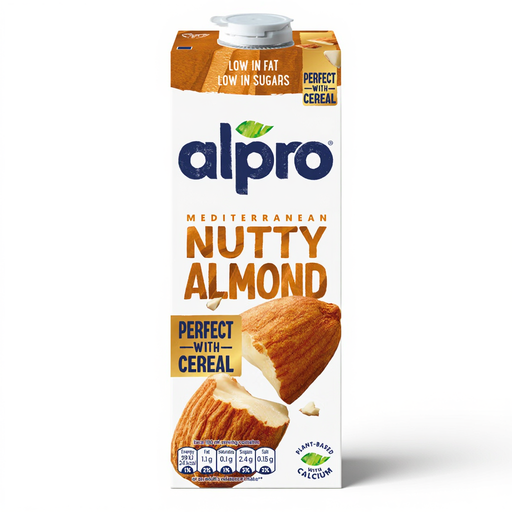 Image unavailable
Consider this if you’re looking for an almond drink for cereal and taste matters to you. The listed pack size is 1 L. Compare the sugars and ingredients in this recipe before choosing it.
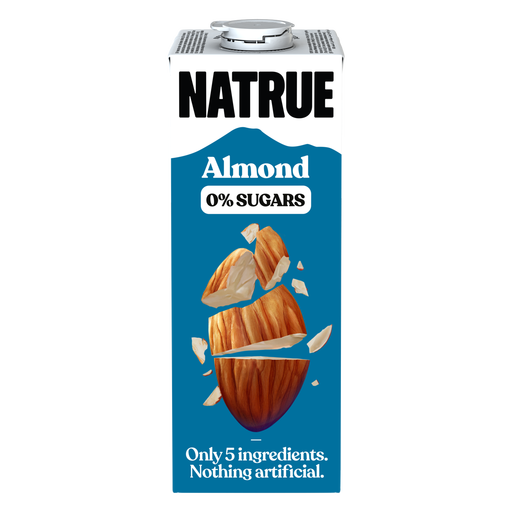 Image unavailable
An option to compare if sugar content is your top priority for cereal or coffee. The listed pack size is 1 L. Check the enrichment and ingredients list too, particularly if almond or soya is an allergen for you.
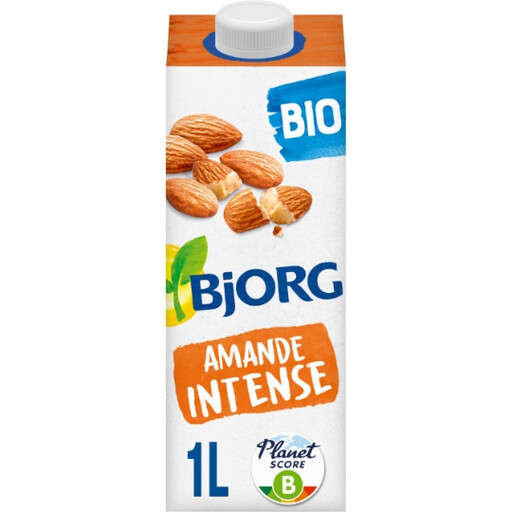 Image unavailable
The Intense variety is for those looking for a stronger almond taste at breakfast or in a recipe. The listed pack size is 1 L. Before buying, compare the sugar information with the ingredients list on the packaging, and check the enrichment if it matters to you.
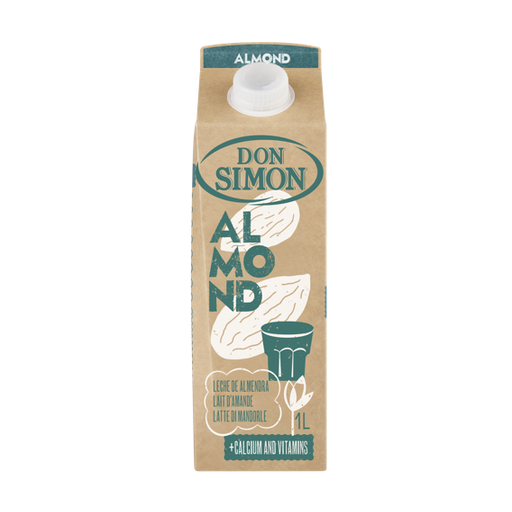 Image unavailable
If you’re comparing drinks by their sugar content or enrichment, check this recipe on the packaging before deciding. The listed pack size is 1 L. The “Sugar-Free” claim doesn’t mean you can skip the “of which sugars” figure or the ingredients list.
Not automatically from a nutritional point of view: Manger Bouger highlights that plant-based drinks and animal milk have different nutritional compositions. If you’re considering making this swap regularly, check the nutritional information, including any enrichment listed, and take the rest of your diet into account.
No. The word “intense” isn’t enough to tell you how much sugar an almond drink contains. The two Bio Village recipes shown by E.Leclerc differ, but you’ll need to compare the “of which sugars” figure per 100 ml and the ingredients in each product you’re considering.
Read the ingredients list for the product you choose. For prepacked foods in France, the Directorate General for Competition, Consumer Affairs and Fraud Control states that allergenic ingredients must be highlighted on the label.
Follow the instructions on the carton you buy, as they vary by product. For its no-added-sugars almond drink shown, Auchan advises keeping it refrigerated between 0 °C and +6 °C and consuming it within 5 days of opening.