Retired people avoiding dairy
If you use almond drink instead of milk, check the ingredients, allergens, calcium and protein separately. The word ‘plant-based’ alone doesn’t answer these questions.


When choosing a dairy-free almond drink, start by checking the ingredients and allergens, then compare the nutritional information per 100 ml. A ‘no added sugars’ claim tells you nothing about protein or calcium, so if you regularly use it as a milk alternative, check these separately rather than assuming it has the same nutritional value.
If you use almond drink instead of milk, check the ingredients, allergens, calcium and protein separately. The word ‘plant-based’ alone doesn’t answer these questions.
Whether you’re having it with cereal or in a hot drink, compare the claim on the carton with the ‘of which sugars’ figure per 100 ml: they tell you different things.
If you’ll be using it regularly, check the allergens first, then compare the nutritional values on the same per-100 ml basis. The Directorate-General for Competition, Consumer Affairs and Fraud Control notes that this format makes it easier to compare products.
| Criterion | What to check | Who is it for? |
|---|---|---|
| Calcium | Look for a declared calcium content or a claim on the exact product; check the protein content too. | If I regularly drink this instead of milk, I want to know whether calcium is listed on the label. Around 28% of shoppers would put this first. |
| Added sugars | Read the claim on the carton and check the ‘of which sugars’ figure per 100 ml. | With my cereal or coffee, I want to avoid adding sugars through my drink. This would be the top priority for around 22% of shoppers. |
| Ingredients and allergens | Check the ingredients list, highlighted allergens and any ‘may contain’ warnings on the carton you choose. | If I need to strictly avoid certain ingredients, I can’t rely on the word ‘plant-based’ alone. Around 22% of shoppers would prioritise this check. |
| Pack size and storage | Choose a volume that suits how much you drink and read the storage instructions for after opening. | If I don’t drink much almond drink, I want to finish the carton within the stated time. For around 17% of shoppers, pack size would be the main consideration. |
| Protein | Compare the ‘protein’ figure per 100 ml rather than assuming it from the presence of calcium. | If this drink replaces something I usually have with a meal, I want to understand how much protein it provides. Around 11% of shoppers would prioritise checking this. |
Almond drink contains almonds. Product information from Bjorg and Andros also mentions possible traces of other ingredients, so the product category alone isn’t enough if you need to avoid something strictly.
Read the ingredients and ‘may contain’ warnings on every carton. If you have a food allergy, ask your healthcare professional for advice.
Calcium content and protein content are two separate pieces of information. Auchan and Éthiquable product information lists 0.5 g and 0.6 g of protein per 100 ml respectively.
If you regularly use it instead of milk, compare the calcium and protein on the carton you choose, and consider the rest of your meals too.
An opened carton should be used according to the instructions for that specific product. The volume you choose matters if you don’t drink much of it.
Before buying several cartons, check how long they keep after opening and choose an amount that suits your habits.
A carton that isn’t finished within the stated time could go to waste.
‘No added sugars’ or ‘source of calcium’ doesn’t tell you everything about a drink’s ingredients and nutritional values.
Use the claim to check one particular point, then read the ingredients list and nutritional information per 100 ml.
These examples relate to specific almond drinks, so always check the label on the product you’re buying.
Auchan offers a 1 L carton of unsweetened almond drink with a ‘source of calcium’ claim.
Carrefour Bio’s unsweetened almond drink is available in a 1 L carton.
Carrefour offers an organic, unsweetened Bjorg almond drink.
Auchan offers a 1 L carton of organic, unsweetened Éthiquable almond drink.
Carrefour offers a 1 L carton of almond drink with no added sugars and a ‘source of calcium’ claim.
This selection includes 1 L almond drinks and a Barista Edition variety designed for coffee. To choose between them, check the product description against the ingredients, allergens and nutritional information on the carton.
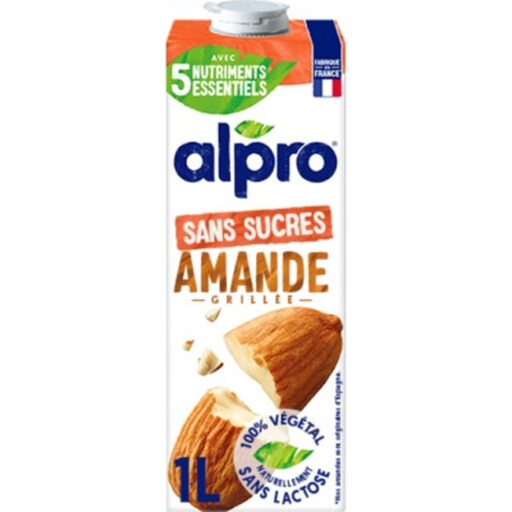 Image unavailable
If you’ll be using it regularly, compare the sugars, calcium and protein on the carton for this Unsweetened variety.
1 L pack; also check the allergen information if you need to avoid other nuts.
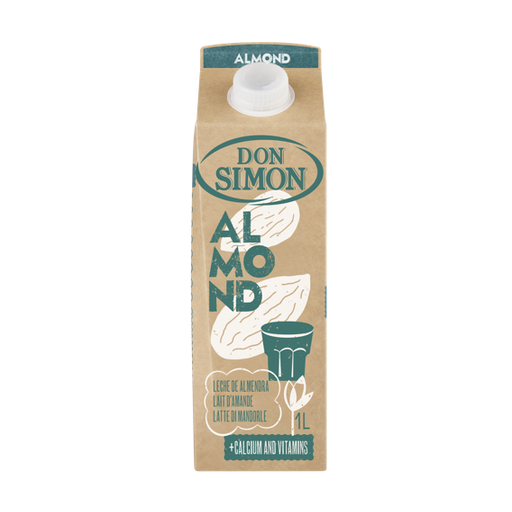 Image unavailable
If reducing sugars is your priority, don’t rely on the ‘Sugar-Free’ claim in the name alone: check the ‘of which sugars’ figure on the carton.
1 L pack; also read the allergen information on the exact packaging.
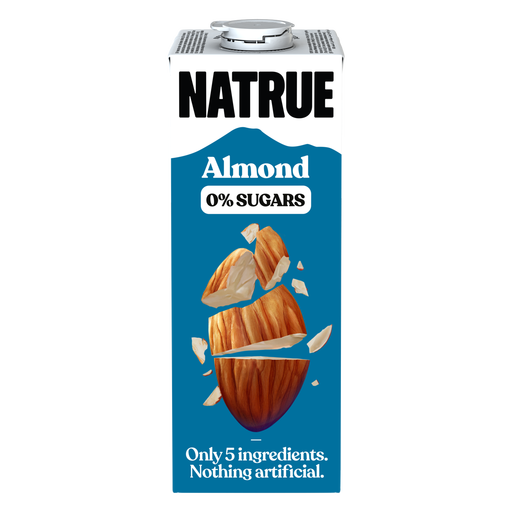 Image unavailable
Whether you’re having it with cereal or in coffee, compare this almond drink using the values per 100 ml instead of interpreting ‘0%’ without reading the label.
1 L pack; check the calcium content and any ‘may contain’ warnings if these affect your choice.
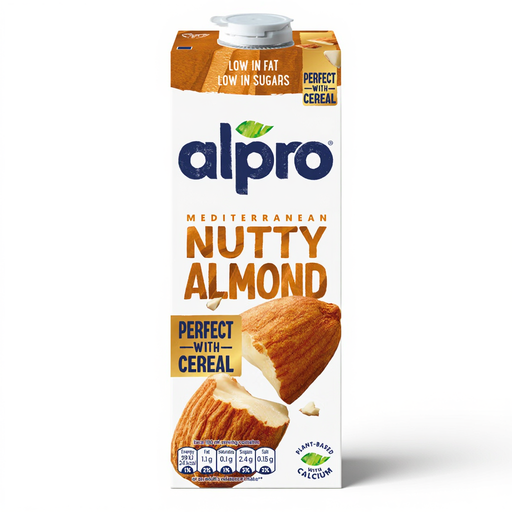 Image unavailable
If you’re comparing this variety with Alpro Almond Unsweetened, check the ‘of which sugars’ figures for each: their names refer to different varieties.
1 L pack; when comparing calcium, make sure the values are given on the same basis.
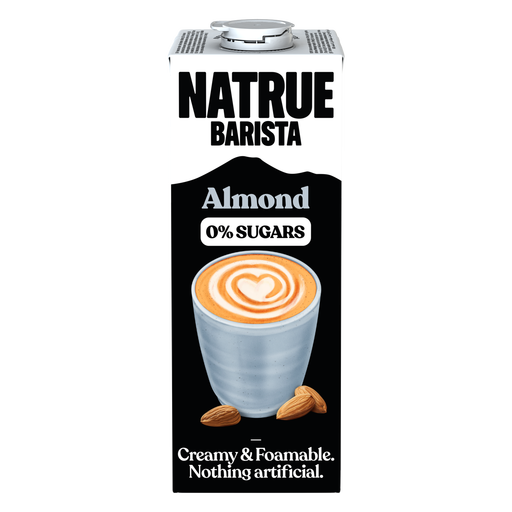 Image unavailable
This Barista Edition variety is for shoppers planning to use almond drink in coffee; its name alone doesn’t tell you its nutritional values.
1 L pack; check for any ‘may contain’ warnings and the storage instructions on the carton.
No. If you need to avoid certain ingredients strictly, don’t assume a plant-based drink is suitable without checking the exact product. Read the ingredients list, highlighted allergens and any ‘may contain’ warnings.
No. The ‘no added sugars’ claim doesn’t replace the ‘of which sugars’ figure. Check this value per 100 ml to compare drinks.
Check the calcium and protein content of the product you choose separately. Auchan’s product information lists 0.5 g of protein per 100 ml, while Éthiquable’s lists 0.6 g per 100 ml. These examples don’t tell you what’s in another carton.
Follow the storage time and instructions on the carton you’ve bought. Auchan’s product information says to refrigerate it and use it within five days of opening; don’t assume the same instructions apply to other products.
Use the same per-100 ml basis to compare sugars, protein and salt, among other things. The Directorate-General for Competition, Consumer Affairs and Fraud Control says that nutritional information per 100 g or 100 ml makes comparisons easier. Always check the values for the product you’re buying.