People keeping track of their protein intake
You want to know how much protein the drink actually adds to your glass or recipe. In that case, the ‘protein’ line matters more than the name of the product range.


If protein intake is your priority, choose an almond drink by comparing the protein content per 100 ml first, then working out how much you’ll get in the amount you drink. A sugar-free option or one with a higher almond content won’t necessarily meet this priority: for example, Joybuy’s product page for Alpro Unsweetened UHT Almond Drink lists 0.4 g of protein per 100 ml. Taste, sugars and how you plan to use it in cooking are separate considerations.
You want to know how much protein the drink actually adds to your glass or recipe. In that case, the ‘protein’ line matters more than the name of the product range.
You check the sugars and ingredients first, without assuming that a sugar-free drink will necessarily contain more protein.
You’re looking for an almond flavour or a drink to use in hot drinks and recipes. If protein intake matters too, check it separately in the nutritional information.
If you’re choosing based on protein, start with the figures per 100 ml and scale them to your usual serving. Then check the sugars, ingredients and intended use. Don’t assume the protein content from the almond percentage alone.
| Criteria | What to check | Who it matters to |
|---|---|---|
| Protein | Protein per 100 ml and the volume of your serving; check the exact ingredients if protein has been added. | If I’m relying on this drink to contribute to my protein intake, I want to know how many grams I’ll actually consume. Around 33% of consumers are said to put protein intake at the top of their list of criteria. |
| Sugars | Sugars per 100 ml and the ingredients list, separately from the ‘protein’ line. | For my cereal or coffee, I’m mainly looking to limit sugars, without confusing this with choosing a high-protein option. This is said to be a priority for around 27% of consumers. |
| Taste and cooking | The stated almond percentage and the sugars, depending on the recipe you have in mind. | In a hot drink or recipe, almond flavour matters more to me than the protein this ingredient provides. Around 20% of consumers are said to choose primarily based on this use. |
| Ingredients and allergens | The ingredients list, allergens and any added calcium or vitamins. | Before making a plant-based drink part of my routine, I need to check what it contains and whether it includes any allergens that affect me. This is said to be the main criterion for around 20% of consumers. |
These claims relate to different things. Joybuy’s product page for Alpro Unsweetened UHT Almond Drink shows 0 g of sugars and 0.4 g of protein per 100 ml.
Compare both figures on the same per-100-ml basis, then work out how much protein you’ll get in your glass.
This percentage describes the ingredients, not the grams of protein per serving. Carrefour’s product page for Carrefour Bio Intense Almond Drink lists 7% almonds and 4 g of added sugars per 100 ml.
If protein is your priority, check the ‘protein’ line. For taste and cooking, also check the ingredients and sugars.
An almond-based plant drink isn’t suitable for anyone with an almond allergy. The DGCCRF notes that allergenic ingredients must be clearly highlighted on food labels.
Check the ingredients list and any ‘may contain traces’ warnings before buying.
Anses warns that plant-based drinks are not suitable as a substitute for breast milk or infant formula for babies from birth to one year old.
Don’t make this substitution. Ask a healthcare professional for advice on feeding an infant.
The range includes classic and unsweetened almond drinks, as well as options designed for coffee. Choose based on the specific product rather than the brand alone.
The organic almond drink described by Carrefour combines almonds with pea protein.
Carrefour’s product page features an almond drink positioned as a source of protein.
The products listed make it possible to distinguish between a no-added-sugar option and an Intense version with a higher almond content.
These two 1 L options are a starting point for comparing a drink whose name highlights that it’s sugar-free with an Intense version. If protein is your priority, compare the nutritional information for the product you buy with your usual serving size.
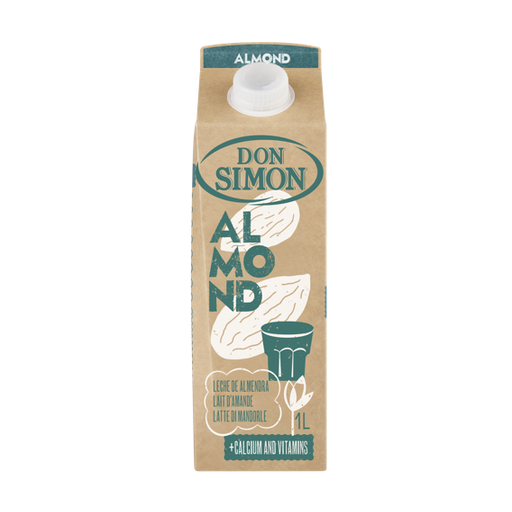 Image unavailable
If you’re comparing this drink for its protein content, check the figure per 100 ml and scale it to your serving.
The ‘Sugar-Free’ title doesn’t match the sugar information on the product page. If this matters to you, check the nutritional table on the pack.
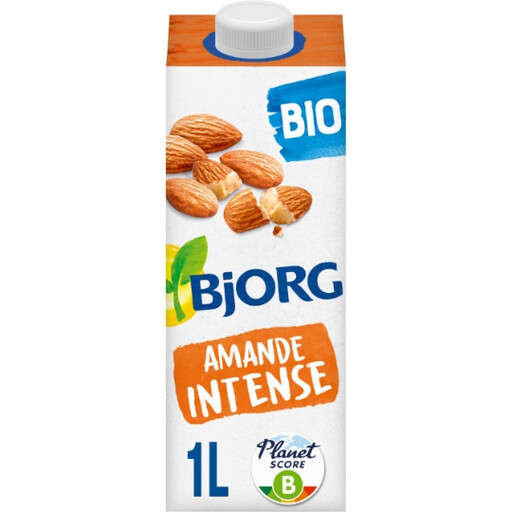 Image unavailable
If you’re considering this Intense version for its flavour or for a recipe, check its protein content per 100 ml separately before choosing it to meet a protein goal.
The product page gives conflicting information about added sugar. Check the ingredients list and nutritional table against the packaging.
Not necessarily: it depends on the protein listed per 100 ml and how much you drink. To compare specific products, Joybuy’s product pages list 0.4 g per 100 ml for Alpro Unsweetened UHT Almond Drink and 0.5 g per 100 ml for Alpro Classic Almond Drink.
No. Sugars and protein are two separate figures. Check both per-100-ml values before choosing a drink based on either one.
Compare their nutritional information on the same per-100-ml basis, including protein, sugars, energy and salt. The DGCCRF explains that this makes comparisons easier. Also check the ingredients and allergens in each product.
No. A drink containing almonds isn’t suitable for anyone allergic to this ingredient. Also check for other allergens and any ‘may contain traces’ warnings on the specific pack.
No. Anses warns that plant-based drinks must not be used as a substitute for breast milk or formula intended for babies from birth to one year old.