People keeping an eye on their fat intake
If you drink almond drink regularly, compare the fat, sugar and energy content per 100 ml. These values vary by recipe, even among products described as having no added sugars.


When choosing an almond drink as part of a low-fat diet, compare the fat and sugar content per 100 ml: ‘no added sugars’ does not, on its own, tell you how much fat it contains. The product listings on Auchan.fr and E.Leclerc show between 1.1 and 1.7 g of fat per 100 ml for the no-added-sugars options featured here, compared with 4.3 g for Bio Village Amande Intense. Check the allergen information too: ‘lactose-free’ does not mean ‘almond-free’.
If you drink almond drink regularly, compare the fat, sugar and energy content per 100 ml. These values vary by recipe, even among products described as having no added sugars.
An almond drink may suit you if you’re looking for a lactose-free product, but it contains almonds. If you have a tree nut allergy, check the warnings about possible traces too.
If organic status, the ingredients list or calcium content matters to you, check the specific variant. The product listings on Auchan.fr and E.Leclerc show that recipes and nutritional information vary from one drink to another.
Start with the fat content per 100 ml, then check the sugars and ingredients. ‘No added sugars’, ‘lactose-free’ and ‘organic’ each tell you something different.
| Criteria | What to check | Who it matters to |
|---|---|---|
| Fat and sugars | Compare both values per 100 ml; don’t assume one from a claim about the other. | If my main aim is to limit fat, I want to compare recipes on the same basis; around 50% of consumers would prioritise this. |
| Lactose and allergens | Read the ingredients list and any warnings about traces, especially for almonds and other tree nuts. | If I’m avoiding lactose, I also need to know whether the drink is suitable for my allergies; this would be the main priority for around 30% of consumers. |
| Recipe and calcium | Check the ingredients, whether it is labelled organic and the amount of calcium stated per 100 ml. | Once I’ve checked the fat content, I want to choose between products based on their recipe or calcium content; nearly 20% of consumers would put this first. |
An almond drink contains almonds. The DGCCRF reminds consumers that allergenic ingredients must be highlighted on the label; the Bjorg product listed by Auchan.fr also warns that it may contain other tree nuts.
If you’re allergic to almonds, don’t choose an almond drink. For other allergies, check the ingredients and trace warnings for the specific product.
According to E.Leclerc, Bio Village Amande Intense contains 4.3 g of fat and 4.1 g of sugars per 100 ml, while its organic almond drink with no added sugars contains 1.5 g of fat and 0.2 g of sugars per 100 ml.
Compare the nutritional information for each variant per 100 ml instead of relying on the range name.
Recipes and declared nutrients vary. E.Leclerc’s VEGE product listing states 127 mg of calcium per 100 ml; this figure cannot be applied to other drinks in the category.
If calcium is a factor in your decision, check the amount on the packaging of the variant you’re considering.
Once opened, the recommended storage period depends on the product: the Auchan.fr listings checked state five days for Auchan and Alpro, and four days for the small-pack Bjorg option.
Choose a size you can finish within the time stated on the carton, and follow its refrigeration instructions.
A carton that’s too large for your needs may not be finished in time.
The unsweetened roasted almond drink listed by Auchan.fr contains 1.1 g of fat and 0 g of sugars per 100 ml.
Auchan.fr’s unsweetened almond-based drink contains 1.1 g of fat and less than 0.5 g of sugars per 100 ml.
E.Leclerc’s listings distinguish between VEGE with no added sugars, Bio Village organic almond drink with no added sugars, and Bio Village Amande Intense. Their nutritional profiles are not interchangeable.
The organic almond drink with no added sugars listed by Auchan.fr is available in the 3 × 250 ml pack featured here and contains 1.7 g of fat per 100 ml.
These almond drinks come in different pack sizes and suit different uses. If your priority is to limit fat, compare the nutritional information for each variant before choosing.
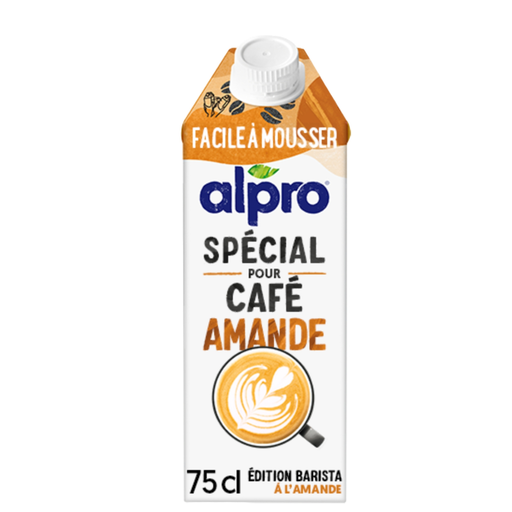 Image unavailable
This Barista variant is designed, among other things, for use in coffee. If you’re focusing on fat content, compare its sugars too, and don’t assume it’s the same as the unsweetened Alpro option mentioned above.
It contains almonds, so it isn’t suitable if you have an almond allergy.
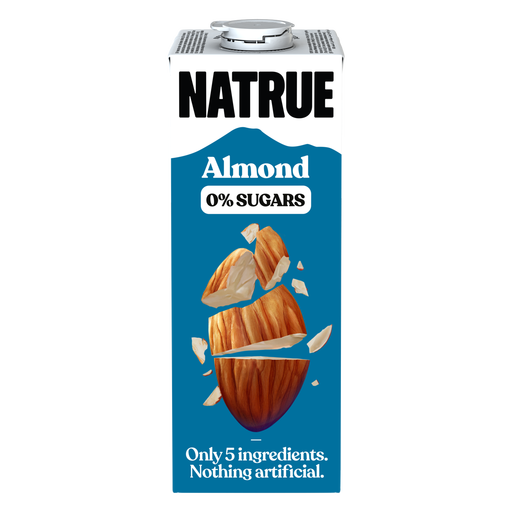 Image unavailable
If you’re considering this drink to limit your sugar intake, check its fat content per 100 ml separately. Check the label for calcium too, if that matters to you.
If you have an allergy, check the information about almonds and possible traces of soya or other tree nuts.
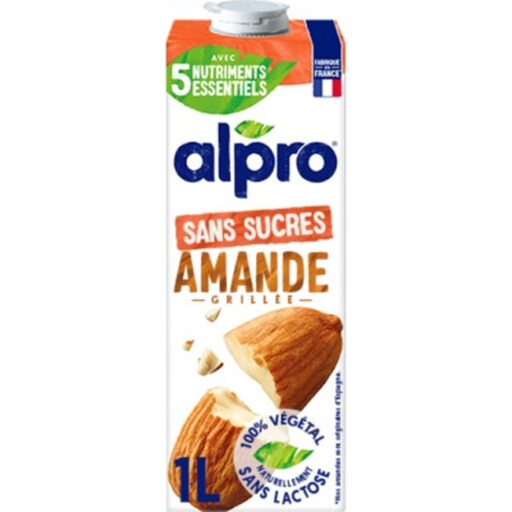 Image unavailable
To assess this variant as part of a low-fat diet, check the fat content per 100 ml on the packaging; the name ‘Unsweetened’ doesn’t answer that question.
It contains almonds. Check the trace warnings if you’re concerned about other tree nuts.
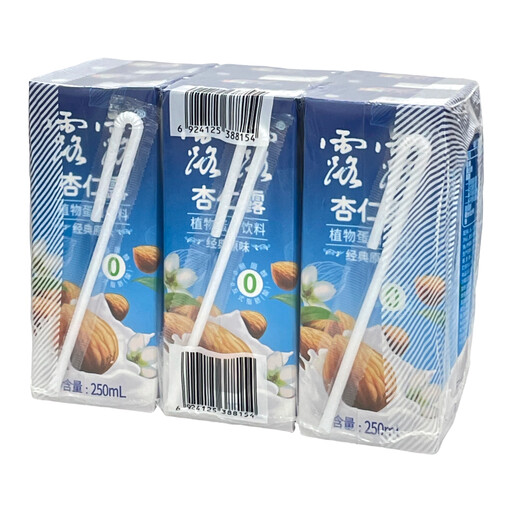 Image unavailable
The multipack of small cartons may suit you if you’re looking for individual portions. Before choosing this format, compare the fat and sugar content per 100 ml with other recipes.
This drink contains almonds, so it isn’t suitable if you have an almond allergy.
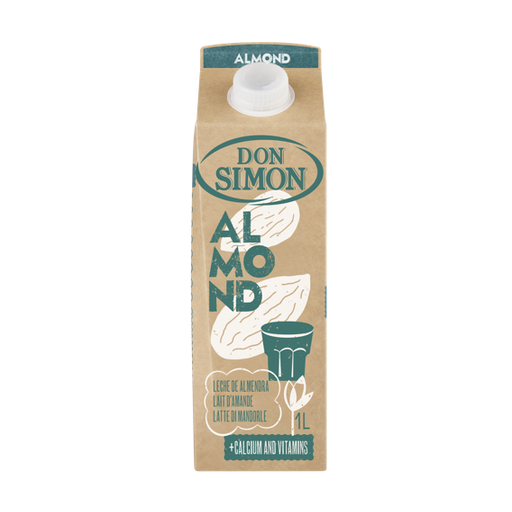 Image unavailable
If you’re looking to limit both sugars and fat, check this variant’s label before buying: compare the ‘Sugar-Free’ claim in its name with the nutritional information.
It contains almonds and isn’t suitable if you have an almond allergy.
No. Sugars and fat appear on separate lines in the nutritional information. The Auchan.fr and E.Leclerc listings show between 1.1 and 1.7 g of fat per 100 ml for the no-added-sugars options featured here; compare the figures for the specific drink you’re considering.
The ‘lactose-free’ claim doesn’t tell you whether a product is suitable for someone with a tree nut allergy: an almond drink contains almonds. The DGCCRF reminds consumers that allergenic ingredients must be highlighted; check the warnings about traces of other tree nuts too.
Follow the storage period and refrigeration instructions on the product you’ve bought. The Auchan.fr listings state that the Auchan and Alpro products checked should be used within five days of opening, compared with four days for the small-pack Bjorg product.