Anyone keeping an eye on fat content
If the ‘low fat’ claim guides your purchase, check the ‘fat’ figure per 100 ml. Under the EU regulation on nutrition claims, drinks can contain no more than 1.5 g of fat per 100 ml.


To choose an almond drink that is low in fat, first compare the figures per 100 ml: under the EU regulation on nutrition claims, drinks can contain no more than 1.5 g of fat per 100 ml to qualify as ‘low fat’. For the October half-term holidays, check the sugar content next, then choose a pack size you can finish within the stated period after opening, and check the allergen information.
If the ‘low fat’ claim guides your purchase, check the ‘fat’ figure per 100 ml. Under the EU regulation on nutrition claims, drinks can contain no more than 1.5 g of fat per 100 ml.
For holiday breakfasts and snacks, choose a quantity that suits the number of people, whether you have access to a fridge and the stated period for using the drink after opening.
If you’re looking for an organic almond drink, compare the ingredients, the almond percentage if stated, and the nutritional information too. An organic label does not replace checking the fat content.
When planning your October half-term shop, start with your main priority, then check the recipe and storage instructions separately. A drink that suits you in one respect won’t necessarily meet your other needs.
| What to check | Look for | Who is it for? |
|---|---|---|
| Fat content | Check the figure per 100 ml. For drinks, the EU regulation on nutrition claims sets the limit for a ‘low fat’ claim at 1.5 g per 100 ml. | If I want to choose based on a specific limit rather than the word ‘light’, fat content comes before other factors. Around 36% of consumers may prioritise this limit. |
| Sugars and ingredients | Compare ‘of which sugars’ per 100 ml and the ingredients list; check the almond percentage if it appears on the pack. | To choose a recipe that suits my usual diet, I want to distinguish its sugar content from its fat content. Around 29% of consumers may have this priority. |
| Pack size and storage | Check the instructions for use after opening and choose a volume that you can get through during your stay. | If a carton is going to be used for several breakfasts, I want to finish it within the stated period and keep it chilled. Around 21% of consumers may put this need first. |
| Organic recipe | Check that the product you choose is labelled organic, then check its fat content per 100 ml. | If I’m primarily looking for an organic recipe among drinks that meet my limit, this will guide my choice. Around 14% of consumers may make this their top priority. |
These claims refer to two different figures. The Auchan product listing for Bjorg organic unsweetened almond drink 3 × 250 ml gives a fat content of 1.7 g per 100 ml, above the 1.5 g limit for a ‘low fat’ claim on a drink.
Check the ‘fat’ and ‘of which sugars’ figures separately, using the same 100 ml measure.
The Auchan and Ethiquable product listings consulted on Auchan’s website say to keep the drink refrigerated and consume it within five days of opening. The time limit depends on the product.
Before you set off, match the quantity you buy to the portions you expect to use and check the instructions on each pack.
These drinks contain almonds, and some product listings also mention possible traces of other tree nuts.
If you have an allergy, check the ingredients list and warnings on the product you buy rather than relying on the drink’s name alone.
The Auchan almond drink listing states that it must not be used as the sole food for an infant under 12 months, unless prescribed by a paediatrician.
For an infant’s diet, ask a healthcare professional for advice rather than choosing an ordinary plant-based drink as their sole substitute.
The figures below apply to the specific products named, not to every drink from each brand.
Auchan’s unsweetened almond-based drink comes in a 1 L carton.
Bio Village organic unsweetened almond drink is a 1 L UHT product.
Ethiquable organic unsweetened almond plant drink comes in a 1 L carton.
Among Alpro’s products, the Alpro Unsweetened Almond Drink UHT 1 L has its own Joybuy product listing, separate from the brand’s other varieties.
Bjorg organic unsweetened almond drink is available in a 3 × 250 ml pack.
These two Alpro almond drinks come in 1 L packs. To choose between the unsweetened variety and the other drink, compare their nutritional information and storage instructions on the relevant pack.
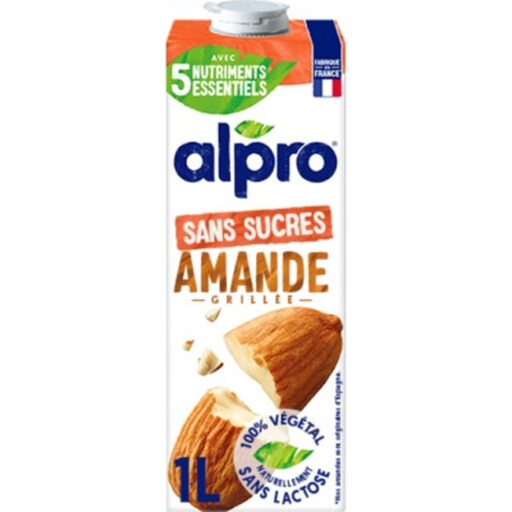 Image unavailable
Worth considering if you want to compare both fat and sugar content: the Joybuy listing for this product gives 1.1 g of fat and 0 g of sugars per 100 ml. It contains 2.3% almonds. Check the carton for how long it can be kept after opening and for tree nut warnings.
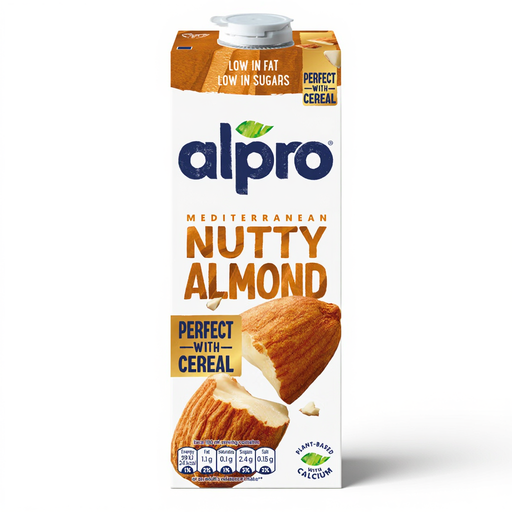 Image unavailable
If you’re considering this other almond drink for breakfasts during your stay, compare the fat and sugar figures per 100 ml on its packaging with those of the unsweetened variety. Also check how long it can be kept after opening and the allergen information.
For a drink, the claim means a maximum of 1.5 g of fat per 100 ml under the EU regulation on nutrition claims. To compare products, check the figure per 100 ml in the nutritional information rather than relying on the word ‘light’.
No: the sugar content doesn’t tell you how much fat a drink contains. For example, the Auchan listing for Bjorg organic unsweetened almond drink 3 × 250 ml gives 1.7 g of fat per 100 ml, above the 1.5 g limit for a ‘low fat’ claim on a drink.
Choose a quantity you can use within the stated period after opening, and make sure you have access to a fridge if the label requires it. The Auchan listings for Auchan and Ethiquable drinks say to consume them within five days of opening; the listing for the Bjorg 3 × 250 ml pack says four days. Always check the instructions for the product you buy.
Read the ingredients and warnings on the pack: these drinks contain almonds, and some product listings mention possible traces of other tree nuts. For an infant under 12 months, the listing for the Auchan product says it must not be used as their sole food unless prescribed by a paediatrician. Ask a healthcare professional for advice about your infant’s diet.