For a lunch that needs to meet the strict gluten-free requirements of a coeliac diet, choose an almond drink whose carton is labelled “gluten-free”. A recipe described as “naturally gluten-free” is not enough to rule out the risk of cross-contamination, as AFDIAG points out. Once you’ve checked this on the specific product you’re buying, compare the sugars, ingredients and nutritional values according to how the drink fits into your meal.
Who is this choice for?
People with coeliac disease planning their lunch
The priority is to check for “gluten-free” information on the specific drink you’ll be having, rather than assuming it’s suitable because it’s made from almonds. AFDIAG points out that contamination can occur during production or packaging.
Consumers keeping an eye on sugar
To go with a meal, they can compare the sugar claims, the “of which sugars” line in the nutritional information and the ingredients. Choosing a particular recipe does not replace the need to check separately for gluten.
Consumers who include the drink in their meal
Whether they have it with muesli, in coffee or in a recipe, they can compare drinks based on their stated uses, almond content and protein or calcium values, where these are listed. These features vary from one recipe to another.
What should you check?
If your lunch needs to meet the strict requirements of a coeliac diet, start by checking the gluten labelling on the carton. You can then compare the ingredients and intended use of recipes that meet this first requirement.
| Criteria |
What to check |
Who it’s for |
| Gluten-free information |
Look for “gluten-free” on the carton and check for any warnings about traces of gluten. If this variant carries the “crossed grain” logo, it provides an additional certification marker described by AFDIAG. |
When I need to follow a strict coeliac diet, I don’t want to rely on the drink’s apparent ingredients alone; around 46% of consumers would make this their top priority. |
| Sugars and ingredients |
Check the “of which sugars” line per 100 ml and the ingredients list. If there’s a “no added sugars” claim, distinguish it from the actual sugar content. |
If I’m limiting added sugars at lunch, I want to know what’s actually in the recipe; around 27% of consumers would prioritise this criterion. |
| Meal composition |
Compare protein and calcium where these are listed, as well as the percentage of almonds. Use the same 100 ml basis to compare nutritional values. |
When putting my meal together, I look at the nutritional values provided rather than assuming all almond drinks are alike; around 18% of consumers would make this their priority. |
| Use at lunchtime |
Check the stated uses, such as with cereal, coffee or in recipes, then look at the ingredients of the variant you choose. |
With my muesli or in my coffee, I’m looking for a drink suited to how I plan to use it; around 9% of consumers would make this their first criterion. |
Common misconceptions to avoid
-
Assuming “naturally gluten-free” means the same as “gluten-free”
The apparent absence of gluten-containing ingredients does not, on its own, tell you whether contamination may have occurred. AFDIAG distinguishes the recipe’s ingredients from the information you need to check on the finished product.
If you’re following a strict coeliac diet, look for “gluten-free” on the specific carton you’re buying and check for warnings about traces, too. Look for the “crossed grain” logo if you want this additional certification marker.
-
Confusing “no added sugars” with sugar-free
A drink with no added sugars may still contain naturally occurring sugars. This claim also tells you nothing about its gluten content.
Check the “of which sugars” value per 100 ml in the nutritional information, then check the ingredients and gluten-free information separately.
Brands to consider
These products illustrate how claims and ingredients can differ; use the label on the specific variant you buy to guide your comparison.
Provamel
Carrefour France lists a 1 L Provamel organic almond drink as “gluten-free” and says it can be enjoyed hot, cold or with muesli.
- This product is explicitly described as “gluten-free”.
- Check that this claim appears on the carton and size you choose.
La Mandorle
Carrefour France’s listing for Eau d’Amande describes it as an organic drink in a 1 L carton and calls it “naturally gluten-free”.
- The listing gives a protein value of 1.5 g per 100 ml, which is useful for comparing this recipe with others on the same basis.
- The wording “naturally gluten-free” is not enough on its own when choosing a drink for a strict coeliac diet: check the carton’s labelling.
Alnatura
For its Amande Nature Bio plant-based drink, Carrefour France lists water, 7% almonds and sea salt.
- The almond content and ingredients list make it possible to compare the recipe precisely.
- The description “naturally gluten-free” should not be confused with a “gluten-free” claim that applies to the finished product.
Andros Gourmand & Végétal
Carrefour France’s listing for an Andros Gourmand & Végétal almond-based drink includes information that’s important when making this choice.
- The warning about traces is clearly shown in the product information and can be taken into account before you buy.
- The listing states “May contain traces of GLUTEN”: don’t assume it’s suitable for a strict coeliac diet just because it’s made with almonds.
An almond drink on Joybuy
This unsweetened almond drink is worth considering for lunch with cereal or in a hot drink. If you’re choosing it for a strict coeliac diet, check for “gluten-free” on the carton of this variant before buying.
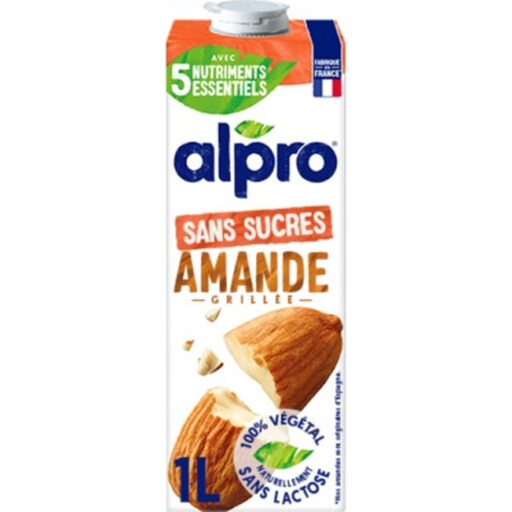 Image unavailable
Alpro Almond Unsweetened UHT 1l
An option to consider if you’re looking for an unsweetened almond drink for lunch. If you’re following a strict coeliac diet, check the “gluten-free” information on the carton you buy.
1l size; UHT variant.
View on Joybuy
Frequently asked questions
Is “naturally gluten-free” enough when choosing an almond drink for someone with coeliac disease?
No. This description of the ingredients does not, on its own, rule out contamination. AFDIAG recommends paying attention to the information on the finished product. Look for “gluten-free” on the exact product you’re buying and check for any warnings about traces.
What does “gluten-free” mean on a drink sold in France?
Under Implementing Regulation (EU) No 828/2014, which applies in France, and according to AFDIAG’s guidance, it means the finished product contains less than 20 mg/kg of gluten. Check that the claim applies to the variant and size you’re buying.
Does “no added sugars” mean sugar-free?
No. Naturally occurring sugars may still appear on the “of which sugars” line in the nutritional information. Compare this value per 100 ml and check the ingredients; the claim tells you nothing about gluten.
Should you check the label again when buying the same drink?
Yes, especially if your choice depends on a “gluten-free” claim. Check the variant, size and information on the carton you’re buying. AFDIAG points out that a warning about traces indicates a possible risk of contamination.


