Managers working to a fat content limit
To choose an almond drink labelled as low fat, they compare the value per 100 ml with the 1.5 g maximum for liquids set out in the European regulation published on EUR-Lex.


For a workplace canteen that requires a low-fat almond drink, start by checking the value per 100 ml: the maximum for making this claim about liquids is 1.5 g, according to the European regulation published on EUR-Lex. Then check the sugars, almond information and storage instructions after opening separately. A ‘no added sugars’ claim does not, on its own, meet the fat content requirement.
To choose an almond drink labelled as low fat, they compare the value per 100 ml with the 1.5 g maximum for liquids set out in the European regulation published on EUR-Lex.
Whether serving customers at a self-service counter or over the counter, they need to be able to tell diners about the almonds in the recipe being served before they consume it.
They choose pack sizes to suit the pace of service and organise refrigeration and stock rotation in line with the instructions for the product purchased.
First, check the fat content per 100 ml for the recipe you’re ordering. Then prepare allergen information and plan how to handle the product after opening. Compare sugar content separately: a drink intended for coffee or labelled ‘no added sugars’ may not meet the same requirements.
| Criteria | What to check | Consumers concerned |
|---|---|---|
| Fat content | Check the value per 100 ml on the packaging of the recipe delivered and compare it with the 1.5 g maximum for the claim on liquids, according to EUR-Lex. | When the specification requires a low fat content, I need to be able to check the value for the drink actually being served. Around 42% of consumers would put this first. |
| Allergens | Check the ingredients list and any ‘may contain’ information, then prepare information that diners can easily access. | When choosing a drink for a communal catering service, I want diners to be able to find out whether it contains almonds before serving themselves; this would be the top priority for around 33% of consumers. |
| Storage | Check the temperature and storage period specified after opening, and adjust the number of cartons opened to suit the service. | To avoid keeping cartons open beyond the instructions for the recipe, I need to organise stock rotation. This would be the top concern for around 25% of consumers. |
These claims relate to different characteristics. A product with no added sugars does not automatically meet the fat content limit set for the canteen.
Include the limit of 1.5 g per 100 ml in your selection criteria and check the ‘fat’ line for the recipe you order.
An almond drink contains an ingredient that must be taken into account in the information provided to diners. In France, the decree published by Légifrance sets out how to provide information about ingredients that cause allergies or intolerances and are still present in non-prepacked food.
Keep the ingredients list for the recipe being served up to date and make information about almonds available before consumption, in accordance with the requirements for your service.
Auchan and Ethiquable product information says to refrigerate their products after opening and consume them within five days. Other recipes may have different instructions.
Date opened cartons and follow the temperature and storage period indicated on the product actually delivered.
Opened cartons that aren’t used within the stated period can lead to waste.
Compare specific recipes rather than assuming that all products from a brand have the same characteristics. Fat and sugar content, as well as instructions after opening, can vary from one product to another.
The Joybuy product page for Alpro Unsweetened Almond UHT 1 L lists 1.1 g of fat per 100 ml.
Auchan offers a 1 L carton of unsweetened almond-based plant drink.
E.Leclerc’s product page for VEGE unsweetened almond drink lists 1.2 g of fat and 0.2 g of sugars per 100 ml.
E.Leclerc’s product page for Bio Village organic unsweetened almond drink lists 1.5 g of fat and 0.2 g of sugars per 100 ml.
These two 1 L Alpro cartons let you compare almond drink recipes for canteen service. Check the fat and sugar content of each version before choosing one for a specific specification.
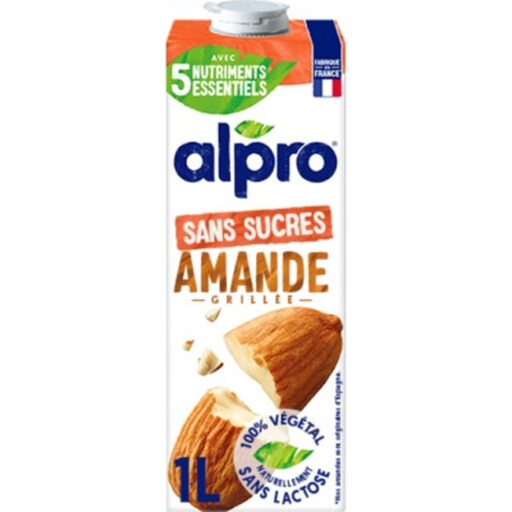 Image unavailable
Worth considering if your canteen is looking for an unsweetened almond drink that meets the fat content limit: the Joybuy product page lists 1.1 g of fat per 100 ml and 0 g of sugars per 100 ml.
Make sure diners are told that it contains almonds. After opening, follow the refrigeration and storage instructions on the carton delivered.
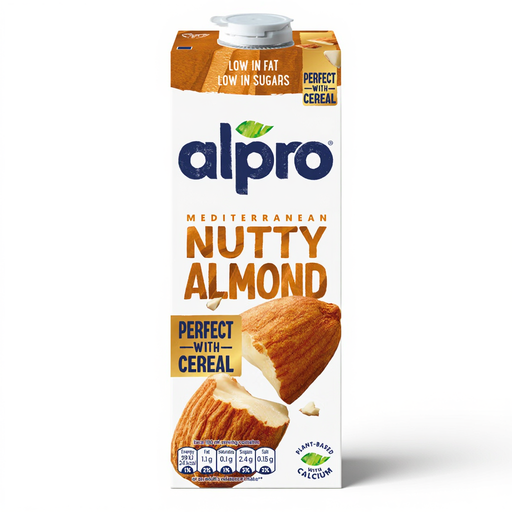 Image unavailable
To compare this other almond recipe for canteen service, check its fat and sugar content per 100 ml on the packaging before choosing it: its name doesn’t indicate that it’s an unsweetened version.
The stated pack size is 1 L. Also check the ingredients and instructions after opening on the carton intended for service.
For the ‘low fat’ claim on a liquid, the European regulation published on EUR-Lex sets a maximum of 1.5 g of fat per 100 ml. Compare this limit with the value per 100 ml shown for the recipe you’ll be serving.
No. Sugars and fat are separate criteria. Check the ‘fat’ line per 100 ml even if an almond drink is labelled ‘no added sugars’.
Almonds must be included in the allergen information for the recipe being served. For non-prepacked food in France, the decree published by Légifrance sets out how to inform the final consumer about ingredients that cause allergies or intolerances and are still present in the finished product. Check the up-to-date ingredients list and follow the requirements at the point of service.
Follow the storage period and temperature specified for the product you bought. Auchan and Ethiquable product information says to refrigerate after opening and consume within five days. Don’t automatically apply this period to another drink.