Anyone making barbecue sauce
You’re looking for an almond drink to adjust a sauce while meeting the 1.5 g of fat per 100 ml threshold for the ‘low fat’ claim.


For a barbecue sauce or marinade, choose an almond drink with no more than 1.5 g of fat per 100 ml if keeping fat content low is your priority. This is the threshold for the ‘low fat’ claim set by Regulation (EC) No 1924/2006, published on EUR-Lex. Then check the sugars, ingredients and allergens separately: ‘no added sugars’ tells you nothing about the fat content.
You’re looking for an almond drink to adjust a sauce while meeting the 1.5 g of fat per 100 ml threshold for the ‘low fat’ claim.
For a marinade or serving sauce, you want to compare sugar and fat separately rather than relying on a single claim on the front of the carton.
Before serving your dish, check the allergens and ingredients for the product you’ve chosen, along with its storage instructions after opening.
| Criteria | What to check | Who is this for? |
|---|---|---|
| Fat | Check the value per 100 ml: Regulation (EC) No 1924/2006 sets a maximum of 1.5 g for the ‘low fat’ claim on drinks. | If keeping fat content low comes before everything else in my sauce, I want to be able to check this on the carton. Around 40% of consumers would put this need first. |
| Sugars | Compare the ‘of which sugars’ line with the ingredients list. Don’t infer the fat content from a claim about sugars. | If my marinade already contains sweet ingredients, I want to choose my drink with that in mind. Checking sugars would be the priority for around 30% of consumers. |
| Product and pack size | Check the exact variant name, its nutrition information and the carton size at your retailer. | When I’m making a small amount of sauce, I want a product I can find in a pack size that suits my recipes. Around 20% of consumers would prioritise this practical need. |
| Ingredients and storage | Check the allergens and ingredients on the packaging, then read the instructions for storing the drink after opening. | If the sauce is being shared, I need to know what it contains and how to store the rest of the carton. Around 10% of consumers would make this their priority. |
These claims relate to different criteria. The Carrefour Bio Amande Sans Sucres Ajoutés product information lists 1.7 g of fat per 100 g. This figure, given per 100 g, cannot be compared directly with the 1.5 g per 100 ml threshold for drinks.
To check whether a drink meets the low-fat criterion, look for the value per 100 ml on the carton. Check the ‘of which sugars’ line separately.
According to E.Leclerc product information, Bio Village Amande Sans Sucres Bio contains 1.5 g of fat and 0.2 g of sugars per 100 ml, while Bio Village Amande Intense Bio contains 4.3 g of fat and 4.1 g of sugars per 100 ml.
Compare the full product name and nutrition values for the variant you plan to use.
Almond drink contains this allergen. According to the DGCCRF, allergens must be emphasised in the ingredients list.
Keep the packaging so you can let your guests know what’s in the dish, and choose an alternative base if the recipe needs to be suitable for someone with an almond allergy.
Storage instructions after opening vary by product and may limit how long you have to use the rest.
Check the instructions on your chosen carton and note the date you opened it.
A pack that’s too large for your recipes could leave you with some unused drink once the stated storage period has passed.
Amande Grillée Sans Sucres and Almond Drink have different sugar profiles.
This retailer offers an unsweetened almond-based plant drink.
The two almond variants listed by E.Leclerc don’t meet the same fat-content criteria.
The Amande Sans Sucres Ajoutés Bio variant meets a sugar-related criterion, which is separate from the one for fat.
Lidl sells a sugar-free organic almond drink under the Vemondo brand.
These two Alpro variants let you compare fat and sugar content before choosing an almond drink for a barbecue sauce or marinade. Check the exact variant and its label against the other criteria for your recipe.
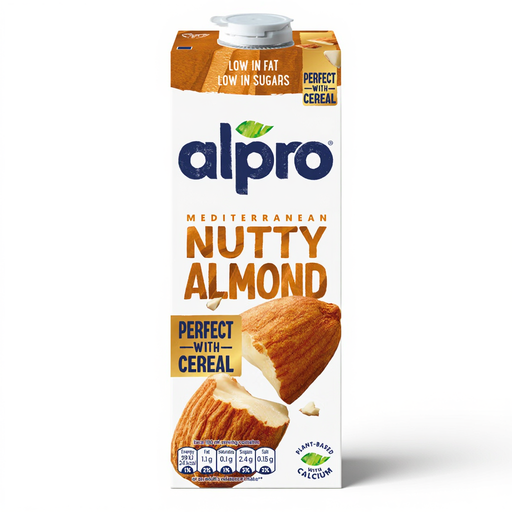 Image unavailable
Worth considering if you want to use almond drink in a savoury recipe while keeping an eye on fat content.
Joybuy’s product information lists 1.1 g of fat and 3 g of sugars per 100 ml. Check the ingredients list on the carton for added sugars.
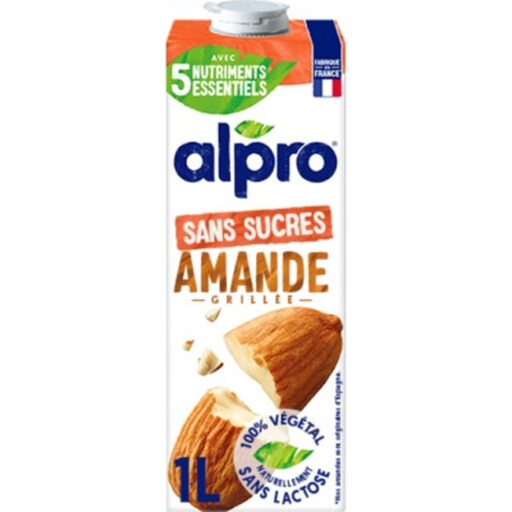 Image unavailable
Consider this if you want to compare both fat and sugar content before adding an almond drink to your recipe.
Joybuy’s product information lists 1.1 g of fat and 0 g of sugars per 100 ml. Check the ingredients and allergen labelling on the carton, as well as whether the flavour suits your recipe.
Regulation (EC) No 1924/2006, published on EUR-Lex, sets a maximum of 1.5 g of fat per 100 ml of drink for this claim. Check this value in the nutrition information for the product you buy.
No. A claim about sugars doesn’t tell you the fat content. Check both values separately, and use the fat value per 100 ml if you want to apply the threshold for drinks.
Check the allergens on the exact product packaging and keep it handy for your guests. The drink contains almond; according to the DGCCRF, allergens must be emphasised in the ingredients list.
Follow the instructions on the carton you buy, including guidance on refrigeration and how soon to use it. These details can vary by variant, so check them before opening a large carton for a single recipe.