Home bakers keeping an eye on fat
You make cakes, crêpes or pancakes and want to compare how much fat the liquid contributes. However, this figure alone isn’t enough to predict the texture of the batter.


When baking at home and the fat contributed by the liquid matters, compare the amount per 100 ml rather than relying on the word ‘light’: the product pages checked at Auchan France list between 1.1 and 1.7 g of fat per 100 ml, depending on the almond drink. Then check the ‘of which sugars’ line and the ingredients. If texture matters to your recipe, try a small batch rather than assuming the drink will also replace the butter or eggs.
You make cakes, crêpes or pancakes and want to compare how much fat the liquid contributes. However, this figure alone isn’t enough to predict the texture of the batter.
You add your own sugar, fruit or chocolate and want to know how much sugar the almond drink contributes, separately from the other ingredients.
You want to check the ingredients, including the almond content, any thickeners and statements about other nuts, before using a carton in a dessert you’re sharing.
Start with the liquid’s nutritional values, then check its ingredients and what your recipe requires. The product name alone won’t tell you all three.
| What to compare | What to check | Who is it for? |
|---|---|---|
| Fat | Compare the ‘fat’ line per 100 ml, using the same basis of measurement. | When I make crêpes or a cake, I want to know how much fat the liquid contributes without assuming what the finished bake will be like; around 27% of consumers would put this first. |
| Sugars | Check ‘of which sugars’ per 100 ml as well as the ingredients list, even if the carton says ‘no added sugars’. | If my batter already contains chocolate or a sweet filling, I prefer to keep track of the sugar in the liquid separately; this would be the priority for around 27% of consumers. |
| Ingredients and recipe | Check the proportion of almonds and any thickeners, then try a small batch if texture is crucial. | If the consistency of my batter is particularly important, I want to try the drink before changing several ingredients; around 26% of consumers would prioritise how well it works in the recipe. |
| Availability | Look for a product available at your chosen retailer, then check the details on the carton you actually buy. | When I shop at a particular retailer, I want to be able to find an almond drink whose label I can check; availability would come first for around 20% of consumers. |
The product pages for the almond drinks checked at Auchan France list between 1.1 and 1.7 g of fat per 100 ml. So the variant’s name is no substitute for comparing the nutritional values.
Decide which figures matter for your recipe, then check the ‘fat’ line on each carton.
The sugar content listed for the drink doesn’t tell you how much sugar will be in the finished cake: fruit, chocolate and toppings all contribute too.
Check ‘of which sugars’ for the liquid, then measure the other ingredients separately.
The product pages at Carrefour France and Auchan France show different proportions of almonds and different ingredients. They can’t predict how every bake will hold together or cook.
If texture is important to your recipe, make a small batch without changing several key ingredients at the same time.
According to the European Commission, almonds are one of the allergens that must be declared when they’re used in a food. Some products also carry a statement about other nuts.
Before cooking for other people, read the ingredients list and precautionary statements on the carton you’re using.
The 1 L Almond Roasted Unsweetened drink is one option to compare when the fat and sugar content of the liquid is a priority.
The 1 L organic almond drink with no added sugars gives you another ingredient profile to consider for home baking.
The unsweetened almond drink and Auchan Bio Light No Added Sugars are two distinct variants, both in 1 L cartons.
E.Leclerc offers a 1 L organic unsweetened almond drink and a separate ‘intense almond’ variant.
Lidl offers an organic unsweetened almond drink under the Vemondo brand.
These two Alpro drinks make it easy to compare the fat and sugar content of the liquid before trying it in your home baking. Their sugar values differ, so choose according to the recipe you’re making.
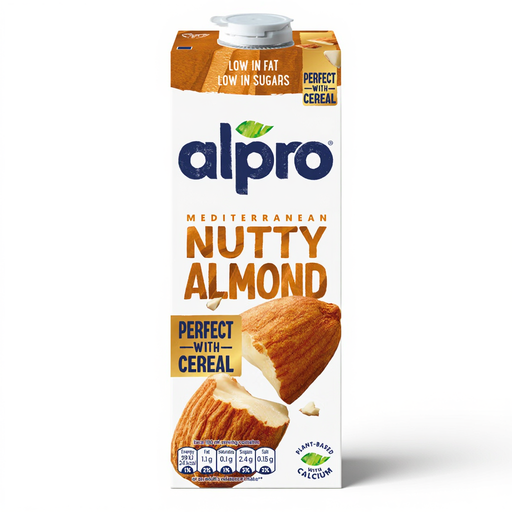 Image unavailable
Worth considering if your priority is comparing the fat content of the liquid you use in baking. The product page lists 1.1 g of fat and 3 g of sugars per 100 ml, so bear this sugar content in mind if your recipe is already sweet.
The product page suggests using it in recipes. If your batter is sensitive to changes in texture, start with a small amount. Also check the packaging for statements about almonds and other nuts.
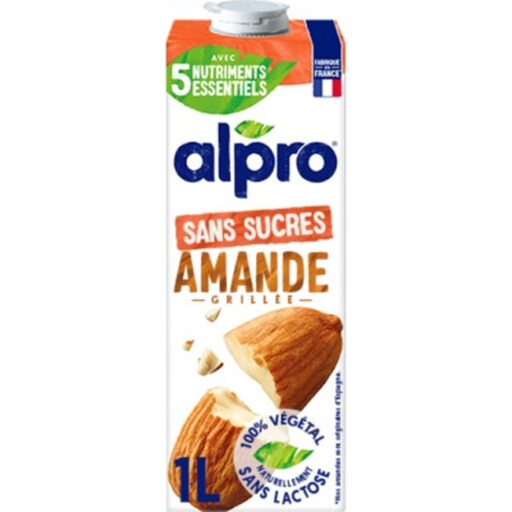 Image unavailable
Worth considering if you want to limit both the fat and sugars contributed by the liquid. The Joybuy France product page for this item lists 1.1 g of fat, 0 g of sugars per 100 ml and 2.3% almonds.
These values don’t predict the texture after baking: try a small batch if your recipe is sensitive to it. Check the allergen statements on the carton.
No. Check the ‘of which sugars’ line for the specific drink you’re buying. Depending on the product, the pages checked at Auchan France list 0 g, 0.2 g or less than 0.5 g of sugars per 100 ml, despite similar product names.
Don’t assume every recipe will turn out the same. The drinks we looked at contain different proportions of almonds and different thickeners. If the consistency of the batter matters, try a small batch first without also removing the butter or eggs.
Follow the instructions on the carton you’ve chosen, particularly those on refrigeration and how long it can be kept after opening. These can vary from one product to another.
An almond drink isn’t suitable for a recipe intended for someone who needs to avoid almonds. According to the European Commission, almonds must be declared when used as an ingredient. Also read the packaging for precautionary statements about other nuts.