Anyone looking for a simple post-workout snack
If you want almonds to make up most of your snack, compare plain varieties and their ingredient lists rather than relying on the word ‘almonds’ on a bar.


For an afternoon snack where almonds should be the main ingredient, choose plain, unsalted almonds: product listings from Carrefour, E.Leclerc and Auchan show 22 to 27.4 g of protein per 100 g, depending on the product. If your priority is the protein content of an individual portion you can take with you, compare protein bars, but don’t assume their protein comes from almonds: the Carrefour and Auchan examples contain just 7 % and 4 % almonds, respectively.
If you want almonds to make up most of your snack, compare plain varieties and their ingredient lists rather than relying on the word ‘almonds’ on a bar.
A bar can make it easier to see how much protein you’ll get in one serving. Check its ingredients too: the Carrefour and Auchan examples combine almonds with other ingredients.
Depending on your dietary choices and the ingredients you need to avoid, check the salt, sugars, sweeteners and allergens listed on each pack, particularly for flavoured varieties and bars.
First decide whether you’re mainly looking for almonds as the key ingredient, a clear protein figure per portion or a product that suits your dietary requirements.
| Criterion | What to check | Who it matters to |
|---|---|---|
| How much of the product is almonds | Read the ingredient list for plain almonds, or check the almond percentage shown for a bar. | For my snack, I want almonds to make up most of the product, not just a small part of a recipe. Around 31 % of consumers prioritise products where almonds are the main ingredient. |
| Protein per portion | Compare protein per 100 g, then work out how much you’ll get from the amount you plan to eat, or check the figure per bar. | After a workout, I prefer to take a portion with a clear protein figure. This is the main concern for around 38 % of consumers. |
| Ingredients and allergens | Check the salt, sugars, sweeteners and allergens listed on the pack. | If some ingredients don’t suit my dietary choices or need to be avoided, checking for them comes before choosing a snack format. Around 31 % of consumers put this check first. |
As the DGCCRF explains, figures per 100 g make it easier to compare foods, but they don’t necessarily reflect how much you’ll eat. An individual bar and a bag of almonds don’t weigh the same either.
Check the protein figure per 100 g, then adjust it to the portion of almonds you plan to eat, or look at the figure given per bar.
The bars listed by Carrefour and Auchan contain 7 % and 4 % almonds, respectively. Their total protein content therefore doesn’t show how much protein comes from almonds alone.
Check the almond percentage and the full ingredient list before swapping a bag of plain almonds for a bar.
Manger Bouger recommends unsalted nuts for everyday consumption. A flavoured variety may contain other ingredients: the listing for TOKAPI smoked-flavour almonds at E.Leclerc, for example, includes oil, salt and caramelised sugar.
If you’re looking for a simple ingredient list, check the ingredients rather than relying on the word ‘almonds’ in the product name.
A food’s protein content alone doesn’t prove that it helps with recovery or performance. The Anses cautions against assuming that an everyday diet is necessarily inadequate for meeting sporting goals.
Choose your snack based on its ingredients and the portion you eat, rather than treating a protein-enriched bar as a must-have after every workout.
Carrefour’s product listings make it easy to distinguish VRACBIO almonds from a TRAINSWEATEAT protein bar that contains almonds.
The Couleurs Vives product is a good option to compare with other dry-roasted almonds with no added salt.
Auchan lists Daco Bello almonds with no added salt and a Barebells white chocolate and almond bar. These are two different product categories.
Monoprix lists several unsalted almond products, including Daco Bello, Seeberger and Vico, in different formats and preparations.
This bag of wasabi-flavoured almonds is a good fit if you fancy a flavoured almond snack in the afternoon. When choosing between plain almonds and a protein bar, compare their ingredients and serving sizes separately.
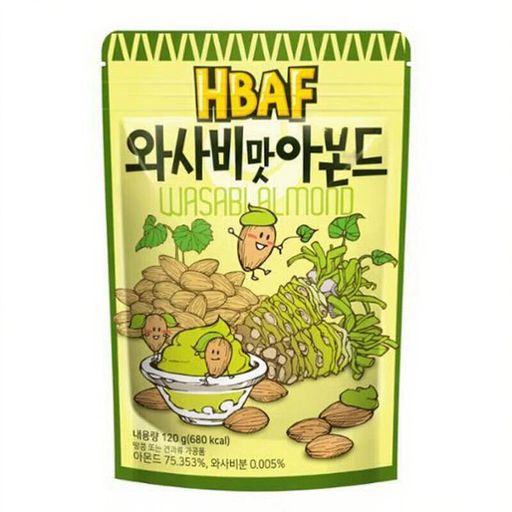 Image unavailable
This 120 g bag is for anyone who wants flavoured almonds for their snack. If you’re looking for plain almonds or a specific amount of protein per portion, check the ingredients and nutritional information on the packaging: the weight of the bag doesn’t determine how much you’ll eat.
It lets you compare products, but doesn’t tell you how much protein is in your portion. The Carrefour, E.Leclerc and Auchan almond listings mentioned here show 22 to 27.4 g of protein per 100 g. Adjust the figure for the product you choose to reflect how much you’ll eat.
Compare the protein per 100 g, then check how much is in the portion you’ll actually eat. The Carrefour and Auchan examples provide 12 g per 50 g bar and 20 g per 55 g bar, respectively. Check their almond percentages and other ingredients too.
Start with the proportion of almonds, then check the ingredient list, sugars, salt and any sweeteners relevant to your needs. The DGCCRF points out that allergenic ingredients must be highlighted on the label, so check the details for the specific product you’re considering.
Follow the instructions on the packaging and reseal the bag after use. Monoprix’s almond listings recommend storing them away from heat and moisture.