If you can eat almonds and are looking for a snack with a stated protein content, compare the figures per 100 g: the almond products listed by E.Leclerc and Courses Monoprix contain 21.2 to 26.2 g, compared with 7.86 g for the Profruit mix featured by Auchan. However, whether they’re natural or roasted, almonds are still tree nuts. If you have an allergy, the ingredients and specific pack labelling matter more than the protein content or a ‘no added salt’ claim.
Who is this choice for?
People who exercise and can eat tree nuts
If you’re considering almonds as a snack before or after a workout, check their protein content on the label. Anses lists almonds among oilseeds that provide plant protein, but this alone does not establish their benefits for recovery.
People who need to avoid a specific allergen
First, check whether the ingredients and any precautionary ‘may contain’ statements are suitable for you. For pre-packed foods, the DGCCRF says that allergenic ingredients must be highlighted in the ingredients list.
People comparing natural products and mixes
If you also want to compare sugars, salt and ingredients, check the nutritional information on the same basis. The DGCCRF specifies that nutrition declarations for pre-packed foods are given per 100 g or 100 ml.
What should you check?
First rule out any products that aren’t suitable for the allergy in question, then compare the protein content and ingredients of the remaining options. Roasting or having no added salt does not, on its own, tell you whether a product contains an allergen.
| Criteria |
What to check |
Who is it for? |
| Allergens |
The ingredients, highlighted allergens and any ‘may contain’ statements on the specific pack. |
If I need to avoid an allergen, a high protein content doesn’t make a product suitable. Around 42% of consumers put this compatibility first. |
| Protein |
The ‘protein’ figure per 100 g, followed by the amount you expect to eat. |
For a snack around a workout, I want to compare the stated protein content of almonds and a mix without relying on the product’s name; around 33% of consumers prioritise protein content. |
| Ingredients |
The ingredients, sugars and salt per 100 g; check any ‘no added salt’ claim separately. |
When choosing between natural almonds, roasted almonds and a dried fruit mix, I want to know the ingredients and nutritional values first. This simplicity is the main priority for around 25% of consumers. |
Mistakes to avoid
-
Assuming all dried fruit and nuts contain the same amount of protein
The E.Leclerc and Courses Monoprix product listings state that the almonds featured contain 21.2 to 26.2 g of protein per 100 g. The Profruit mix featured by Auchan contains 7.86 g per 100 g. These figures apply to these specific products, not to all almonds or mixes.
Compare the protein content per 100 g, then check the sugars and ingredients list for the product you’re interested in.
-
Confusing ‘natural’ or ‘no added salt’ with ‘allergen-free’
Almonds are still tree nuts. The listing for Profruit raw almonds at Courses Monoprix also mentions possible traces of peanuts, sesame and gluten.
Check the allergen you need to avoid and the statements on the pack, even if the ingredients list is short.
-
Relying solely on an online product listing
If you have an allergy, you need to check the ingredients of the product you’ve bought against the allergens you need to avoid. The DGCCRF says that allergenic ingredients in pre-packed foods are highlighted on the label.
Check the pack before eating the product, even if you’ve already looked at its online listing.
-
Leaving whole tree nuts within reach of young children
The Seeberger listing available from Courses Monoprix warns of a choking hazard for young children, particularly those under 4.
Keep whole tree nuts out of their reach and choose a suitable form for the child’s age.
Brands and products to know
E.Leclerc / TOKAPI
The E.Leclerc listing is for a 200 g bag of unroasted TOKAPI almonds with no added salt.
- It lists ‘shelled almonds’ as the ingredient and states 26.2 g of protein per 100 g.
- These ingredients do not make the almonds suitable for anyone with a tree nut allergy.
Carrefour / Maître Prunille
The product featured by Carrefour consists of roasted, shelled almonds with no salt.
- The listing makes it easy to distinguish these roasted almonds from a dried fruit mix.
- To choose them based on protein content or a specific allergy, check the nutritional and allergen information on the pack in question.
Auchan / Profruit
The Profruit mix featured by Auchan includes almonds, raisins, goji berries and cranberries.
- Its listing details the ingredients and states 7.86 g of protein and 49 g of sugars per 100 g.
- The ingredients include almonds and sulphite E220; these details don’t apply to other Profruit mixes.
ALDI / Trader Joe's
ALDI features Trader Joe's roasted almonds with no added salt.
- The ‘no added salt’ claim makes this preparation detail easy to spot.
- It doesn’t tell you the protein content or whether the product is suitable for someone with an allergy.
Monoprix / Profruit et Seeberger
Courses Monoprix features Profruit raw almonds and Seeberger shelled almonds.
- Their listings state 21.2 g and 24 g of protein per 100 g respectively.
- The Profruit listing mentions possible traces of peanuts, sesame and gluten; the Seeberger listing warns of a choking hazard for young children.
A product available from Joybuy
These flavoured almonds may be worth considering as a snack around a workout if you can eat the ingredients. They don’t replace checking the label for a specific allergy.
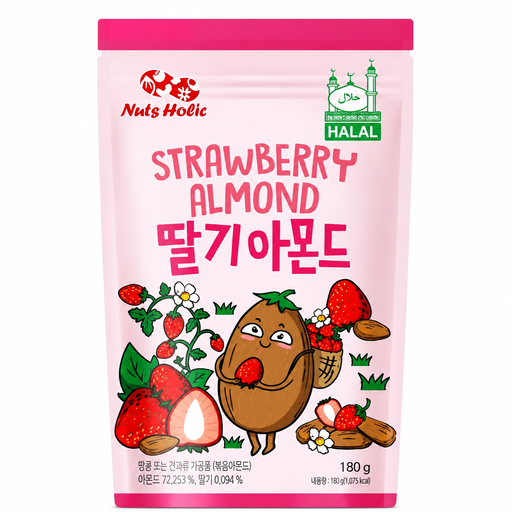 Image unavailable
Nutsholic Strawberry-Flavoured Almonds, 180 g
Worth considering as a snack if you’re looking for flavoured almonds and can eat the listed ingredients. The information for this product mentions almonds and milk, as well as possible traces of wheat, peanuts and sesame. Check these statements against the pack label before buying and eating.
View on Joybuy
Frequently asked questions
Are almonds suitable for everyone with a food allergy?
No. Almonds are tree nuts and can themselves cause an allergic reaction. Depending on the product, other traces may also be listed; check the allergens you need to avoid against the information on the pack.
How can I compare the protein in almonds and a mix?
Check the ‘protein’ figure per 100 g to compare products on the same basis, then consider how much you expect to eat. The DGCCRF specifies that nutrition declarations for pre-packed foods are given per 100 g or 100 ml. Also check the sugars, salt and ingredients.
Are roasted almonds with no added salt safe if I have an allergy?
A ‘no added salt’ claim doesn’t tell you whether a product is suitable for someone with an allergy. Roasted almonds still contain almonds; check the other ingredients and any precautionary ‘may contain’ statements too.
How should I store almonds after opening?
The listings for Profruit and Seeberger almonds featured by Courses Monoprix recommend keeping them away from heat and moisture. Also follow the storage instructions on the pack you buy.
Why shouldn’t young children be left with whole tree nuts?
The listing for Seeberger almonds featured by Courses Monoprix warns that they can pose a choking hazard for young children, particularly those under 4. Keep whole products like these out of their reach.


