
Livraison le jour même ou le lendemain

Qualité garantie

Débloquez vos offres de bienvenue: Livraison GRATUITE | Jusqu'à -80 % | 30 jours d'essai gratuits à JoyPlus
Téléchargez l'application
Buying an all-hob saucepan seems simple, until a model advertised as versatile does not work on induction, its non-stick coating scratches quickly or its capacity is not enough for the quantities you cook. To avoid wasting money, it is better to compare the technical specifications rather than relying solely on marketing claims.
A saucepan compatible with gas and electric hobs will not necessarily work on an induction hob. This technology requires a base containing a magnetic material, usually indicated by the relevant symbol.
Before ordering, check the exact list of compatible heat sources:
A flat, sufficiently thick base also improves the saucepan’s stability and helps distribute heat more evenly.
A non-stick saucepan makes it easier to prepare milk, sauces and foods that tend to stick. However, its coating requires some care: use wooden or silicone utensils, avoid heating it when empty and clean it with a non-abrasive sponge.
Claims such as “PFOA-free” or “PFAS-free” should be read carefully. They do not necessarily describe all the saucepan’s components. A product description stating that it is free from PFAS, PTFE and PFOA provides more complete information about the coating concerned.
An enamelled cast-iron saucepan retains heat very well, but it can become heavy to move once full. Conversely, a lightweight model is easier to handle, but may be less stable depending on the design of its base.
The lid also deserves your attention. A saucepan with a lid allows you to monitor cooking without lifting the lid and helps limit splashes. In a small kitchen, removable handles and stackable sizes can also save valuable space.
Choose the capacity according to your usual cooking needs:
The stated diameter alone is not enough to determine the actual available volume. Also check the capacity in litres and the height of the sides.
An stainless-steel saucepan, particularly one made from 304 stainless steel, generally offers good corrosion resistance and does not rely on a non-stick coating. It is well suited to everyday cooking, provided you control the temperature and avoid leaving the empty pan on the heat for too long.
An enamelled cast-iron saucepan retains heat for a long time and is ideal for soups and slow-cooked dishes. Its weight and care requirements should nevertheless be taken into account. For quick cooking, a small saucepan with a non-stick coating may prove more practical.
Aluminium models with a ceramic coating may be suitable if you are looking for a PFAS-free saucepan, provided this feature is clearly stated in the product description. It is still advisable to follow the manufacturer’s care instructions.
An encapsulated or composite base distributes heat more effectively and improves compatibility with different types of hob. For induction, always check the compatibility explicitly stated by the manufacturer rather than relying on the appearance of the base.
Silicone handles or handles made from an insulating material limit heat transfer, but should not be placed directly in a flame. If the handle is removable, make sure it is properly locked in place before lifting the saucepan.
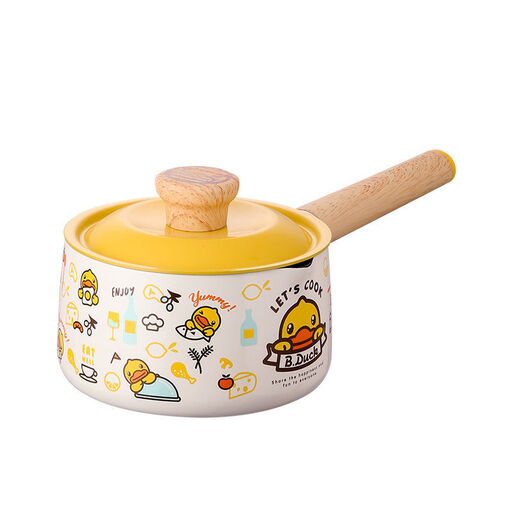
Why this choice suits this profile: With its 16 cm diameter, this model is suitable for sauces, milk and small quantities. The product description states that it is compatible with all heat sources, including induction.
The diameter and stated compatibility are clearly specified. However, dishwasher cleaning is not recommended in order to preserve the surface.
Compact size, anti-spill design and stated compatibility with all hob types.
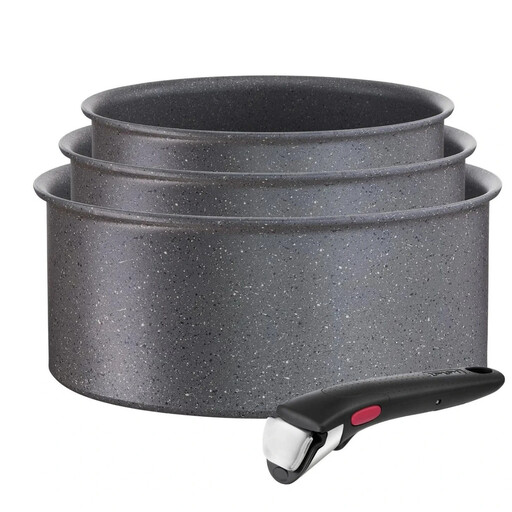
Why this choice suits this profile: This 16 cm model is part of a stackable system. It features a Mineralia+ coating and a base stated to be compatible with induction.
The product description clearly distinguishes between the saucepan and the removable handle, which is sold separately according to the product presentation. Check the contents of the parcel before buying.
Stackable design, heat indicator and compatibility with gas, electric, ceramic and halogen hobs, as well as induction.
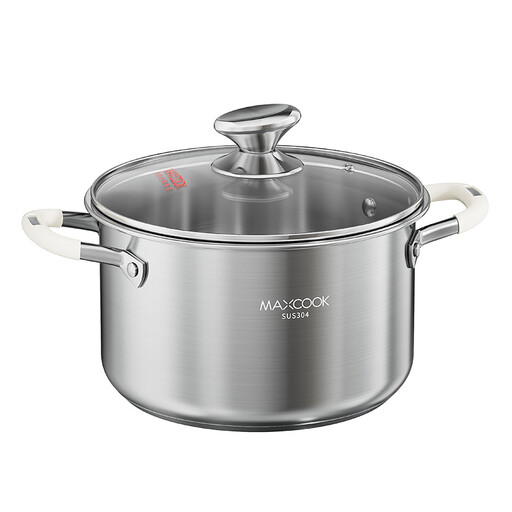
Why this choice suits this profile: Its 4,3-litre capacity is suitable for soups, slow-cooked dishes, pasta and family meals. Its composite base is stated to be compatible with induction, gas and electric hobs.
The capacity is clearly specified, as is the instruction to avoid heating the pan when empty. Hand washing is recommended to preserve the product’s appearance.
304 stainless steel, glass lid, silicone-protected handles and generous capacity.
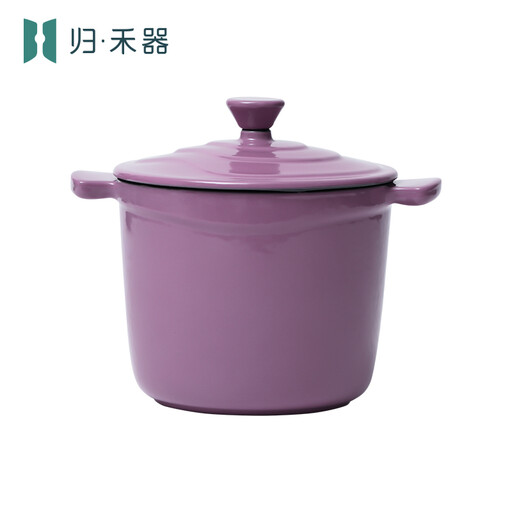
Why this choice suits this profile: This small enamelled cast-iron model is suitable for individual portions, porridge, sauces and soup. It is stated to be compatible with induction.
At 1,3 litres, it avoids choosing an oversized pot for one person. However, the inherent weight of cast iron should still be considered before ordering.
14 cm size, enamelled cast iron and stated compatibility with induction.
We have put together a complete, real-time updated list of products that meet these demanding selection criteria and European safety standards.
A saucepan’s lifespan depends as much on its material as on your cooking habits. To keep an all-hob saucepan in good condition:
A cookware set can reduce the number of pieces you need to store, but check that the sizes included genuinely cover your needs. A set of three small saucepans will not necessarily replace a large-capacity stockpot.
No. The term “all hobs” should be accompanied by explicit induction compatibility. If the model is only compatible with gas, electric and ceramic hobs, it will not necessarily work on an induction hob.
For one or two portions, a capacity of 1 to 2 litres is generally sufficient. For a family, choose a saucepan or stockpot of 3 to 5 litres, with a stable lid and easy-grip handles.
No. Being PFAS-free describes a feature of the material or coating, but does not by itself guarantee a non-stick effect. Check the product description to clearly distinguish the composition, surface type and care instructions.