
Livraison le jour même ou le lendemain

Qualité garantie

Débloquez vos offres de bienvenue: Livraison GRATUITE | Jusqu'à -80 % | 30 jours d'essai gratuits à JoyPlus
Téléchargez l'application
An all-terrain electric bike can make journeys on forest tracks, gravel paths and private trails far more accessible. However, product descriptions sometimes focus on power, tyre size or range without explaining usage limitations. To avoid buying the wrong model, there are three pitfalls you should watch out for.
The first concerns the claimed power output. A 500 W motor or more may sound appealing, but this figure alone does not guarantee that the bike is road-legal. In France, an electrically assisted bicycle intended for public roads must meet the criteria applicable to pedal-assisted cycles, including assistance limited to 25 km/h and a continuous rated power that complies with European regulations. A more powerful model may fall into a different category and may not be approved for road use.
The second pitfall concerns theoretical range. A high-capacity battery can provide a useful energy reserve, but the actual distance covered depends on the carried weight, terrain, tyre pressure, temperature, assistance level and ground conditions. A range quoted under favourable conditions should therefore not be treated as a guaranteed distance.
Finally, wide tyres cannot make up for inadequate suspension or unsuitable braking. On rough terrain, stability depends on the bike as a whole: frame geometry, suspension travel, tyre width, brake quality and maximum permitted load.
A battery’s capacity is measured in watt-hours (Wh), a figure calculated from its voltage and amp-hour capacity. For example, a 48 V and 18 Ah battery provides approximately 864 Wh, while a 48 V and 23 Ah model reaches approximately 1,104 Wh. These figures make it possible to compare bikes more objectively than relying on the phrase “long range” alone.
Also check:
A 20-inch electric fat bike fitted with 4-inch tyres can improve grip on sand, loose earth or gravel. In return, these tyres are heavier and can increase rolling resistance on roads. Their pressure should be adjusted to suit the terrain and the rider’s weight.
For an electric bike with suspension, check whether it has front suspension, a rear system or simply a rigid frame. On uneven tracks and trails, full suspension can provide greater comfort, but it also adds weight and more components to maintain. The stated maximum load must include the rider, clothing and any luggage.
Hydraulic disc brakes provide progressive braking and good control on descents, provided they are properly maintained. Mechanical disc brakes may be sufficient for less demanding leisure use, but they also require regular adjustment.
Before ordering, make sure you distinguish between an electric all-road bike, an electric dirt bike and an all-terrain electric motorbike. The latter may be intended for private land or a dedicated circuit only. The VIPCOO H3 shown below is stated not to be authorised for public roads. It must not be ridden on a road, cycle lane or route open to traffic without checking its legal status and the local rules.
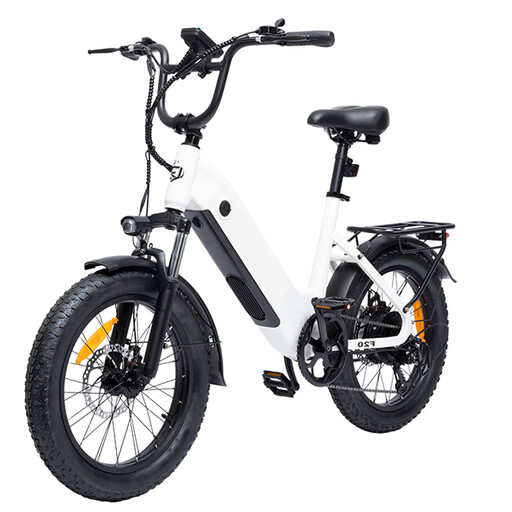
Why this choice suits this user profile : This model combines a 250 W motor, a 48 V battery and 20-inch tyres. It may suit an adult who wants to explore tracks and become familiar with an all-terrain bike without moving straight to a more powerful motor.
The claimed power output is clearly stated, making it easier to compare the bike with the criteria for a pedal-assisted bicycle. You must nevertheless check the assistance speed and the model’s compliance before using it on the road.
250 W motor, 48 V battery and 20-inch tyres, in a configuration designed for leisure journeys.
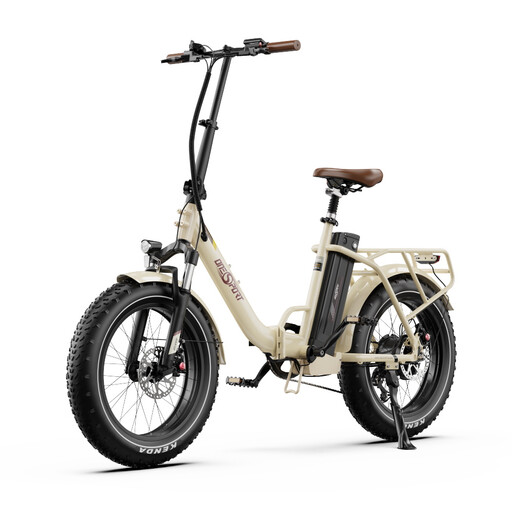
Why this choice suits this user profile : This folding electric bike is designed for users who want to combine wide tyres with convenient storage in a flat, car boot or motorhome.
The 48 V and 18 Ah capacity is stated separately from the range claim. Remember to check the folded weight, dimensions and locking mechanism before buying.
48 V and 18 Ah battery, 20 × 4.0-inch tyres and a folding design for easier transport.
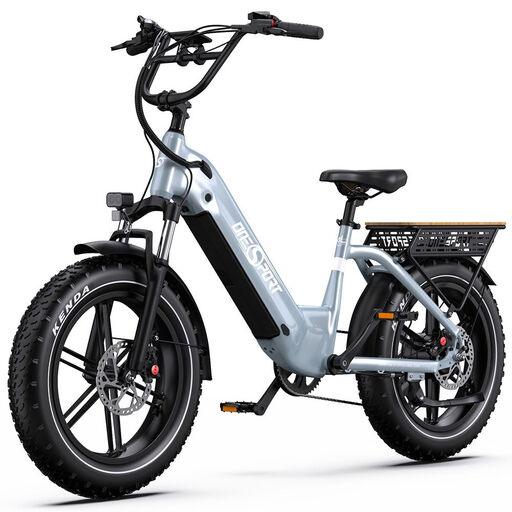
Why this choice suits this user profile : With its 500 W motor, stated 864 Wh battery, twin disc brakes and stated maximum load of 150 kg, the OT08 is aimed at adults who prioritise load capacity and a versatile set-up.
The battery, load and braking specifications are presented as separate features. However, the 500 W power output means you must check the legal framework that applies to your intended use.
Stated 864 Wh battery, 500 W motor, twin disc brakes, Shimano 7-speed transmission and stated maximum load of 150 kg.
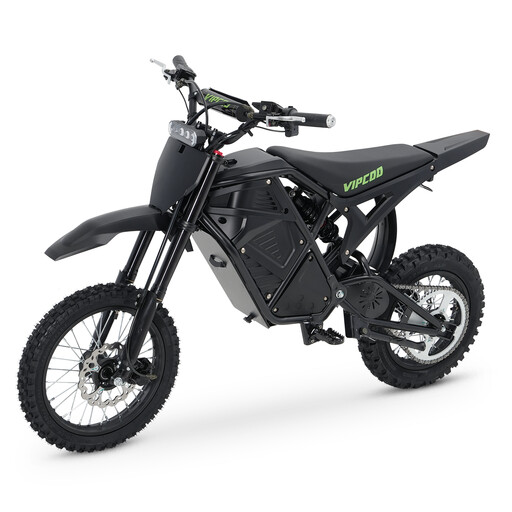
Why this choice suits this user profile : This electric dirt bike is designed for enthusiasts who ride off-road on private property or at a dedicated circuit, rather than for everyday journeys on public roads.
The product description specifies its off-road use and states that it is not authorised for public roads. This prevents an all-terrain electric motorbike from being confused with a road-approved bicycle for urban use.
Stated 3,500 W motor, removable 48 V 23 Ah battery, front and rear suspension, all-terrain tyres and hydraulic disc brakes.
We have put together a complete, real-time updated list of products that meet these demanding selection criteria and European safety requirements.
Before your first ride, check that the handlebars, wheels and suspension components are securely tightened. Adjust the tyre pressure, test the brakes at low speed and recharge the battery using the supplied charger. To help preserve its capacity over time, avoid storing it completely discharged or in a place exposed to freezing temperatures or intense heat.
On an electric bike for tracks and trails, remove mud without directing a powerful jet of water at the motor, connectors or display. Check the wear of the brake pads, chain tension and tyre condition regularly. Wearing a suitable helmet and protective equipment is particularly recommended on rough terrain. With an electric dirt bike, add protection suited to the speed and follow the rules set by the landowner or circuit operator carefully.
For leisure use on accessible tracks, a motor rated at 250 W may be sufficient, depending on the terrain and available assistance level. Models rated at 500 W or more may be suitable for more demanding private use, but their legal status must be checked before riding anywhere outside private land.
Charging generally uses less electricity than a motorised vehicle, but the cost depends on the battery capacity and electricity tariff. You should also budget for maintenance of the wide tyres, brakes and transmission, as well as battery replacement in the longer term. A removable battery makes charging easier and allows you to monitor its condition more conveniently.
Yes, some folding models have wide tyres and a structure designed for uneven surfaces. However, the fact that a bike folds does not guarantee full suspension or strength equivalent to that of a rigid frame. Check the permitted load, total weight and the manufacturer’s instructions before choosing this format.