
Livraison le jour même ou le lendemain

Qualité garantie

Débloquez vos offres de bienvenue: Livraison GRATUITE | Jusqu'à -80 % | 30 jours d'essai gratuits à JoyPlus
Téléchargez l'application
Finding the ideal duvet can be a challenge. Between a winter model that's stifling in summer and a summer duvet that's too thin for cool nights, managing your bedding can quickly become a headache. The all-season duvet is the solution for optimal year-round comfort, regardless of your room's temperature. This guide is here to help you navigate the options and choose a versatile model that ticks all the boxes: comfort, hygiene, and practicality.
Before you start shopping, a few key points deserve your attention. They will help you decipher product descriptions and make the right choice with confidence.
This is the core of the duvet, the element that defines its comfort and how easy it is to care for.
Expressed in grams per square metre (g/m?), the fill weight measures the density of the filling and, consequently, the duvet's level of warmth. For year-round use in a bedroom where the temperature stays between 18 and 22°C, a "temperate" weight duvet is generally the best compromise.
For maximum comfort, the duvet should hang over the sides of the bed by 20 to 40 cm. For example, for a standard double bed (140x190 cm), the 240x220 cm size is the most common for a duvet for two people.
Also, remember to check for labels like Oeko-Tex Standard 100, which guarantees the textile is free from substances harmful to your health and the environment.
Here are a few options that stand out for their versatility and features, tailored to different needs and preferences.
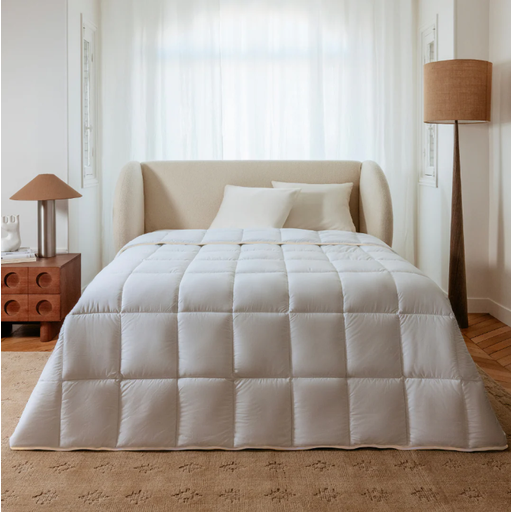
What sets it apart: Its secret? The combination of a natural filling and an organic cotton shell, for perfect thermoregulation and unparalleled softness.
Advantages:
Who is it for? For those seeking the breathable comfort and understated luxury of a natural duvet for restful sleep, season after season.
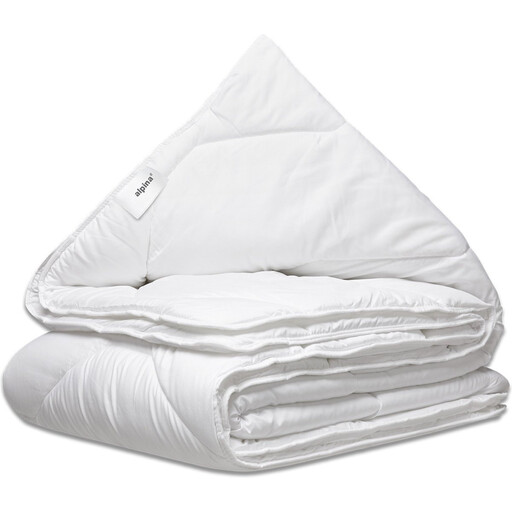
What sets it apart: Its simplicity and effectiveness. It's the ultimate practical solution for everyday use.
Advantages:
Who is it for? Ideal for families or anyone looking for a duvet for two people that is above all functional, low-maintenance, and gentle on sensitive skin.
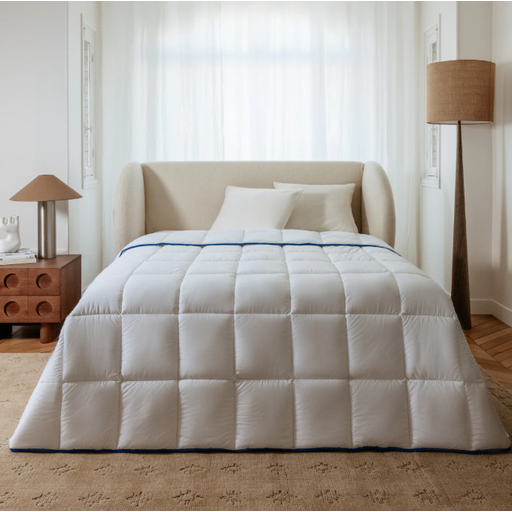
What sets it apart: Its remarkable lightness and cotton percale shell, perfect for those who often get hot at night or for well-heated bedrooms.
Advantages:
Who is it for? Perfect for those who find most duvets too thick or whose bedroom stays above 20°C year-round.
If none of these models have caught your eye, or if you're looking for an even lighter solution for summer nights, other options are available.
? Discover our full range of comfortable summer blankets to find the model that will elevate your nights.
1. What is the difference between a synthetic and a natural duvet?
It's all in the filling! A natural duvet (feathers, down) is known for its superior thermal insulation and breathability, allowing it to regulate temperature perfectly. A synthetic duvet, made from polyester fibres, is praised for its hypoallergenic properties, ease of washing, and often more accessible price point.
2. How do I care for my all-season duvet?
The first step: carefully read the manufacturer's label. Most synthetic duvets can be machine-washed at 30 or 40°C. For natural models, professional cleaning or a low-temperature wash on a delicate cycle is often recommended. A little tip: using dryer balls in the tumble dryer (on low heat) will restore its loft. Also, remember to air out your duvet regularly to keep it fresh.
3. What fill weight should I choose for an all-season duvet?
For a single all-season duvet, a "temperate" weight is the ideal compromise. For a synthetic filling, a density of 250 to 350 g/m? is generally the target. This is perfect for a room kept around 18-22°C year-round. If you tend to feel the cold or your room is poorly insulated, a higher fill weight or a natural duvet with a high down content will be a better choice.