
Livraison le jour même ou le lendemain

Qualité garantie

Débloquez vos offres de bienvenue: Livraison GRATUITE | Jusqu'à -80 % | 30 jours d'essai gratuits à JoyPlus
Téléchargez l'application
An all-season duvet can simplify your bedding choices, but that label doesn't guarantee it will suit every bedroom or every sleeper. A room heated to 22°C, a poorly heated bedroom, or a couple with different warmth needs all require different levels of insulation.
Before you place an order, it's best to avoid three common mistakes: relying on a simple marketing promise, overlooking the actual dimensions, and underestimating the care requirements. Here are the criteria to consider when choosing a duvet suited to British nights, whether in summer or winter.
A duvet marketed as suitable for summer, autumn and winter can be versatile, but it won't deliver the same thermal feel in every situation. The weight, type of filling and airflow all play a decisive role.
A lightweight duvet can be perfectly comfortable in a heated bedroom, but may lack warmth in winter in a poorly insulated home. Conversely, a warm duvet can become stifling as soon as the temperature rises. So check the product description, its weight (where stated) and the recommended temperature range.
A duvet needs to cover the mattress properly and hang down sufficiently over the sides. For a single bed, the 135x200 and 140x200 sizes are very common. For a double bed, sizes such as 200x200, 220x240, 220x260 or 155x220 – depending on your bed configuration – should be compared carefully.
Measure your mattress, take its thickness into account, and check the size of the duvet cover you already have. A duvet that's too short may leave your feet or shoulders exposed during the night. A very wide model, on the other hand, can be more difficult to wash and dry.
Terms like hypoallergenic duvet, anti-dust mite or non-allergenic generally refer to a material, treatment or certification claimed by the manufacturer. They are not a medical guarantee and do not replace the advice of a healthcare professional.
To limit the build-up of moisture and dust, choose a breathable cover, air the room regularly, and follow the washing instructions carefully. A machine-washable duvet can be very practical, provided you have a drum that's large enough.
A polyester duvet often appeals because of its easy care and affordable price. Depending on the product's design, hollow silicone fibres can provide a feeling of lightness and help distribute the filling more evenly.
A down and feather duvet offers a different feel, generally more lofty and lighter for the same weight. However, you need to look closely at the proportion of feathers and down, the certifications stated, and the washing instructions. The DOWNFOCUS products featured in this selection specify a filling of 90% feathers and 10% down, with a weight of 200 g/m² for their summer versions. These details should be distinguished from general comfort claims.
People who sweat at night will often prefer a breathable duvet with a cotton cover or lightweight filling over a very thick model. Breathability depends on the overall design: the outer fabric, fibres, quilting and ability to wick away moisture.
A summer duvet intended for a bedroom at 20°C or above, like some cotton and polyester models, doesn't meet the same need as a thick winter duvet. For year-round use, look for a description that specifies the seasons covered, rather than relying solely on the term "4 seasons".
Before buying, check the washing temperature, any prohibition on bleach, and the recommended drying method. Some models require a washing machine with a capacity of at least 12 kg. A duvet that isn't dried properly can retain moisture, develop unpleasant odours and lose its loft.
The MORPHEA references specify a wash at 40°C and certifications such as STANDARD 100 by OEKO-TEX, CertiPUR, Sanitized and ISO 9001, depending on the product sheet. These labels meet specific criteria defined by the manufacturer or the relevant body. Always check the product sheet and the conditions applicable to the model you choose.
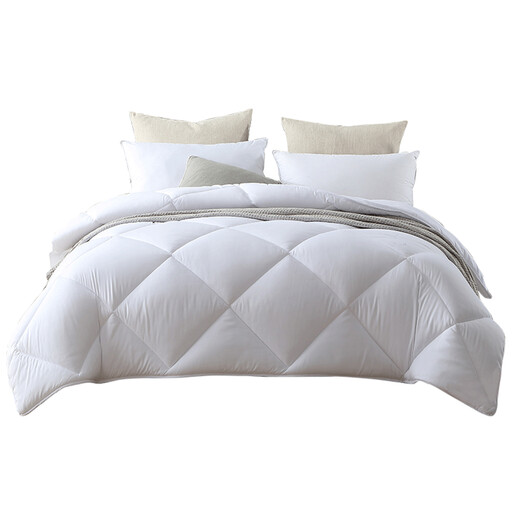
Why this choice suits this profile: Its single size is ideal for a single bed, and its description positions it for summer, autumn and winter use.
The product sheet mentions a breathable, non-allergenic and washable model, so it doesn't rely solely on a warmth promise.
135 x 200 cm size and multi-season use stated.

Why this choice suits this profile: This feather and down model is aimed at sleepers looking for a natural feel during warm nights.
The product sheet specifies the weight of 200 g/m² and the composition: 90% feathers and 10% down. This makes comparison with other models much easier.
OEKO-TEX, RDS and Downpass certifications stated on the product sheet.
For a double bed, compare the width of the mattress, the thickness of the bedding and the overhang you want. The 200x200, 220x240 and 220x260 sizes suit different needs. For a large bed or a couple who move around a lot during sleep, a wider duvet will offer more coverage. However, you'll need to make sure you have a suitable duvet cover and washing machine.
Yes, provided the filling is light enough and the cover promotes airflow. For warm nights, also look at models explicitly described as a summer duvet where the weight is stated. The room temperature, your bedding and your sleeping habits also affect comfort.
Air it regularly, use a washable duvet cover and follow the care label instructions. Only store it once it's completely dry. For large sizes, check the minimum washing machine capacity and avoid compressing the filling for long periods. These precautions help limit moisture, deformation and premature wear.