
Livraison le jour même ou le lendemain

Qualité garantie

Débloquez vos offres de bienvenue: Livraison GRATUITE | Jusqu'à -80 % | 30 jours d'essai gratuits à JoyPlus
Téléchargez l'application
A single duvet for the entire year? The promise of an all-season duvet is certainly appealing. Say goodbye to storage headaches and the seasonal shuffle of bedding. Yet, behind this brilliant concept lie pitfalls that can turn a smart purchase into a genuine disappointment. Common complaints include being too hot in summer, not warm enough in winter, or a modular design that fails over time.
As a product expert at Joybuy, my mission is to bring clarity to your decision. Let's cut through the marketing jargon and focus on the essentials. Here’s how to navigate the three most common pitfalls when choosing your duvet.
To make the right decision, three key criteria must be examined closely. They determine the comfort, durability, and practicality of your future duvet.
This is the heart of the matter—the soul of your duvet. Each type has its own advantages:
A true all-season duvet is a modular system. It generally consists of:
These two components can be used separately or joined together (with press studs, ties, or a zipper) to create a thick, warm winter duvet with a combined fill weight of 500?g/m? or more. It is this modularity that guarantees tailored comfort for every season.
Often overlooked, the casing (the fabric containing the filling) is crucial. A casing made of 100% cotton with a tight weave (like percale or cotton sateen) acts as a natural anti-dust mite barrier.
Finally, always check for the Oeko-Tex Standard 100 label. This is your assurance that the duvet contains no chemical substances that are harmful to your health.
To help you see these criteria in action, here are a few models that meet specific needs, based on the principles we've just discussed.
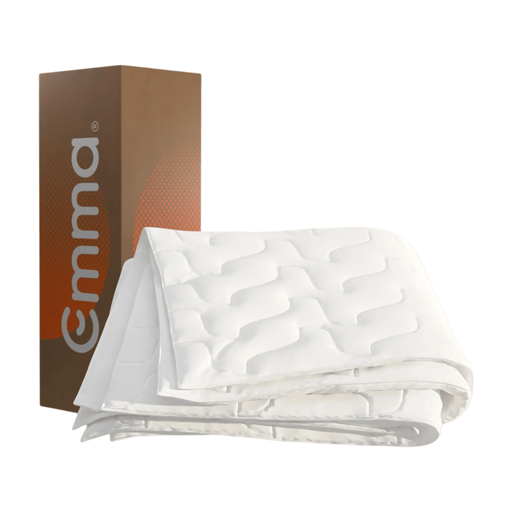
Why we love it: It's the ultimate all-in-one solution for those who value simplicity. Its 3-in-1 system is straightforward and adapts effortlessly to every season.
It avoids the "false modularity" trap with its two distinct, detachable duvets. You get true modularity for precise thermal comfort all year round.
Its ease of use (press-stud fastening) and its design from recycled materials, combining practicality with an eco-friendly touch.
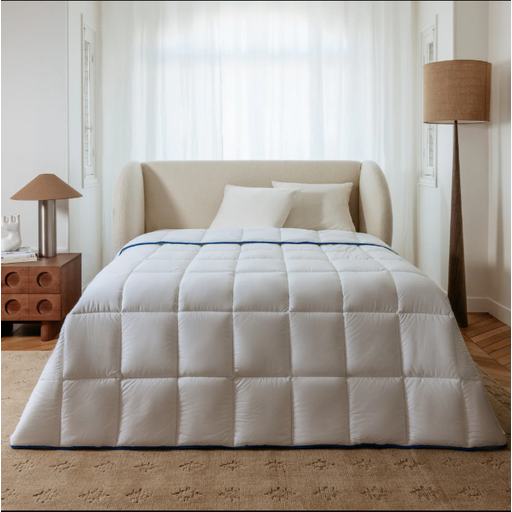
Why we love it: With its 100% polyester filling and cotton casing, this duvet is designed for those seeking a healthy and easy-to-maintain sleep environment.
It knocks out the trap of vague claims by displaying solid certifications: Oeko-Tex Standard 100, Certipur, and a Sanitized treatment, which guarantee its hypoallergenic and anti-dust mite properties.
Its siliconised hollow fibre filling ensures excellent breathability and easy care (machine washable), limiting the proliferation of allergens.
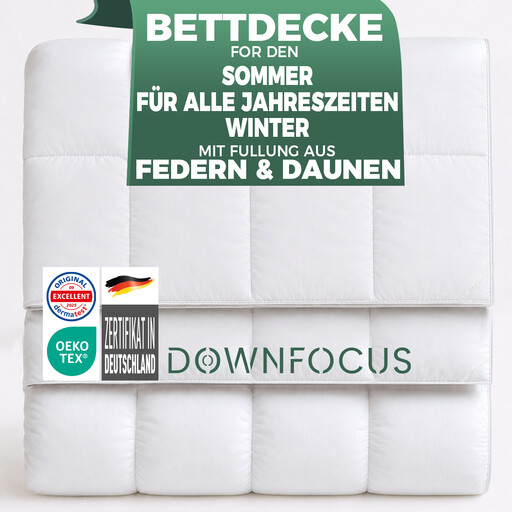
Why we love it: It combines the luxurious comfort and superior thermoregulation of a natural filling (90% feathers, 10% down) with the versatility of a 2-in-1 system.
It avoids the misleading fill weight trap by focusing on the quality of a natural filling certified by RDS (animal welfare) and Oeko-Tex. The warmth is authentic, breathable, and healthy.
A modular system (200 g/m? summer duvet + 450 g/m? mid-season duvet) that offers adaptable warmth and superior comfort thanks to the natural properties of down.
Discover our full selection of duvets that meet our quality criteria and the strictest safety standards.
1. How do I assemble and care for an all-season duvet? The two duvets are most often joined with press studs or ties located at the corners and along the sides. For care, always follow the instructions on the label. Synthetic duvets can generally be machine washed at 40?°C. For a natural duvet, choose a low-temperature wash or professional cleaning to preserve the down's loft. Remember to air it regularly to refresh it.
2. What is the lifespan of an all-season duvet? It all depends on the quality of the materials and the care you provide. A high-quality synthetic duvet can last for about 5 years. A natural duvet, if well-maintained, can retain its loft and properties for 10 years or even longer. Using the appropriate section for each season will also extend its longevity.
3. Is a natural duvet always warmer than a synthetic one? Not necessarily. Warmth depends on the filling's insulating power and its weight. High-quality duck or goose down has superior insulating power to polyester fibres, meaning it can offer the same level of warmth with less weight. However, a synthetic duvet with a very high fill weight (over 450?g/m?) will be very warm, but potentially less breathable than a down duvet. The final choice depends on how sensitive you are to the cold and whether you tend to sweat during the night.