
Livraison le jour même ou le lendemain

Qualité garantie

Débloquez vos offres de bienvenue: Livraison GRATUITE | Jusqu'à -80 % | 30 jours d'essai gratuits à JoyPlus
Téléchargez l'application
Juggling a summer duvet and a winter duvet is a hassle. The promise of a single all-season duvet, perfect all year round, is certainly appealing. But be warned: the market is flooded with models that fail to deliver, leaving you shivering in winter or sweating in summer. To avoid buyer's remorse, it's crucial to know how to sidestep the most common pitfalls.
Our editorial team's mission is to help you make an informed decision. Let's break down the mistakes to avoid and the criteria to check to find the perfect duvet for your needs.
To make the right choice, here are the technical specifications that truly matter. They determine the comfort, durability, and practicality of your future duvet.
A duvet's weight, expressed in grams per square meter (g/m?), measures the density of the filling and thus its insulating power.
The secret to a true all-season duvet? It often consists of two parts: a lightweight summer duvet and a mid-season one, which can be attached together to form a warm winter duvet.
The choice of filling affects the weight, insulating power, and maintenance.
The duvet's shell is crucial for comfort. Opt for natural materials like cotton, cotton percale, or cotton sateen. The tighter the weave (indicated by the thread count), the softer and more durable the duvet will be, and the better it will prevent the filling from escaping.
Finally, certifications are a reliable mark of trust:
Here are a few options that cater to different user profiles, taking into account quality and practicality.
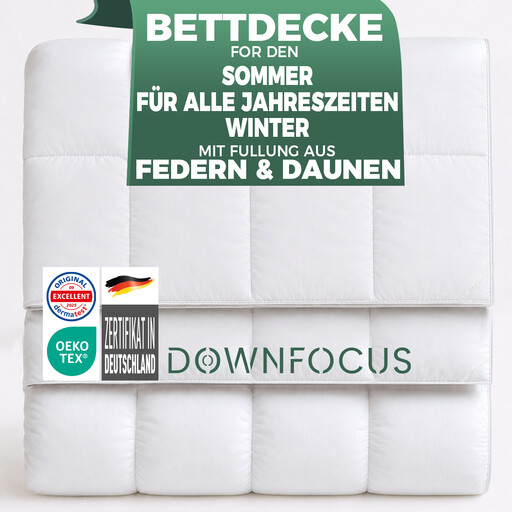
Why we chose it: This is the very definition of a modular all-season duvet. It offers total flexibility: a lightweight duvet for summer, another for mid-season, and the two clipped together to tackle the coldest winter nights.
It sidesteps the single-weight trap by offering two separate duvets (one 200 g/m? and one 450 g/m?), ensuring precise thermal comfort all year round.
Its winning combination: a natural feather and down filling certified by RDS (ensuring animal welfare) and an Oeko-Tex cotton shell for ethical and healthy comfort.
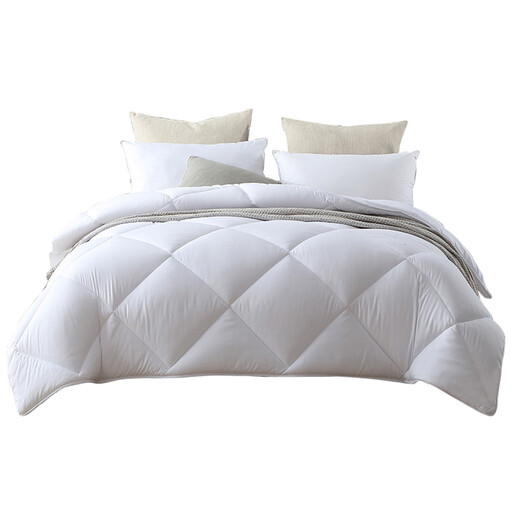
Why we chose it: This is the smart choice for anyone looking for a simple, effective, and budget-friendly solution. Its synthetic filling makes it easy to care for and ideal for those with sensitivities.
Its synthetic filling is naturally resistant to dust mites, making it a great ally for sensitive individuals. A simple machine wash is all it takes to ensure perfect hygiene.
Its value for money is unbeatable. Easy to live with and wash, it's the perfect choice for a first apartment or for hassle-free daily use.
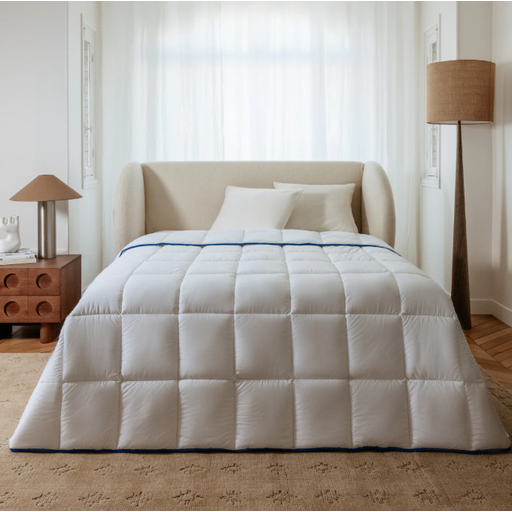
Why we chose it: Specifically designed for hot weather, it puts an end to restless nights thanks to its light weight and ultra-breathable cotton percale shell. The ideal complement to a winter duvet.
It defies the myth of the "all-season" duvet that often turns into an oven in the summer. Its low 250 g/m? weight and 100% cotton shell ensure optimal air circulation.
Its masterstroke: a cotton percale shell (91 threads/cm?) that combines softness and breathability. The STANDARD 100 by OEKO-TEX certification is your guarantee of sleep free from harmful substances.
Discover other models tested and approved by our editorial team, all of which meet our standards for quality and comfort.
The secret to longevity? Air out your duvet every morning and give it a good shake to restore the filling's loft. A duvet cover is essential to protect it. For washing, follow the label's instructions to the letter: a natural duvet requires different care than a synthetic one. If it's a modular design, remember to wash the two parts separately.
For a 160x200 cm bed, aim for a 220x240 cm duvet. This is the ideal size for a nice drape on each side and, most importantly, to avoid fighting over the covers at night! If you like to be really wrapped up, or if you move a lot in your sleep, the next size up (240x260 cm) is a welcome luxury.
Yes, for the same weight, a natural down duvet is unbeatable in terms of insulation and lightness. Its structure traps air like no other material. That said, high-end synthetic fibres have made huge advancements and now offer excellent thermal comfort. They also have the advantage of being hypoallergenic and much easier to care for. Ultimately, the choice depends on your budget, any allergies you may have, and the feel you're looking for (the feather-light weight of down or the practicality of synthetic).