
Livraison le jour même ou le lendemain

Qualité garantie

Débloquez vos offres de bienvenue: Livraison GRATUITE | Jusqu'à -80 % | 30 jours d'essai gratuits à JoyPlus
Téléchargez l'application
Choosing a car seat for your child is a critical decision. The promise of an all-in-one car seat that can grow with your child from birth to 12 years old is tempting. On paper, it's a single investment for a decade of peace of mind. However, the market is flooded with models making sometimes misleading claims, and it's easy to fall into common traps that can be costly in terms of both comfort and safety.
Our editorial team's mission is to help you navigate this complex choice. Let's review the mistakes to avoid and the essential criteria for making the right decision with confidence.
To ensure you don't make a mistake, here are the technical features that truly make a difference.
The i-Size (R129) standard isn't a marketing gimmick; it's a non-negotiable safety guarantee. It ensures:
An R129-certified seat is therefore an essential prerequisite for a purchase you can feel good about, especially for a model intended to last over a decade.
The ISOFIX system consists of two metal anchor points located between the seat cushion and backrest of your car's rear seat. The car seat clips directly onto them, creating a rigid connection to the vehicle's chassis.
Combined with a load leg (a telescopic support that rests on the car floor) or a "Top Tether" strap (which anchors to the back of the vehicle seat), it prevents the car seat from tipping or rotating during an impact. It's an infinitely more reliable solution than a seatbelt installation, which is often prone to user error.
A good all-in-one car seat must adapt not only to your growing child but also to your daily life as a parent.
birth to 12 years car seat) or a young schoolchild looking out the window.To help you move from theory to practice, here are a few models that meet specific needs while adhering to the safety and practicality criteria we've just established.
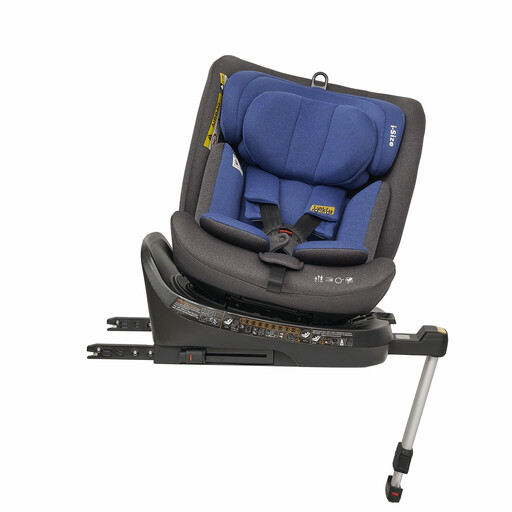
Why it's a great fit: This model is designed to be the one and only car seat you'll ever need. It covers the entire mandatory usage period, from birth (40 cm) to the legal limit (150 cm, or about 12 years), making it a perfect long-term investment.
It avoids the "fake" all-in-one trap with its 12 headrest heights and removable inserts, ensuring a comfortable space even for older children.
Certification i-Size R129, 360° rotation for effortless buckling, and ISOFIX installation with a load leg for maximum stability.
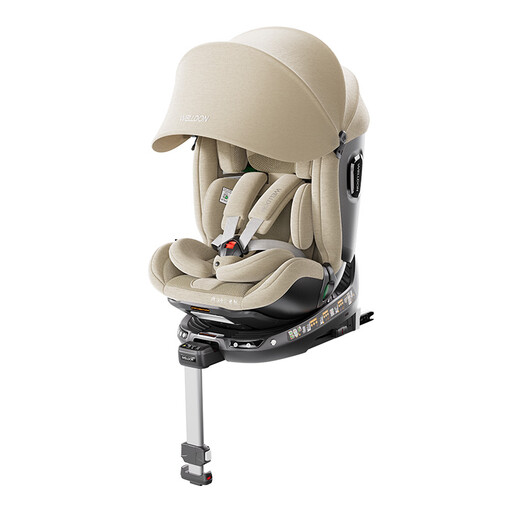
Why it's a great fit: For parents seeking advanced features, this seat incorporates technologies that go beyond the basic requirements. It's perfect for those who appreciate innovations that enhance comfort and monitoring.
It avoids the "useless gadget" trap by offering features with real added value. According to Welldon, its Hawk-Eye smart monitoring system provides real-time checks on proper installation (ISOFIX, load leg, etc.) via sound and light alerts.
Integrated ventilation system to reduce sweating, premium temperature-regulating fabrics, and installation monitoring via a Bluetooth app.
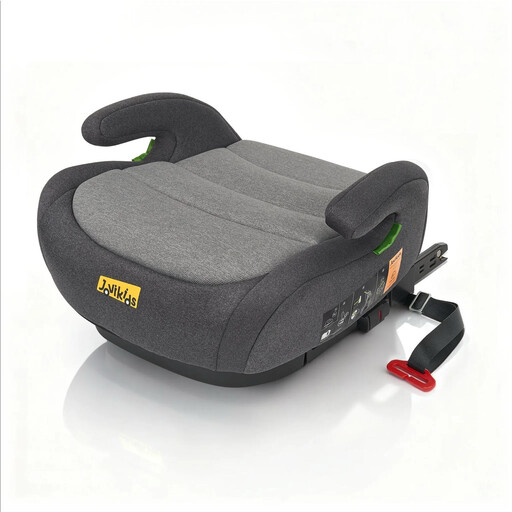
Why it's a great fit: This booster seat is the practical and safe solution for children who have outgrown a harness but are still too small for the vehicle's seatbelt alone. Its lightweight design makes it easy to transfer between cars.
It avoids the "too-good-to-be-true" trap by complying with the i-Size R129 standard. This ensures that even this simple booster seat meets the latest safety requirements for seatbelt positioning.
Quick and stable installation thanks to its ISOFIX connectors. Its feather-light weight makes it ideal for families with multiple cars or for grandparents.
We have curated a full range of products that meet our strict selection criteria and European safety standards.
Yes, provided it is i-Size (R129) certified and comes with a well-padded newborn insert. The insert ensures the baby is perfectly supported in a near-flat position, protecting their spine and airways. The mandatory rear-facing position remains the safest option for infants.
Most ISOFIX seats are universal or semi-universal. The best practice is to check the vehicle compatibility list provided by the seat manufacturer, which is usually available on their website. For models with a load leg, also verify that your car's floor does not have underfloor storage compartments that would prevent a stable base.
Manufacturers recommend replacing a car seat after 7 to 12 years, depending on the model. Why? Over time and with temperature fluctuations inside the car, the materials (plastics, expanded polystyrene) degrade and lose their shock-absorbing properties. The manufacturing date is always engraved or printed on a sticker on the seat.