
Livraison le jour même ou le lendemain

Qualité garantie

Débloquez vos offres de bienvenue: Livraison GRATUITE | Jusqu'à -80 % | 30 jours d'essai gratuits à JoyPlus
Téléchargez l'application
An all-hob wok should be suitable for use on induction, gas, electric or ceramic hobs, without becoming a chore to handle or clean. The problem is that some product listings blur the distinction between a genuine wok and a simple deep frying pan.
Before placing your order, three potential pitfalls deserve your full attention.
A wok that is compatible with gas and electric hobs is not necessarily suitable for induction. This technology requires a magnetic base, generally made from magnetic stainless steel or a multi-layer base.
Check the heat sources listed by the manufacturer carefully:
A 28 to 32 cm model is often suitable for a family, but a 30 cm wok can quickly become awkward to store in a narrow sink or small cupboard. For one or two people, a 24 cm wok frying pan will often be easier to handle.
A carbon steel wok heats up quickly and performs very well at high temperatures. However, without a coating, it must be seasoned before first use, then hand-washed, dried immediately and lightly oiled. Its surface changes over time: it may naturally become less prone to sticking, but the result depends greatly on seasoning and care.
A stainless steel or multi-layer stainless steel wok offers a stable construction and good resistance to scratches. Without a non-stick coating, however, it requires careful temperature control and enough oil to prevent food from sticking.
A non-stick wok or one with a ceramic coating makes it easier to cook eggs, fish and delicate vegetables. Avoid heating it when empty and use a soft sponge for cleaning. If you are looking for a PFAS-free wok, check the exact wording in the product listing: for the SENSARTE model featured below, this characteristic is stated by the manufacturer and is not an independent certification.
A wok with a lid is more versatile for simmering, braising, cooking noodles or retaining moisture in food. A glass lid lets you monitor the cooking without lifting it, but it remains vulnerable to thermal shock and drops.
For everyday use, also take the time to check:
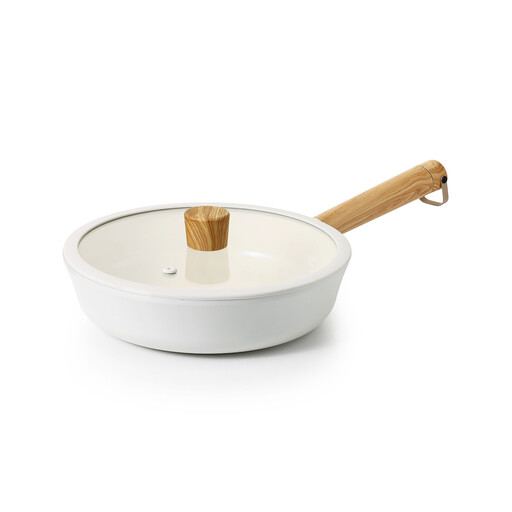
Why this choice suits this type of user : Its compact size is ideal for students, couples and small kitchens where every centimetre matters. The listing states that it is compatible with induction, gas, electric, ceramic and halogen hobs.
At 24 cm in diameter, it reduces the risk of choosing a pan that is too bulky for a small hob or narrow sink. The manufacturer recommends hand-washing and using non-abrasive utensils.
Ceramic coating stated to be free from PTFE and PFAS, magnetic stainless steel base and glass lid. The product information should still be checked before purchase.

Why this choice suits this type of user : Its three-layer 304 stainless steel construction and 30 cm diameter are aimed at households looking for versatile cookware for searing, stir-frying, simmering or frying.
Its flat magnetic base is stated to be compatible with induction, gas, electric and ceramic hobs. However, the textured surface should not be considered immune to sharp utensils.
304 stainless steel, ceramic coating stated to be non-stick, glass lid and insulated handle. Hand-washing is recommended.
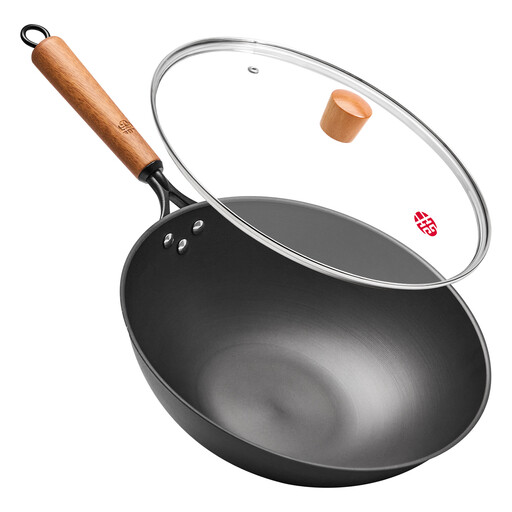
Why this choice suits this type of user : Weighing 1.17 kg, this wok is designed for people who regularly cook at high temperatures and want a surface without an applied coating.
Its flat base is stated to be compatible with gas, induction, electric and ceramic hobs. However, the listing specifies that seasoning and regular care are required.
1.5 mm carbon steel, stated nitriding treatment, glass lid and iron spatula included. Hand-wash only.
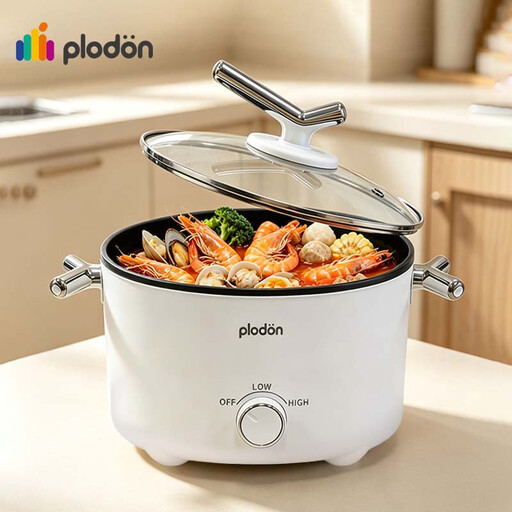
Why this choice suits this type of user : This compact appliance is aimed at students, people living in studio flats and anyone without a conventional hob.
It is not intended to replace a large traditional wok: its 2 litre capacity and low/high power settings make it primarily suited to individual portions and simple dishes.
Stated power output of 1 000 W, glass lid, detachable cord and a format suited to limited spaces. Always observe the stated filling limit.
We have put together a comprehensive, real-time selection of products that meet these demanding criteria and European safety standards.
For a carbon steel wok, initial seasoning is essential. Gradually heat the pan with a thin layer of oil, then allow it to cool, following the instructions provided. After each use, remove any residue, rinse with warm water, dry thoroughly on the hob and apply a light coating of oil.
With a non-stick or ceramic wok, avoid overheating it when empty, metal scourers and sharp utensils. Even when a product is described as easy to clean, hand-washing is generally preferable to protect the coating and handles.
Choose a model with a flat magnetic base and check that it explicitly states “induction” compatibility. For a household with several people, a diameter of 28 to 30 cm offers a good balance between capacity and storage space.
It requires a little more care than a non-stick model: seasoning, immediate drying and applying a thin layer of oil. In return, its surface without an applied coating is very well suited to high-temperature cooking, provided you follow the manufacturer’s instructions.
A lid can reduce heat loss during covered cooking, but energy consumption depends mainly on the hob’s power, cooking time, quantity prepared and setting selected. For an electric hot pot, also check the rated power and the different modes available.