
Livraison le jour même ou le lendemain

Qualité garantie

Débloquez vos offres de bienvenue: Livraison GRATUITE | Jusqu'à -80 % | 30 jours d'essai gratuits à JoyPlus
Téléchargez l'application
An all-hob frying pan should be suitable for use on induction, gas, electric and ceramic hobs. However, this marketing claim does not always guarantee practical everyday use. The diameter, base construction and type of coating all have a direct impact on cooking performance, maintenance and the pan’s lifespan.
Before comparing a non-stick frying pan, an induction frying pan, a stainless steel frying pan or a steel frying pan, it is worth keeping three common pitfalls in mind.
A frying pan may work on gas, electric and ceramic hobs without necessarily being compatible with induction. Induction generally requires a magnetic base. So check that the product listing explicitly mentions induction, rather than simply stating ‘all hobs’.
Also take care not to confuse ceramic and induction hobs: a ceramic hob heats up using a heating element and accepts more materials, provided that the base of the pan is completely flat.
Even a non-stick frying pan designed to stop food sticking can lose its properties if it is heated while empty, scrubbed with an abrasive sponge or used with unsuitable utensils. To protect a ceramic coating or treated surface, wood, silicone and nylon utensils are generally the best choice.
Claims such as ‘Teflon-free’ or ‘PFAS-free’ should be considered alongside the detailed information provided by the manufacturer. On their own, they are neither a general safety certification nor a guarantee of the product’s environmental impact.
A 20 cm frying pan is suitable for a single portion, cooking an egg or preparing a small side dish. The 24 cm size is more versatile for one or two people. For a family, a 28 cm or 30 cm frying pan provides more cooking space, but it will also be heavier and require a sufficiently large cooking zone.
When considering compliance claims, distinguish between the materials advertised and the supporting documentation actually available. For example, some product listings refer to the Chinese GB 4806.9 standard or to US FDA requirements. These indications correspond to the information declared for the product concerned; they are neither medical approval nor an independent guarantee.
A frying pan with a lid is particularly practical for simmering, reducing splashes and retaining heat. An induction-compatible wok measuring 28 to 30 cm is suitable for stir-fried vegetables, family meals and recipes requiring plenty of space. However, remember to check its weight with the lid on, as well as the space available in your cupboards.
Check whether the frying pan can be used in the oven, up to what temperature and whether its lid needs to be removed. A product listing may also state that the item is dishwasher-safe while recommending hand washing to help preserve the coating.
Always allow the frying pan to cool before cleaning it, avoid thermal shock and dry steel or iron models thoroughly.
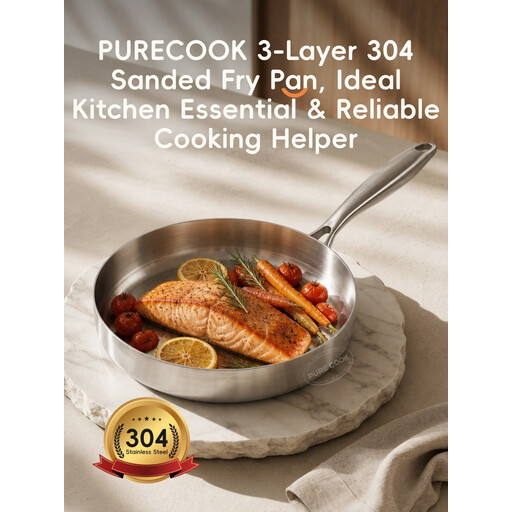
Why this choice suits this profile : Its compact size is ideal for small portions and kitchens where every centimetre counts. Its 304 stainless steel construction with an aluminium core is advertised as compatible with induction, gas and other common heat sources.
The listing details the materials and compatible heat sources rather than relying on a general promise.
20 cm size, three-layer construction and a smoothed rim for easier handling and cleaning.
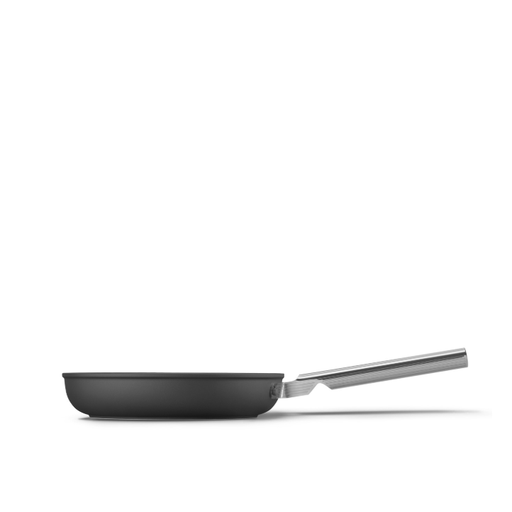
Why this choice suits this profile : This model combines a versatile diameter, a ceramic coating advertised by the brand as PFAS-free, and a base compatible with induction, gas and electric hobs.
The listing specifies the maximum oven temperature, compatible hobs and recommends hand washing.
24 cm diameter, stainless steel handle and advertised oven compatibility up to 250 °C.
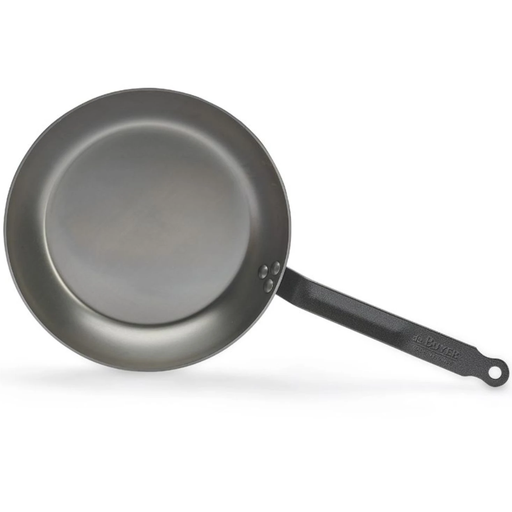
Why this choice suits this profile : This 3 mm iron frying pan is designed for cooks looking for a surface that improves with use and who are happy to season it and carry out regular maintenance.
The listing clearly states that the pan should be dried, oiled and seasoned to reduce the risk of rust.
3 mm thickness, 28 cm diameter and advertised induction compatibility.
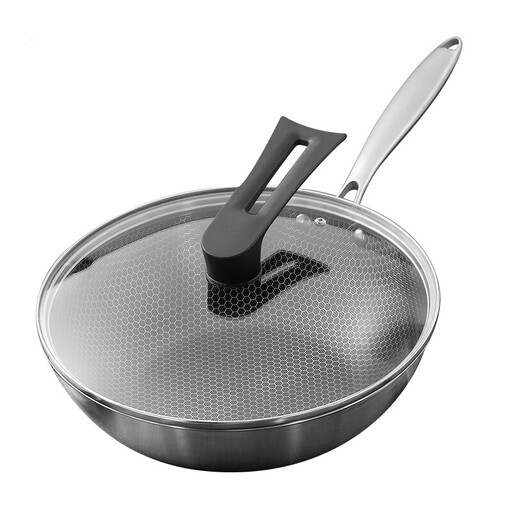
Why this choice suits this profile : With its 30 cm diameter and advertised 4.7 l capacity, it is suitable for family meals, stir-fries, one-pot dishes and steaming.
The listing distinguishes between the magnetic stainless steel, aluminium and 304 stainless steel layers, then states compatibility with gas, induction, electric hobs and ceramic hobs.
Wok with a toughened glass lid, silicone-coated handle and a design advertised as splash-resistant.
We have put together a complete, real-time updated selection of products that meet these demanding criteria as well as European safety standards.
No. Look for an explicit statement confirming induction compatibility or for a magnetic base. An adapter, such as the 20 cm Belissam disc, may allow you to use some non-magnetic cookware. However, it is designed exclusively for induction hobs and becomes very hot during use.
A 28 cm frying pan is generally suitable for meals for several people. For larger portions or stir-fried dishes, a 30 cm model or an induction-compatible wok will provide more capacity. Nevertheless, measure your cooking zone and check that the base of the frying pan covers it properly.
Cook over a moderate heat, avoid leaving the empty pan on the hob for too long and avoid metal utensils when recommended by the manufacturer. Hand washing with a soft sponge also helps preserve the ceramic or non-stick coating. For a steel frying pan, immediate drying and applying a thin layer of oil remain essential.