
Livraison le jour même ou le lendemain

Qualité garantie

Débloquez vos offres de bienvenue: Livraison GRATUITE | Jusqu'à -80 % | 30 jours d'essai gratuits à JoyPlus
Téléchargez l'application
An all-hob cookware set needs to work with your current hob, while also suiting your cooking habits. Gas, electric, ceramic, halogen or induction: the simple marketing claim isn't always enough. Compatibility can depend on whether there's a magnetic base, the use of an adapter disc, or certain temperature limits.
Before buying a pot, a lidded casserole dish or a stainless steel saucepan, check three things: actual compatibility, the material and the capacity. This approach will help you avoid impractical purchases, fragile coatings and utensils that are too heavy for everyday use.
A pot that works on gas and electric hobs won't necessarily work on an induction hob. This technology generally requires a base containing a magnetic material. You can hold a magnet to the underside of the pot for a quick check, but the product page remains the most reliable source.
Some borosilicate glass models are advertised as induction-compatible only with a compatible adapter disc. Without this accessory, the hob may not detect the utensil.
A 2 to 2.5-litre pot is fine for sauces, small soups or two portions. For a family, a capacity of 4 to 6 litres offers more versatility: you can cook pasta, a stew or a soup without filling the pot to the brim.
However, a large family pot takes up more space and becomes heavy when full. The diameter also needs to match the cooking zone to minimise heat loss.
A non-stick pot makes cleaning easier, but its coating requires some care. Metal utensils, abrasive sponges and heating when empty can speed up its deterioration. Check the washing instructions and stop using the product if the coating starts to peel.
On the other hand, a stainless steel pot or an uncoated stainless steel saucepan generally resists scratches better. However, it requires more precise temperature control to prevent food from sticking.
Look for an explicit statement of compatibility with induction, gas, electric, ceramic and halogen. An encapsulated or multi-layer base promotes more even heat distribution. For an all-hob pot intended for daily use, this type of base is often more practical than a very thin one.
If you use an induction hob, also check the minimum diameter your appliance can detect. A 30 cm pot may be too wide for a small cooking zone.
Claims like "PTFE-free", "PFAS-free" or "PFOA-free" should be interpreted in the context of the specific product page. They don't replace the usage instructions.
A lidded casserole dish with a glass lid lets you monitor cooking without lifting the lid. Silicone handles can improve grip, but they shouldn't be exposed directly to flames. For an oven-safe casserole dish, check the maximum temperature supported by the pot, lid and handles separately.
A pot equipped with a steamer basket or a perforated basket gains versatility for cooking vegetables, pasta and certain fried foods. On the downside, the accessory takes up cupboard space and needs to remain stable enough when loaded.
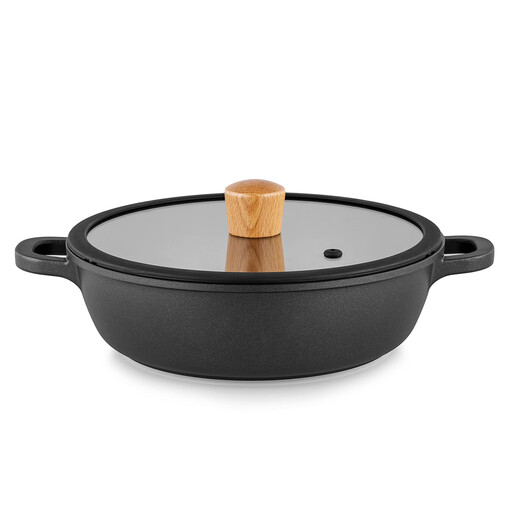
Why this choice suits this profile: This versatile size is ideal for preparing stews, curries, stir-fries and simple meals on an induction hob or gas.
The product page states compatibility with induction and gas, and includes a glass lid. However, the coating requires the use of non-metal utensils.
28 cm diameter, toughened glass lid and cleaning stated as dishwasher-safe.
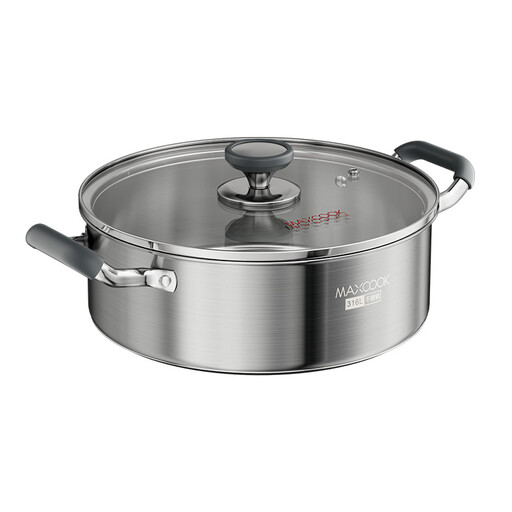
Why this choice suits this profile: Its capacity is ideal for large quantities and meals with several guests. Its stainless steel construction includes a conductive base.
The composite base is stated as compatible with gas, induction, electric, ceramic and halogen. However, hand washing is recommended.
Stated 316L stainless steel, glass lid and handles with silicone protection.
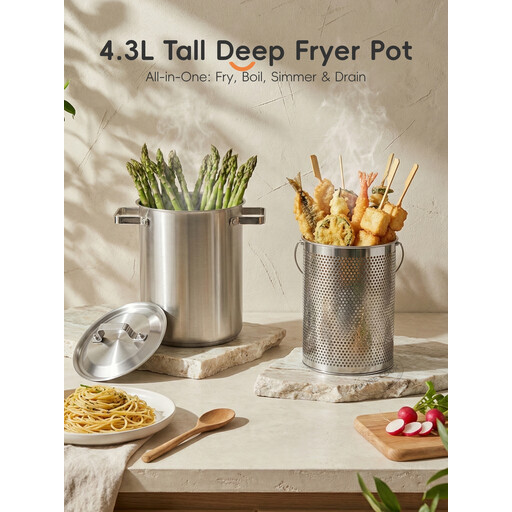
Why this choice suits this profile: Its removable perforated basket is ideal for those who alternate between frying, cooking pasta, blanching vegetables and preparing soups.
The 4.3-litre capacity and integrated basket clarify its purpose. For deep frying, keep an eye on the oil and avoid overfilling the pot.
304 stainless steel, magnetic composite base and stated compatibility with gas, induction and ceramic hobs.
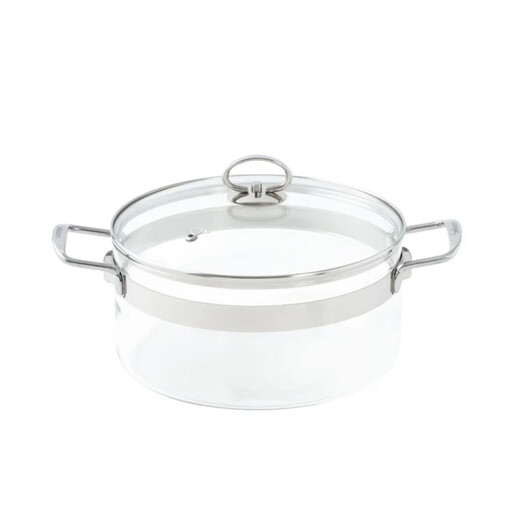
Why this choice suits this profile: The transparent glass lets you monitor cooking at a glance, while the capacity is suitable for soups, pasta and vegetables for several people.
The product page specifies oven use up to 180 °C and induction compatibility using the MC60090 disc. Thermal shock and direct flame should be avoided.
Non-porous borosilicate glass, integrated pouring spout and lid included.
We've put together a comprehensive, real-time updated list of products that fully meet these strict selection criteria and European safety regulations.
The lifespan depends mainly on the material and your care habits. For a stainless steel pot, dry the inside after washing to minimise water marks. Diluted vinegar can help remove certain white marks, but don't use a metal scourer.
For a non-stick pot or one with a ceramic coating, use a soft sponge and a moderate temperature. A borosilicate glass pot must have cooled completely before cleaning. Finally, an oven-safe casserole dish should be handled with oven gloves and placed on a heat-resistant surface.
No. The product page must explicitly state induction compatibility, or the manufacturer must provide an adapter disc. The material and design of the base determine whether the hob can detect the utensil.
For everyday meals, a capacity of 4 to 5 litres offers a practical compromise. A 6-litre pot or larger is suitable for large quantities, preserving and family meals, but it becomes heavier when full.
Only if the product is stated as oven-safe. Check the maximum temperature supported, as well as the materials of the lid, handles and any silicone components.