
Livraison le jour même ou le lendemain

Qualité garantie

Débloquez vos offres de bienvenue: Livraison GRATUITE | Jusqu'à -80 % | 30 jours d'essai gratuits à JoyPlus
Téléchargez l'application
Airtight glass food storage containers are useful for all sorts of everyday tasks: storing leftovers, preparing meals in advance, taking your lunch with you or organising cupboards. However, some purchases quickly become disappointing when the lid leaks, the sizes do not stack neatly or the container cannot handle the temperature changes promised.
Before choosing a set of glass food storage containers, it is therefore best to separate genuinely useful features from purely marketing-led claims.
Simply placing a lid on top does not guarantee a leakproof seal. If you plan to carry soup, sauce or a meal in the car, check that it has a proper closure system, such as clips, a seal or a locking mechanism. The lid should also be easy to clean, as removable seals can trap food residue.
The term “heat-resistant glass” does not mean that every part of the product can be used in the oven. The lid, in particular, may have different limitations from the container. Borosilicate glass is often preferred for its thermal resistance, but it is still essential to follow the manufacturer’s instructions and avoid thermal shock.
Glass meal prep containers are generally heavier than their plastic equivalents. A large size is handy for storing a family meal, but less convenient to carry in a bag. Smaller containers make it easier to portion individual servings, but take up more space if they have not been designed to stack.
If you want to use a container in the fridge, freezer, microwave or oven, check the stated compatibility for each model. A container described as a microwave- and oven-safe food storage container should always be used within the limits specified on its product page.
Borosilicate glass is used in several models in this selection. As a non-porous material, it generally helps limit the retention of odours and stains, depending on the product’s design. However, avoid plunging a very hot container into cold water or placing it straight in the fridge or freezer. Allow it to cool gradually to room temperature.
Choose the size to suit your habits:
Stackable containers are especially practical when their dimensions are coordinated. Also check whether the lids can be stacked separately and whether each size is easy to identify.
The closure system should suit how you plan to use the container: everyday transport, storing dry foods or keeping meals with sauces. Check whether the lid is removable, dishwasher-safe and compatible with the microwave or oven. Inspect the glass and seals regularly. A crack, chip or deep scratch is a reason to stop using the container.
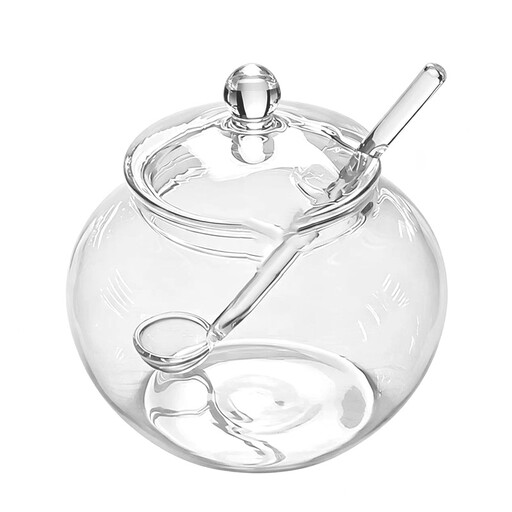
Why this choice suits this profile : With its 350 ml capacity, this compact size is ideal for small quantities, condiments, individual preparations and first-time use of glass food storage containers.
A clearly defined capacity helps you avoid choosing a large container for a small portion. The supplied lid and spoon are suited to a specific, focused use.
350 ml capacity, lid and spoon included.

Why this choice suits this profile : This 0.8 litre container lets you prepare, store and reheat food, making it a practical way to reduce the number of containers in your kitchen.
This model is advertised as suitable for the fridge, freezer, microwave, oven and dishwasher. However, precautions against thermal shock remain essential.
Non-porous borosilicate glass, 0.8 litre capacity, stackable rectangular shape.
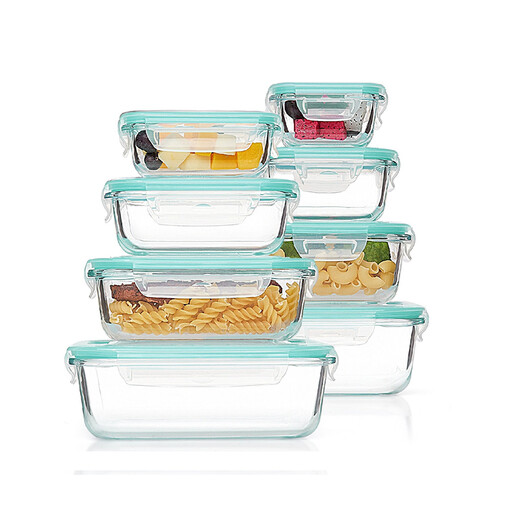
Why this choice suits this profile : The eight sizes, from 150 ml to 1 040 ml, let you adjust portions for batch cooking, packed lunches and family storage.
The range of sizes helps you avoid ending up with containers that are too large or too small. The rectangular shape also makes fridge storage easier.
Set of 8 containers, borosilicate glass, graduated capacities and rectangular design.
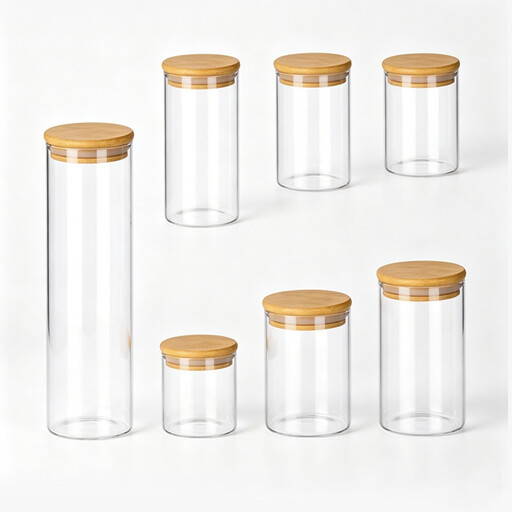
Why this choice suits this profile : The seven sizes, from 431 ml to 2 178 ml, are suitable for storing pasta, cereals, pulses and other dry foods.
The different capacities help you avoid transferring a small quantity into an oversized jar. The transparent design also lets you see quickly how much is left.
Set of 7 jars, sizes from 431 ml to 2 178 ml, designed for cereals and other dry foods.
We have brought together a complete, real-time updated selection of products that meet these exacting criteria while complying with European safety regulations.
No, unless the manufacturer explicitly permits it and provides precise instructions. Moving the container suddenly from extreme cold to a hot oven can cause thermal shock and crack the glass. Allow the container to return gradually to room temperature and consult the instructions for the specific model.
Some models are suitable for use in the microwave. However, remove the lid or leave it slightly ajar if it is not designed for reheating, to prevent pressure from building up. Metal parts and accessories not intended for microwave use must also be removed.
For an individual lunch, a capacity of 500 to 800 ml is a good starting point, to be adjusted according to your appetite and the type of meal. Sizes of at least 1 litre are more suitable for family portions or preparing several meals. For sauces, fruit or side dishes, a small 150 to 400 ml jar may be sufficient.