
Livraison le jour même ou le lendemain

Qualité garantie

Débloquez vos offres de bienvenue: Livraison GRATUITE | Jusqu'à -80 % | 30 jours d'essai gratuits à JoyPlus
Téléchargez l'application
An airtight lunch box needs to withstand daily commutes, the occasional rough handling, and temperature changes between the kitchen, fridge and bag. Yet product descriptions often highlight leak-proofing or durability without specifying the conditions under which these promises actually hold true.
To avoid a disappointing purchase, focus on four key areas: the closure system, the material, the capacity, and the usage limits. A lunch box for a child won't necessarily meet the same needs as one intended for office lunches or batch-preparing several portions.
A press-on lid can prevent splashes without being designed to carry soup or a liquid sauce. A genuinely airtight box needs a properly positioned seal and a closure system capable of maintaining even pressure on the lid.
Before you fill your box, check that the seal is removable, that the lid closes easily, and that the container can stay upright at the bottom of your bag. Even a model marketed as airtight can leak if the lid isn't clipped on properly or if the seal is dirty.
Stainless steel and some plastic lids cannot go in the microwave. Borosilicate glass may, depending on the manufacturer's instructions, be suitable for the oven and microwave, but that doesn't mean its lid can be placed in there too.
Don't rely on the product's appearance alone. Check the instructions specifically for the microwave, oven, freezer, fridge and dishwasher. For reheating your lunch at the office, a glass box can be more practical than a stainless steel one, provided you're happy with its weight and relative fragility.
A capacity of 900 ml doesn't mean the box will take up little space. A rectangular shape often fits more easily into a rucksack or bag, while a taller model can be handy in the fridge but less stable during transport.
For a school lunch box, measure the available space in the bag and check the empty weight. At work, also consider the space in the shared fridge and the storage needed after washing.
A compartmentalised lunch box stops dry and wet foods from mixing together. It works well for sandwiches, vegetables, fruit and separate accompaniments. On the downside, fixed dividers can reduce the space available for a bulky dish.
A stainless steel lunch box generally stands up well to everyday knocks, but it can't go in the microwave. 18/8 or 316L stainless steel is often chosen for its corrosion resistance; it's best, however, to follow the manufacturer's washing recommendations.
A glass lunch box lets you see what's inside and can, depending on the model, go from fridge to oven or microwave. Avoid thermal shock, though, and inspect the container regularly. Chipped or cracked glass should no longer be used.
Plastic appeals for its lightness – a real advantage for children and for taking food on the go. Check the food-contact information, heat resistance and dishwasher compatibility. Complex lids can trap residue in their grooves or around the seal.
A lid attached to the base reduces the risk of losing it, especially on a lunch box for a child. The clips should be simple to operate, yet firm enough to prevent accidental opening. For young children, stick to the recommended age and check the condition of small parts regularly.
After each use, take apart any removable parts when the manufacturer advises it. Rinse the seal, dry each piece separately and avoid closing the box while it's still damp. This routine helps prevent lingering odours in a food storage container.
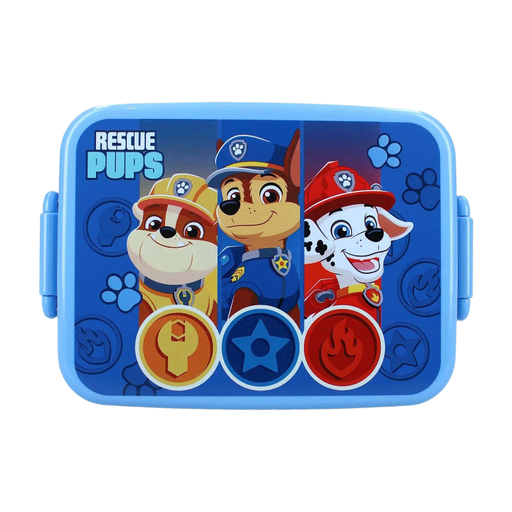
Why this choice suits this profile: With its dimensions of 16 × 13 × 5 cm and light weight, it's ideal for small meals, days out and first school lunch boxes from age 3.
The press-on closure is simple to check. However, hand washing and the lack of microwave compatibility are things to consider before buying.
Compact size, durable plastic, press-on closure and a design children love.

Why this choice suits this profile: Its 0.8-litre capacity is ideal for individual portions, leftovers and meal prep. According to the manufacturer's instructions, it can go in the fridge, freezer, oven or microwave.
The material and permitted uses are clearly stated. However, you should avoid thermal shock and never use a cracked container.
Non-porous borosilicate glass, stackable rectangular shape and dishwasher-safe.
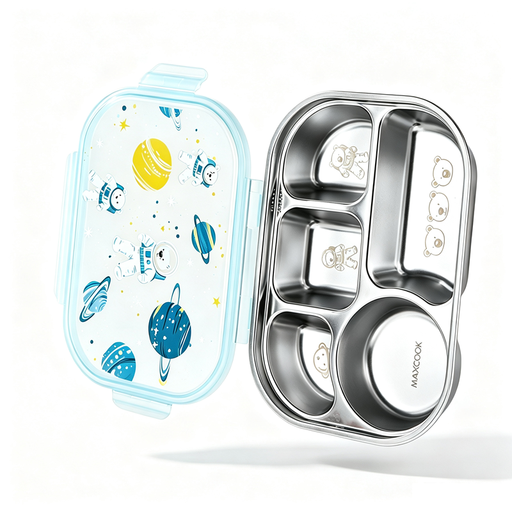
Why this choice suits this profile: Its five compartments are ideal for composed meals, portion prep and picnics where several foods need to stay separate.
The four clips help keep the lid in place. Its limits are clearly defined: no microwave or oven, and hand washing is recommended.
316L stainless steel, five compartments and removable lid with clips.
We've put together a comprehensive, real-time updated selection of products that meet these exacting criteria as well as European safety standards.
For school, go for a school lunch box that's light, easy to open and compact enough. At the office, capacity, stability and microwave compatibility may become priorities. For a picnic, focus on the quality of the closure, impact resistance and how easy it is to carry.
A lunch box without compartments works well for sandwiches and simple portions. A bento box or a compartmentalised box will be better suited to composed meals. For organising ingredients at home, an assortment of boxes in different sizes can be more practical than a single large container.
Yes, but only if the manufacturer clearly states that the closure is leak-proof and suitable for liquids. Don't exceed the fill line, check the condition of the seal and transport the box upright. A simple press-on lid doesn't necessarily guarantee no leaks.
Stainless steel is good for taking food on the go and resists knocks, but it's generally not microwave-safe. Glass makes reheating easy and doesn't hold onto odours, but it needs more care. Plastic is light and practical for children, as long as you respect the temperature limits and care instructions.
Wash it after every meal, dry the seal thoroughly and check regularly for cracks, warping or loose clips. Avoid abrasive products and unauthorised temperatures. As soon as a part no longer closes properly or shows signs of wear, replace it to reduce the risk of leaks.