
Livraison le jour même ou le lendemain

Qualité garantie

Débloquez vos offres de bienvenue: Livraison GRATUITE | Jusqu'à -80 % | 30 jours d'essai gratuits à JoyPlus
Téléchargez l'application
An airtight glass jar makes it easier to store dry foods, prevents open packets from being left lying around and makes your cupboards much easier to keep organised. But not all models are created equal, nor do they meet the same needs. An attractive lid, a large capacity or simply the word ‘airtight’ does not necessarily guarantee practical everyday use.
Before placing your order, here are the main pitfalls to avoid, the criteria to consider and a selection of glass storage jars suited to different uses.
A lid simply placed on the container may be sufficient for short-term use, but it does not necessarily protect the contents from air and moisture. For cereals, rice, pasta, coffee or dried fruit, choose a seal with a gasket, a clip-top lid or a system clearly described as airtight.
Also make sure the lid stays securely in place when you move the jar. A poorly designed closure can quickly cause a leak or spill inside a drawer or cupboard.
A large container is not always the most practical option. A 1.2-litre jar takes up more space and can become difficult to handle once full. Conversely, a small size is ideal for spices or seeds, but means using several containers for foods you consume regularly.
To choose a kitchen storage jar, compare its capacity with the quantities you actually use. Sizes from 350 to 600 ml are generally suitable for ground coffee, sugar, spices or nuts. Models from 630 to 1 200 ml are better suited to pasta, rice, cereals and dry foods bought in larger quantities.
Borosilicate glass handles temperature changes better than some standard types of glass. However, this does not mean that every jar can go straight from the freezer into the oven or be filled with boiling liquid.
Permitted uses depend on the model. Always consult the product details and the manufacturer’s recommendations. Even when a container is advertised as suitable for the oven, freezer or microwave, avoid sudden temperature changes and check the condition of the glass before each use.
Glass is non-porous and absorbs few odours or stains. This is a real advantage when the same container is used in turn for coffee, sugar or spices. Borosilicate glass may be a good choice if the manufacturer specifies increased resistance to thermal changes, but this material does not remove the need to follow the usage precautions.
Also check the information relating to food contact, the lid material and whether a silicone seal is included. A transparent jar with a lid lets you check the contents and see how much is left at a glance.
For storing dry foods, three points deserve particular attention:
Wooden lids add a warm, decorative touch, but they generally require special care. They often need to be washed by hand and dried promptly. Lids that are fully dishwasher-safe are easier to live with in a busy kitchen, provided the product details allow it.
Square or rectangular jars are easy to line up on a shelf and make better use of certain spaces. Round models are comfortable to hold and fit easily on a worktop. Before buying, measure the depth of your cupboards, taking into account the height of the lid and the space needed to take hold of the container.
Wash the jar before using it for the first time. To preserve the glass’s clarity and the seal’s effectiveness, dry it completely before filling it. A container that is cracked, chipped or fitted with a misshapen lid should be replaced.
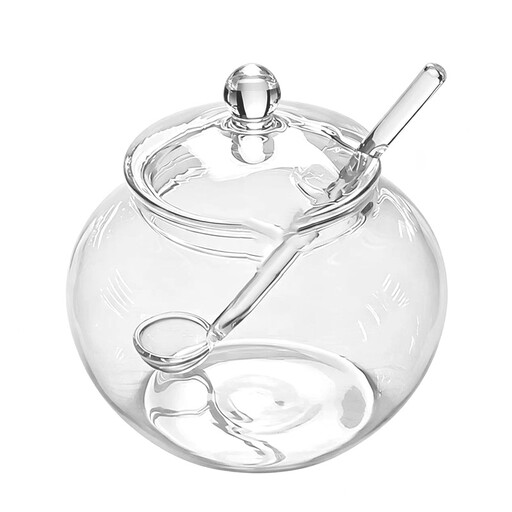
Why this choice suits this profile : its compact size is ideal for starting to organise a worktop, particularly for sugar, spices or small quantities of dry foods.
Its small capacity reduces the risk of choosing a bulky container that is difficult to fill regularly.
350 ml capacity, with lid and spoon included according to the product details.

Why this choice suits this profile : its textured glass and acacia lid look equally at home on an open shelf or on a worktop where style matters.
The product details clearly distinguish between washing the glass and caring for the wooden lid by hand, reducing the risk of incorrect use.
750 ml capacity, textured borosilicate glass, food-grade silicone seal and acacia lid.

Why this choice suits this profile : its advertised compatibility with the oven, freezer, microwave and dishwasher makes it suitable for a kitchen where storage and reheating alternate.
The permitted uses are detailed in the product information, but sudden temperature changes should still be avoided.
630 ml, borosilicate glass, clip-top closure and advertised compatibility with several appliances.
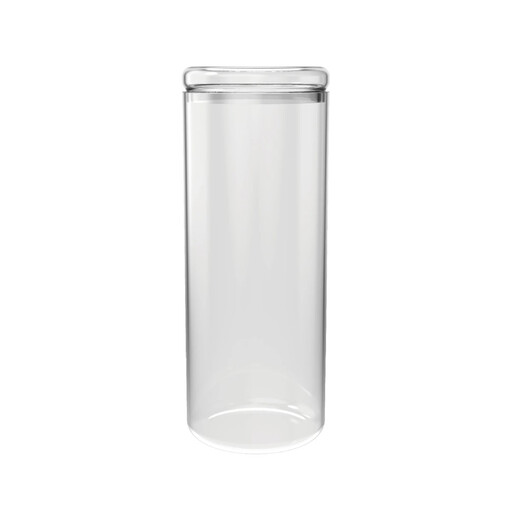
Why this choice suits this profile : its capacity is ideal for households that regularly store rice, pasta, coffee, sugar or cereals.
Its large size reduces the need for multiple small containers while keeping the food clearly visible.
1 200 ml capacity, transparent borosilicate glass, airtight lid and tall format measuring 23.5 × 9 cm.
We have put together a complete, real-time updated list of products that fully meet these strict selection criteria and European safety regulations.
To create a cohesive set of glass jars, group the containers according to their purpose rather than simply by appearance. Keep products you use every day at eye level and store larger sizes on easily accessible shelves.
Add a label showing the food’s name and, if necessary, the date it was opened. This habit is still useful even with a transparent jar. Above all, avoid filling a container while it is still damp: residual moisture can spoil dry foods.
Clean wooden lids in accordance with the manufacturer’s recommendations. Seals and closures must be kept clean to maintain consistent airtightness. Finally, hold filled jars with both hands and only stack them if their shape is designed to allow this.
Yes, a small jar can be ideal for spices, seeds, sugar or ground coffee. Choose a lid with a seal and check that the opening makes it easy to fill and measure out the contents. To preserve the flavours, keep the jar away from heat and direct sunlight.
It depends on the model. Some containers are advertised as suitable for the microwave or oven, while others are designed solely for storage. Always remove any parts that are not intended to withstand heat, particularly certain lids, and avoid thermal shock. The product details should be followed rather than applying a general rule about borosilicate glass.
Glass does not wear out like a flexible material, but it can crack or break following an impact. Its lifespan therefore depends on how you handle and store it, as well as the condition of the lid. Replace the container at the first sign of a chip and check the seal regularly, especially if the closure becomes less airtight.