
Same-day & Next-day Delivery

Quality Guaranteed

Unlock Your Welcome Offers: FREE Delivery | Up to 80% OFF | Free 30-day JoyPlus trial
Download the APP
Buying an airtight glass jar? It seems simple enough. But we've all been there: wrestling with a lid that won't seal, finding our food has lost its crunch, or discovering a crack in the glass after the first wash. For a pantry organisation system that actually works, it's crucial to see past the marketing gimmicks and focus on what really matters.
As a Product Expert at Joybuy, I'm here to help you see things more clearly. Let's forget the jargon and empty promises and concentrate on the criteria that truly make a difference. Together, we'll break down the two most common mistakes to avoid and the technical points to check for a purchase you won't regret.
To make your kitchen a model of organisation and preservation, three points are non-negotiable. This is what separates a simple glass food container from a true everyday ally.
The jar's material is the primary indicator of quality. While most containers are made of glass, not all are created equal.
The airtightness of your glass storage jar depends entirely on its closure system. Here are the most common options:
Beyond the materials, the shape of the jar influences its day-to-day use.
There's a solution for every need. Whether you're looking to organise your pantry, beautify your countertop, or store small quantities, here are options that cater to specific uses.
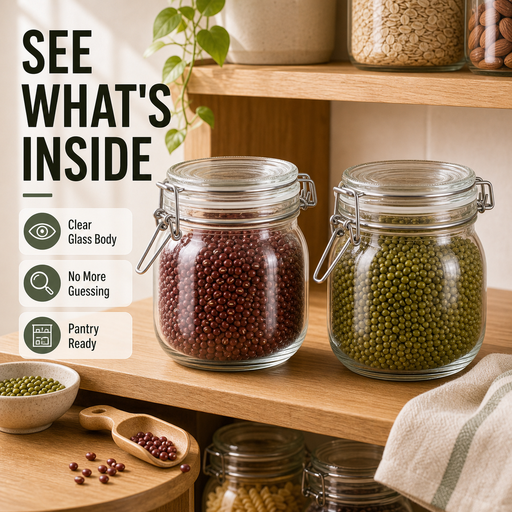
Why we chose it: Ideal for those who prioritise efficiency and durability for their pantry. This set of glass jars is built for heavy-duty storage of dry goods (rice, pasta, legumes).
Its stainless steel clip closure and thick, food-grade silicone gasket provide constant pressure for a foolproof seal, neatly avoiding the "pseudo-airtight" trap.
The borosilicate glass body resists thermal shock and won't retain stains or odours. The removable gasket ensures impeccable cleaning.

Why we chose it: For those who want their glass kitchen jars to be as beautiful as they are functional. This model combines a refined aesthetic with a genuine preservation function for dry foods.
Its acacia wood lid features a food-grade silicone gasket, ensuring a seal tight enough for dry goods (coffee beans, nuts, pasta), a far cry from purely decorative and ineffective gadgets.
Its antique-inspired design, with hammered glass and a natural wood lid, makes it a decorative object that enhances any countertop or open shelving.
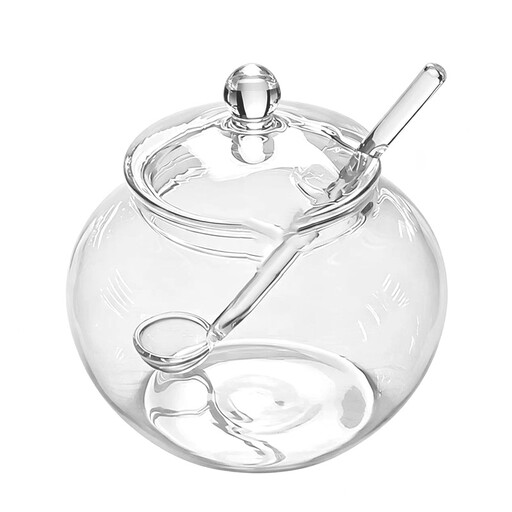
Why we chose it: Perfect for keeping small quantities of ingredients within easy reach: sugar, salt, spices, or even homemade jam. The integrated spoon is the detail that changes everything.
Rather than offering an ill-suited large format, this jar meets a specific need. Its gasketed lid is perfect for daily use and rapid ingredient turnover.
The spoon nested in the lid is the ergonomic asset that makes all the difference on a countertop or breakfast table. Its small footprint (350 ml) is perfect for saving space.
We have curated a complete range of products that meet these quality criteria and food safety standards.
The simplest test: fill the jar with water, close it, and turn it upside down. If it doesn't leak, that's a good sign. For air-tightness, place a very fragrant food (like freshly ground coffee) inside. If you can't smell anything from the outside after a few hours, the seal is doing its job.
The glass body, especially if it's borosilicate glass, is generally dishwasher-safe. However, lids (especially those made of wood or with metal parts) should be hand-washed to prevent damage, rust, or warping. Always check the manufacturer's recommendations.
Yes, its resistance to thermal shock is significantly higher than that of soda-lime glass. This means you can pour a hot liquid into a cold jar (within reason) or put it in the microwave (if the manufacturer indicates it's safe) with almost no risk of breakage. It is also less porous, making it more hygienic and resistant to stains.