
Livraison le jour même ou le lendemain

Qualité garantie

Débloquez vos offres de bienvenue: Livraison GRATUITE | Jusqu'à -80 % | 30 jours d'essai gratuits à JoyPlus
Téléchargez l'application
Better food preservation, less waste, and a stylishly organised kitchen: these are goals many of us share. As the push against plastic gains momentum, the airtight glass jar has emerged as the quintessential healthy and sustainable alternative. But with different types of glass, sealing mechanisms, and designs, the choice can quickly become overwhelming.
This guide is here to help you make sense of it all. We'll break down the essential criteria and present a selection of products to help you find the perfect glass storage container for your daily needs, whether for storing dry goods or prepping meals in advance.
Before you start shopping, there are a few technical points to consider. These are the details that will make all the difference in terms of effectiveness and versatility.
An airtight seal is the number one criterion. A quality gasket ensures your food stays protected from air and moisture, which extends its freshness and preserves its flavours.
Be aware that not all glass is created equal, especially when it comes to resisting temperature changes.
Think about how you'll use your jars. A variety of container sizes will allow you to store everything from spices to pasta or flour. Opt for square or rectangular shapes: they are often stackable, a major advantage for optimising space in your cupboards or fridge.
To put theory into practice, here are a few models that stand out for their design and utility.
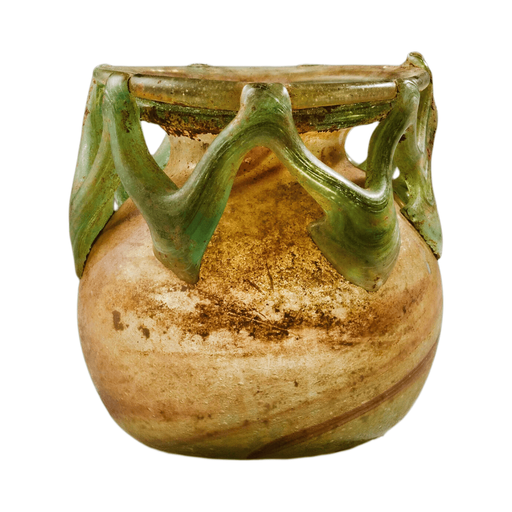
Why we love it
This jar blends aesthetics with practicality. Its design, inspired by Roman amphorae, with its hammered borosilicate glass body and natural acacia wood lid, makes it more than just a container: it's a true decorative piece. The kind of jar you won't want to hide away in a cupboard.
The pros
Who is it for?
For kitchen aesthetes looking for a food storage jar that is as beautiful as it is practical, ideal for proudly displaying dry goods (nuts, coffee beans, pasta) on a shelf or countertop.
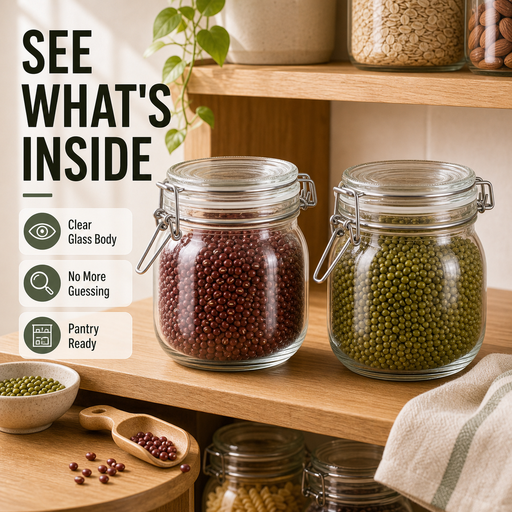
Why we love it
The focus here is all on robustness and efficiency. The closing system with stainless steel clips and a thick silicone seal ensures a foolproof closure, designed to last and perfectly protect food from air and moisture.
The pros
Who is it for?
For those who swear by reliability and want a versatile clip-top jar for flawless long-term storage, whether for kitchen organisation or preserving homemade creations.
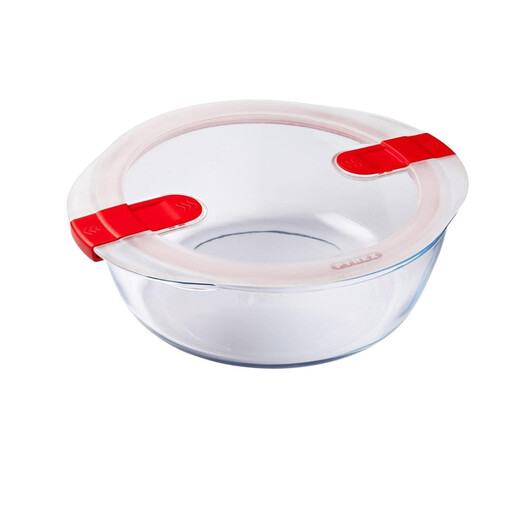
Why we love it
It's the Swiss Army knife of food storage. Its large capacity and ultra-resistant glass make it the perfect partner for preparing, cooking, storing, and reheating. In short, the ultimate multifunctional glass dish with a lid.
The pros
Who is it for?
For families, batch cooking pros, and anyone who wants to simplify their kitchen routine by using a single container to cook, store, and reheat their meals.
Has this selection whet your appetite, but you haven't found your perfect match yet? The world of food containers is vast. To explore more shapes, sizes, and sealing systems, take a look at our full range.
? Discover our full range of food prep containers
Yes, most borosilicate or tempered glass jars are freezer-safe. The golden rule: never fill the jar to the brim; leave at least 2 to 3 cm of empty space at the top. As liquids freeze, they expand, and this headspace is essential to prevent the glass from cracking under pressure. When in doubt, always check the manufacturer's instructions.
Glass has the advantage of not retaining odours. If a persistent smell has set in, the culprit is often the silicone seal. The trick: wash the jar and the seal separately. Let the seal soak in a mixture of hot water and baking soda (or white vinegar) for a few hours. A good rinse, and you're good to go!
Borosilicate glass's superpower is its resistance to thermal shock (rapid changes in temperature). This means it can go from the fridge to the microwave without fear. Tempered glass, on the other hand, is a tough cookie. It undergoes a special treatment that makes it up to five times more resistant to everyday impacts (drops, bumps) than ordinary glass. It's oven-safe, but be wary of sudden, extreme temperature changes, which are its Achilles' heel.