
Same-day & Next-day Delivery

Quality Guaranteed

Unlock Your Welcome Offers: FREE Delivery | Up to 80% OFF | Free 30-day JoyPlus trial
Download the APP
A well-organised pantry is the first step towards a functional and serene kitchen. The airtight glass jar has established itself as the indispensable ally for preserving the freshness of dry foods, from cereals to legumes, while adding a touch of elegance. But be warned: not all jars are created equal. Faced with an overwhelming number of options, it's easy to fall into common traps, and disappointment often follows after just a few months of use. As the Head of Product Recommendations at Joybuy, my mission is to help you see things more clearly.
Before you start, here are the 3 most common pitfalls to avoid to make a truly informed and lasting choice.
For kitchen and pantry storage that combines aesthetics with performance, you need to focus on a few decisive technical points. It's these details that make all the difference between a simple jar and a true preservation partner.
The choice of material is the primary quality criterion. While soda-lime glass is common and budget-friendly, a borosilicate glass container is a much wiser choice for the kitchen.
The airtightness of your food storage jar relies entirely on its closing mechanism.
Before buying, assess your needs. A 700?ml jar is perfect for coffee beans or legumes, while containers of 1.2?L or more will be needed for pasta or flour. Opting for a set of glass jars from the same collection helps create visual harmony and optimise storage space.
Rather than an exhaustive list, here is a selection of products that cater to distinct user profiles, taking into account the quality criteria we've discussed.
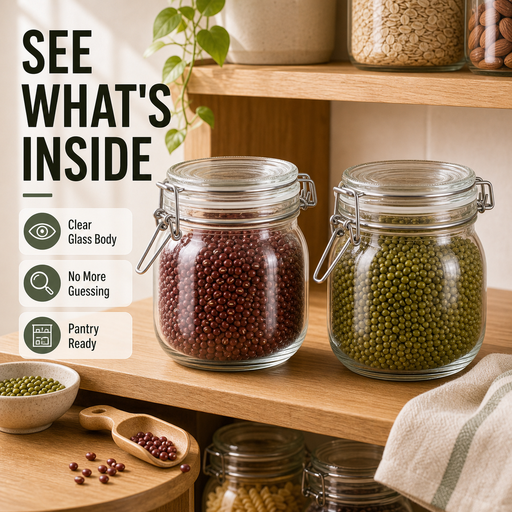
Why we chose it: Ideal for those looking to standardise their pantry with reliable and practical containers. The set format is economical and perfect for storing staples like rice, lentils, or rolled oats.
The borosilicate glass body resists thermal shock, while the stainless steel clip-top closure with its thick silicone seal ensures a reliable, long-lasting airtight seal. A combination that avoids the two most common pitfalls.
A tried-and-true mechanical closing system and a high-quality material provide complete peace of mind for everyday use.

Why we chose it: For those who believe everyday objects should also be beautiful. This jar is designed to be displayed on a worktop or open shelf, turning storage into a decorative element.
Its lid is made of natural acacia, a dense wood, and includes a food-grade silicone seal. The hammered borosilicate glass body combines aesthetics with durability.
An antique-inspired design that doesn't sacrifice performance, thanks to modern materials. The perfect blend of style and function.
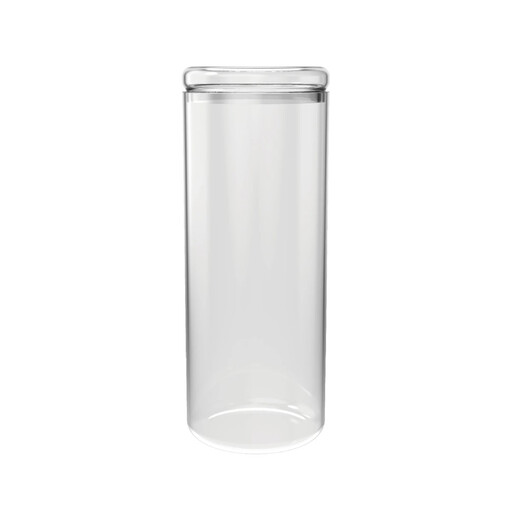
Why we chose it: Perfect for storing large-format foods, like family-size packs of pasta, flour, or cereal. Its large 1.2 L capacity allows you to empty packages completely and reduce clutter.
This model focuses on simplicity and efficiency. A large, durable borosilicate glass body and a simple airtight lid, with no complex mechanism that could break. Here, function takes precedence over form.
Its large 1200 ml capacity and minimalist design make it the ideal partner for efficiently storing bulky goods.
We have compiled a complete and updated list of products that meet these strict selection criteria and safety standards.
As a general rule, the glass body, especially if it is borosilicate, is dishwasher-safe. However, it is strongly recommended to wash lids by hand. Metal clips, wooden lids, or even some plastics can be damaged by high temperatures and harsh detergents, which would compromise the seal's integrity. When in doubt, always consult the manufacturer's instructions.
To maintain the seal's flexibility and effectiveness, clean it regularly by hand with warm water and mild soap. Avoid abrasive products. Make sure it is completely dry and correctly repositioned in the lid's groove before closing the jar. If it becomes stiff, brittle, or deformed, it's time to replace it.
No, and this is an important point. The term "resistant" is more accurate. A borosilicate glass container offers far superior tolerance to thermal shock (rapidly going from cold to hot) and better resistance to light mechanical impacts than standard glass. However, it is still a material that should be handled with care to avoid drops and hard knocks.