
Same-day & Next-day Delivery

Quality Guaranteed

Unlock Your Welcome Offers: FREE Delivery | Up to 80% OFF | Free 30-day JoyPlus trial
Download the APP
A well-organised pantry starts with the right containers. But not all airtight food storage containers meet the same needs. Between claims of a ‘perfectly airtight’ seal, materials that aren’t always clearly specified and awkward sizes that are hard to store, the wrong choice can quickly turn a smart-looking set into a daily headache.
This guide from the Joybuy Product Recommendation Officer helps you compare the options for your needs: storing dry food, organising spices, keeping coffee or tea fresh, meal prep or professional use.
A lid simply placed on a container keeps out dust, but it won’t necessarily protect food from moisture. For flour, rice, cereal or sugar, look for a silicone seal and a clearly described closure system, such as side clips, a push-on lid or a multi-point closure.
Check the condition of the seal after washing, too. A lid that’s difficult to clean can trap residue and gradually become less effective.
A larger capacity doesn’t guarantee convenient storage. A container that’s too tall may not fit in a low cupboard, while one that’s too wide can waste valuable space. Stackable storage containers with a square shape generally make it easier to organise your pantry, provided you measure your shelves before ordering.
Think about the opening, too. Containers for flour and rice need to be wide enough for a measuring cup or scoop to fit inside without spilling the contents.
The BPA-free label is useful, but it isn’t enough on its own to tell you whether a product suits your needs. Check the material and whether it’s suitable for the dishwasher, oven, freezer or microwave, as well as any care instructions for the lid. A container may be dishwasher-safe while its seal or lid needs to be washed by hand.
For glass containers, also check the warnings about thermal shock and the risk of cracking.
Polypropylene (PP) is a good choice for lightweight, stackable containers. Some models are advertised as BPA-free and designed for storing dry goods. Borosilicate glass gives you a clear view of the contents and may be suitable for leftovers as well as meal prep, depending on the manufacturer’s instructions. 304 stainless steel is a durable option for coffee, tea and dry food, but you won’t be able to see how much is left.
For glass spice jars, look for a closure that helps keep out air and moisture. Bamboo, aluminium or wooden lids may have different cleaning instructions from the container itself.
A useful set combines a range of sizes:
External dimensions matter just as much as the stated capacity. For a neat, uniform pantry, square food containers with lids often make better use of shelf corners than round ones.
Jar labels make it easy to identify the contents and note when you opened them. A funnel or a wide opening makes it easier to fill containers with spices and seeds. To keep dry food in good condition, always let food cool before sealing the containers, then store them clean and dry, away from direct heat.
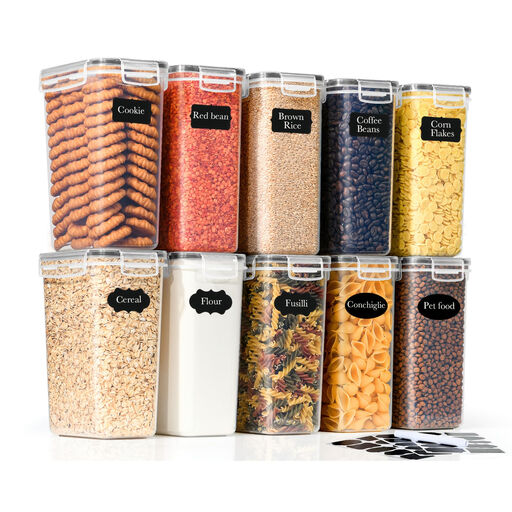
Why it suits this profile : This set of ten 2-litre containers makes it quick and easy to reorganise everyday dry goods such as pasta, muesli, sugar and rice. The included labels and pen help you get everything sorted from the start.
The four clip-locks and silicone seal are described as helping to limit exposure to air and moisture. The dimensions of each container are provided, so it’s easy to check how much space you have.
Polypropylene advertised as BPA-free, dishwasher-safe bases and a stackable design. The lids are recommended for hand-washing.
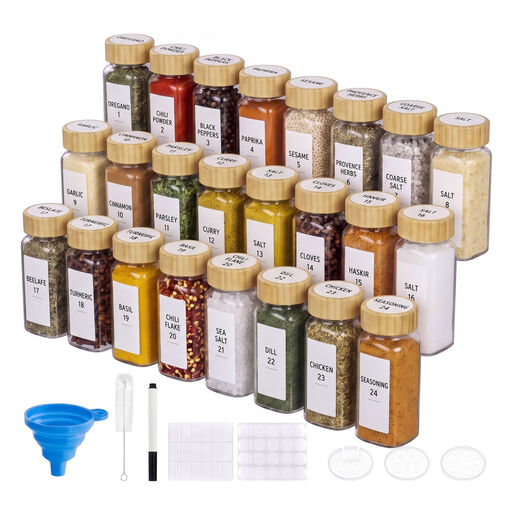
Why it suits this profile : This set is ideal for kitchens that use lots of spices and want a coordinated look on a shelf or rack. The clear glass jars let you see what’s inside at a glance.
The bamboo lid with a seal is designed to provide an airtight closure. Water-resistant labels make it easy to identify the contents and avoid mixing up similar-looking powders.
24 120 ml borosilicate glass jars, with several accessories included: a collapsible funnel, brush, pen and shaker insert.
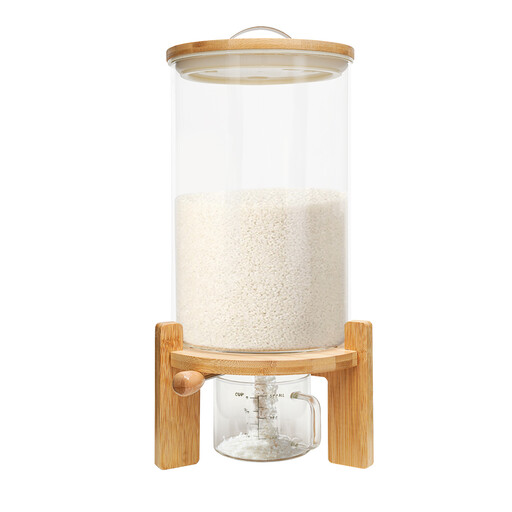
Why it suits this profile : Its generous capacity makes it a good fit for households that buy in bulk, cafés, restaurants and breakfast areas. The tap and measuring cup mean less handling when serving.
The product is described as being for dry food only, making its intended use clear. The lid and valve need to be closed properly after each use.
7.5-litre capacity, manual tap, measuring cup and round bamboo stand. Handle the glass body with care.
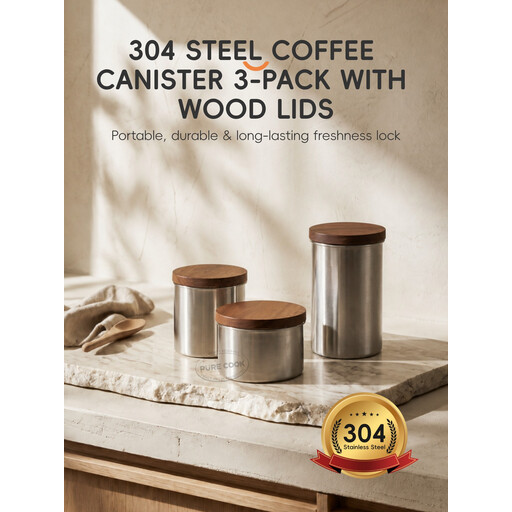
Why it suits this profile : This set of three canisters for coffee and tea is ideal if you’re looking for a durable material and want to keep different ingredients neatly separated on your worktop.
304 stainless steel is described as corrosion-resistant and uncoated. The lid seal helps to keep out moisture, provided it’s cleaned and closed properly.
Set of three containers in 400, 450 or 600 ml sizes, depending on the version, with 304 stainless steel bodies and lids topped with a wooden detail.
We’ve put together a comprehensive list, updated in real time, of products that meet these strict selection criteria and European safety regulations.
Wash the container according to the manufacturer’s instructions, then dry it completely before filling. Clean seals, lids, valves and accessories separately. If the container is intended for dry food, don’t seal food while it’s still hot or damp.
An airtight seal limits exposure to air and moisture, but it doesn’t automatically extend the use-by or best-before date on the packaging. Store food according to its date, type and the manufacturer’s recommendations. Add the opening date to a label to keep track of your supplies more easily.
Glass gives you a clear view of the contents and suits a wide range of uses, but it’s heavier and can break. Plastic, particularly PP advertised as BPA-free, is lightweight and practical on shelves or for taking with you. The right choice depends on the weight, where you’ll store it, how it needs to be cleaned and what you plan to keep inside.