
Livraison le jour même ou le lendemain

Qualité garantie

Débloquez vos offres de bienvenue: Livraison GRATUITE | Jusqu'à -80 % | 30 jours d'essai gratuits à JoyPlus
Téléchargez l'application
A tidy kitchen often starts with the right containers. But not all airtight food storage containers are made for the same purpose. A container that’s ideal for dry pasta won’t necessarily suit a prepared meal, while a pretty jar can turn out to be more hassle to maintain than you might have imagined.
Before buying a kitchen storage set, take the time to check the materials, dimensions, closure system and usage conditions. Here are the main pitfalls to avoid, along with a selection of containers suited to different needs.
A lid alone doesn’t make a container airtight. For dry foods, a silicone seal or a mechanism designed to limit air exchange will better protect flour, sugar, rice and cereals from moisture.
For liquids and leftovers, also check for leak resistance. A lid that simply sits on top may be fine on a shelf, but it will quickly show its limits when you’re transporting a container or storing a sauce in the fridge.
Removable seals can trap food residue. When they can’t be taken out, thorough cleaning becomes more difficult. A wooden lid, on the other hand, adds a warm, decorative touch but usually requires hand washing.
The dishwasher-safe label must therefore be checked for each component. It may apply only to the container, and not to the lid or seal.
A large container may seem practical for storing dry foods, but it can quickly become bulky in a narrow cupboard. Conversely, a collection of small jars multiplies the number of lids and eats into available space.
Measure the depth of your shelves, the height under your cabinets and the free space in your fridge door. For long-lasting organisation, stackable or rectangular containers are generally easier to align and store.
Borosilicate glass containers appeal for their transparency and resistance to temperature changes, in line with the manufacturer’s specifications. They are often suitable for the fridge and freezer, provided you follow the guidelines to avoid thermal shock.
Lighter in weight, BPA-free plastic is practical for large quantities, pantry storage or transport. However, always check the usage limits stated on the product page. A container intended for food contact must not be placed in the oven, microwave or on a direct heat source unless explicitly stated.
To choose airtight food containers, match the volume to the intended contents:
If you’re freezing foods with a high water content, leave enough headspace – their volume can increase during freezing.
Check for the presence of a seal, ease of opening and how well the lid stays on. For jars with a wooden lid, consult the care instructions. With a removable seal, make sure it can be taken out and put back easily.
Transparency is also a real advantage day to day: it lets you identify the contents at a glance and keep an eye on remaining quantities. The labels and tags supplied with some sets simplify sorting and stock rotation.
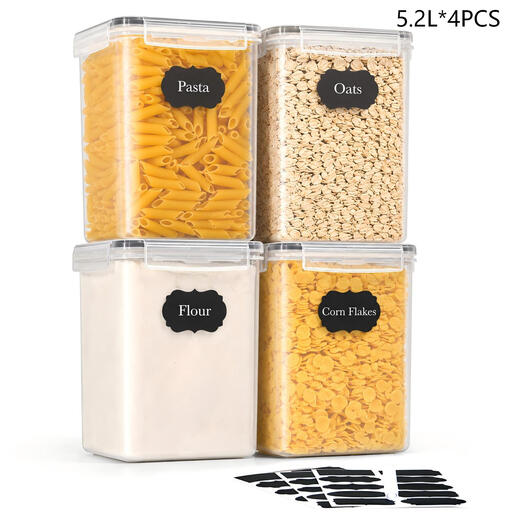
Why this choice suits this profile: This small set lets you start organising your dry foods without investing in a whole army of containers straight away. It covers the basics, whether in a cupboard or on a shelf.
The limited size stops you buying a set that’s too large before you’ve assessed your needs and measured the available space.
A 4-piece set with airtight lids and labelling accessories, as the product name suggests.
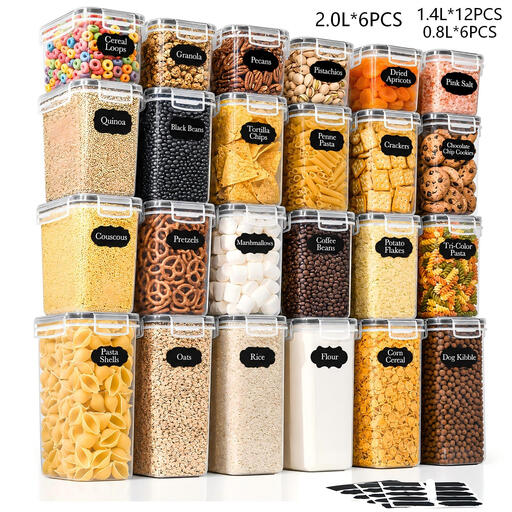
Why this choice suits this profile: With 24 pieces, this set is ideal for households that want to store pasta, rice, flour, sugar, spices and other provisions in a coordinated collection.
The labels and tags mentioned make contents easier to spot, which reduces duplicate purchases and forgotten products at the back of the cupboard.
24 pieces and labelling accessories as stated on the product page, for organising several categories of dry foods.
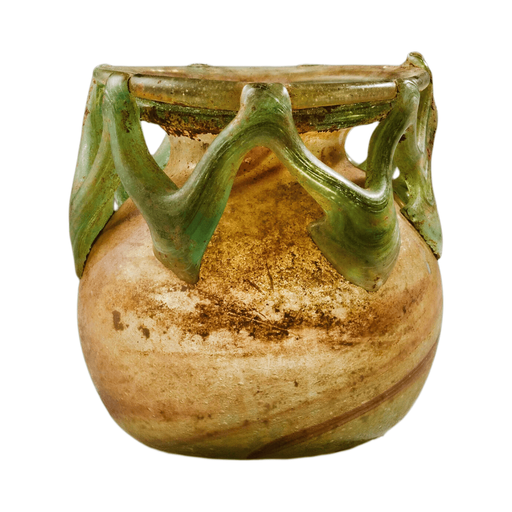
Why this choice suits this profile: This 750 ml jar is as much about its decorative appeal as its function. It’s perfect for cereals, nuts, coffee, pasta or dried fruit, and sits beautifully on a worktop.
The product page states that the glass is dishwasher-safe, while the acacia lid needs hand washing – the care requirements are clearly separated.
A 750 ml hammered borosilicate glass jar, a food-grade silicone seal and a clear view of the contents.

Why this choice suits this profile: Its 2-litre capacity is ideal for prepared meals, family portions and leftovers to store in the fridge or freezer.
The usage conditions are clearly stated: remove the lid in the microwave, leave headspace when freezing and avoid going straight from the freezer to an intense heat source.
A 2-litre borosilicate glass container with a removable silicone seal, stated as dishwasher-, freezer- and microwave-safe under certain conditions.
We’ve put together a comprehensive, real-time updated list of products that meet these demanding selection criteria and European safety regulations.
To get the most out of your storage boxes and jars:
It all depends on the quantities you usually buy and the height available in your cupboard. Medium sizes generally work well for rice and pasta, while flour needs a more generous volume. For a versatile set, it’s better to go for several different sizes rather than one single large container.
No. Check the instructions separately for the container, lid and seal. Some glass items are dishwasher-safe, while wooden lids usually need hand washing. Always follow the product-specific guidelines.
Only if the product page says so. Generally, remove the lid before placing the container in the microwave, and leave enough headspace to allow foods to expand in the freezer. Even when designed to withstand temperature changes, glass must be protected from sudden thermal shock.