
Livraison le jour même ou le lendemain

Qualité garantie

Débloquez vos offres de bienvenue: Livraison GRATUITE | Jusqu'à -80 % | 30 jours d'essai gratuits à JoyPlus
Téléchargez l'application
Between overflowing cupboards, food losing its freshness and lids that leak in your bag, airtight food storage containers are a real help in everyday life. But you need to choose models that suit your needs, rather than a set that appeals only because of its piece count or marketing promises.
Here are the criteria to consider for optimising your kitchen organisation, keeping your food in good condition and preparing meals to take with you without any nasty surprises.
A lid that simply clips on isn't necessarily enough to prevent leaks or odours from spreading. For saucy dishes, soups and moist foods, look for a closure system that's clearly described: a sealing gasket, side clips or a double seal.
The shape of the lid also deserves your attention. If it's difficult to position, you're likely to close it crookedly in daily use, even if the product looks convincing in the picture.
A 24-piece set might seem economical, but it will quickly take up space if the containers don't stack well or are too bulky. Conversely, a small set may prove insufficient for storing leftovers, cereals or individual meals.
Before choosing, take stock of your habits: storing rice and pasta, preparing lunches, freezing, keeping leftovers or organising dry goods. The number of pieces shouldn't make you forget the actual dimensions of the boxes.
Glass generally resists odours well and lets you see the contents immediately, but it's heavier and can break. Plastic is often lighter, but check the manufacturer's instructions regarding food contact, heat and freezer use.
For disposable accessories, such as biodegradable food wraps or disposable bamboo fibre tableware, check the intended use, capacity and conditions of use. An environmental claim doesn't automatically mean the product can go in the oven, be reheated or be used for long-term storage.
For truly practical kitchen organisation, choose sizes that match your habits:
Spice jars and food storage containers should ideally be stackable or easy to line up. Labels and tags can also simplify stock rotation and help you avoid forgetting packets at the back of the cupboard.
An airtight box should open easily while remaining perfectly stable once closed. In particular, check:
For already-opened packets, bag clips offer a very simple complementary solution. They're suitable for packets of cereal, biscuits, flour or dry goods that don't necessarily justify buying a dedicated box.
Check the instructions provided for the fridge, freezer, dishwasher and reheating. Don't assume a container is oven or microwave-safe just because it's described as resistant.
Borosilicate glass, for example, is valued for its stated thermal resistance, but the lid may have different rules. For a glass lunch box, always consult the instructions before heating or freezing it.
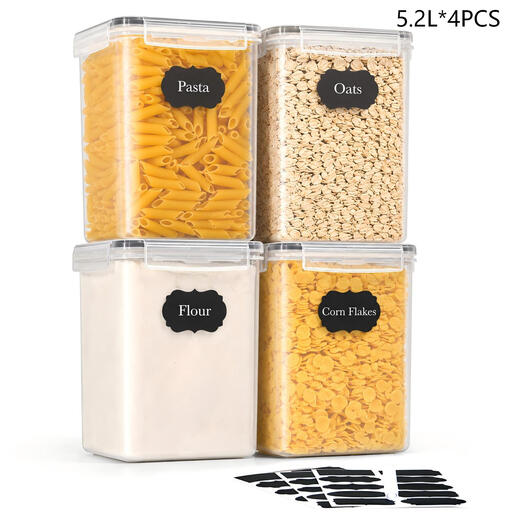
Why this choice suits this profile: A compact set to start organising pasta, rice, flour, sugar and dry goods without multiplying your purchases.
The four-piece format avoids cluttering your kitchen with an oversized set. The included labels and tags make it easy to identify the contents.
4-piece set designed for dry food storage, with identification accessories.
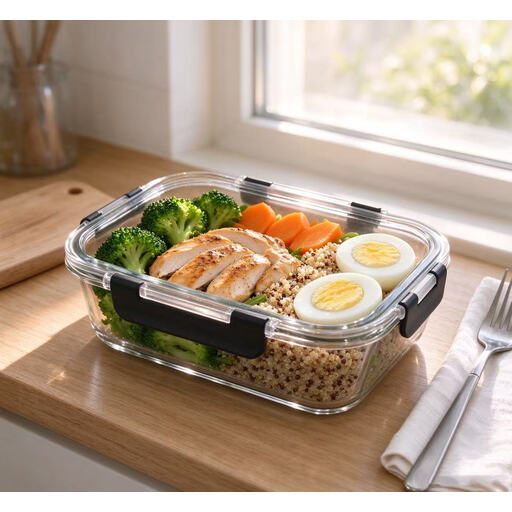
Why this choice suits this profile: This borosilicate glass set is ideal for those looking for reusable containers for meals, leftovers and lunch at the office.
The capacities are clearly stated: 5 containers of 1,040 ml and 5 of 370 ml. This makes it easier to choose the right size for each portion.
Stated borosilicate glass, press-lock lids and two sizes combined in one set.
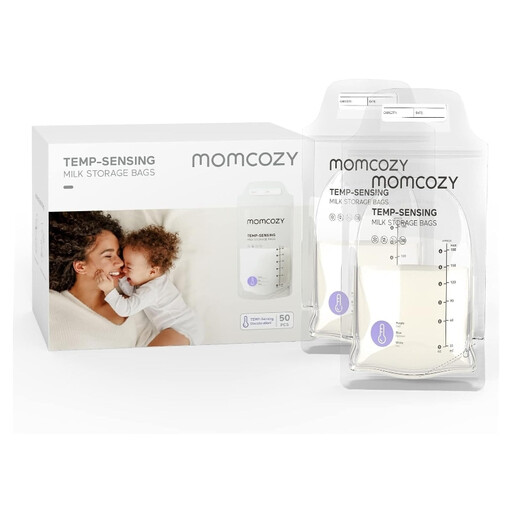
Why this choice suits this profile: These single-use bags are designed for parents who express milk and want to store it in the fridge or freezer.
The stated maximum capacity is 180 ml. The instructions advise not to exceed the fill line and prohibit heating the bag in the microwave.
Stated double seal, space for writing, flat or upright storage and BPA-free and BPS-free material according to the product sheet.
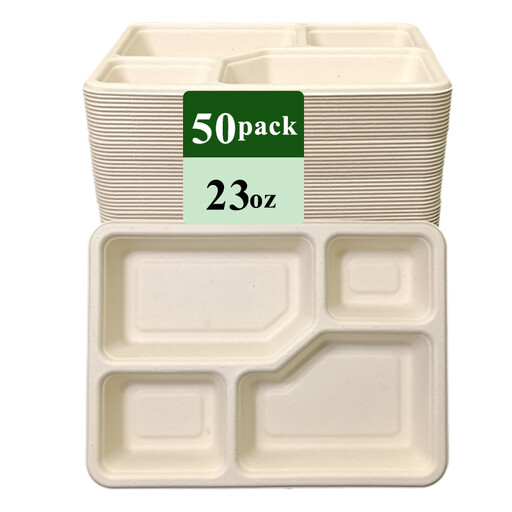
Why this choice suits this profile: A practical solution for buffets, picnics, family gatherings or meals that need to be served quickly.
The pack of 50 is intended for occasional use. It avoids confusing serving tableware with a reusable box for long-term food storage.
Disposable trays stated to be made from plant fibre, packed in 50s and suitable for serving portions at events with several people.
To complete your organisation, cling film lets you quickly cover a salad bowl or plate. The ALFAPAC model, 29 cm x 50 m, is stated to be made in France and suitable for the fridge or freezer. Its product sheet specifies, however, that it should not be used in the microwave. A bread bin with a window can also take care of bread storage, while airtight containers remain dedicated to moist foods.
We've put together a comprehensive list, updated in real time, of products that meet these demanding selection criteria and European safety regulations.
For an individual portion, a box of 370 to 700 ml can be suitable depending on the contents. Large formats, around 1 litre or more, are better suited to family dishes, salads and leftovers. Also remember to measure the available space in your fridge.
Wash the boxes following the manufacturer's recommendations, dry the seals thoroughly and avoid thermal shock. Don't close a container while it's still hot if the instructions don't allow it. Replace a deformed lid, a damaged seal or a cracked box.
Not in every situation. Reusable containers are perfect for regular storage and foods that need to stay well protected. Cling film can be more practical for quickly covering a dish or an irregularly shaped container. In a well-organised kitchen, both solutions have their place.