
Same-day & Next-day Delivery

Quality Guaranteed

Unlock Your Welcome Offers: FREE Delivery | Up to 80% OFF | Free 30-day JoyPlus trial
Download the APP
Between leftovers, pasta, rice, flour, spices and pre-prepared meals, airtight food storage containers make daily organisation so much simpler. But not all containers are created equal, depending on how you plan to use them. A lid that lets liquid seep out, a cover that's a pain to clean, or a poorly chosen capacity can quickly relegate an otherwise practical purchase to the back of a cupboard.
Before you choose a set of airtight containers, here are the main pitfalls to avoid, the criteria to consider, and a selection tailored to different needs.
A lid that simply clips on doesn't necessarily guarantee a perfect seal. To protect dry foods from moisture or to transport a meal without the risk of leaks, look for a silicone seal, a proper locking system, or an explicit indication of airtightness.
An airtight container should also remain easy to open. A mechanism that's too stiff can quickly put you off using it every day, especially for children or at the office.
Glass food containers generally don't retain odours and let you see what's inside at a glance. On the downside, they're heavier and can break if dropped or subjected to sudden temperature changes.
Plastic is lighter and more practical for an airtight lunch box or for taking food on the go. However, you need to check its composition, how to care for it, and what it's approved for. The BPA-free label is a good thing to look for, but it doesn't automatically mean the container is oven or microwave safe.
A large container isn't necessarily suitable for storing spices, nuts or individual portions. To organise your pantry efficiently, it's better to mix up the capacities: small jars for spices, medium sizes for cereals, and larger containers for pasta, flour or family-sized meals.
Borosilicate glass withstands temperature changes better than ordinary glass. That doesn't mean you can ignore the manufacturer's instructions, though. For example, avoid placing a frozen container directly into a hot oven, or pouring boiling liquid into a cold jar.
For use in the fridge, freezer or microwave, always check the manufacturer's specific guidelines. The lid often needs to be removed before reheating. A dishwasher-safe container can also make cleaning easier, even if some seals or lids need to be washed separately.
The capacity should match how you'll actually use it:
Also remember to check the external dimensions. A 2-litre container might be too tall for a shelf or too wide for a drawer, even if the capacity seems ideal.
A removable seal is easier to clean, because food residue and moisture tend to build up there. After washing, dry each part thoroughly before closing the container. Inspect the seals, clips and rims regularly: a crack or distortion can compromise the airtightness.
Labels and markers are also very handy for organising dry foods. They let you identify the contents at a glance and keep track of opening dates more easily.
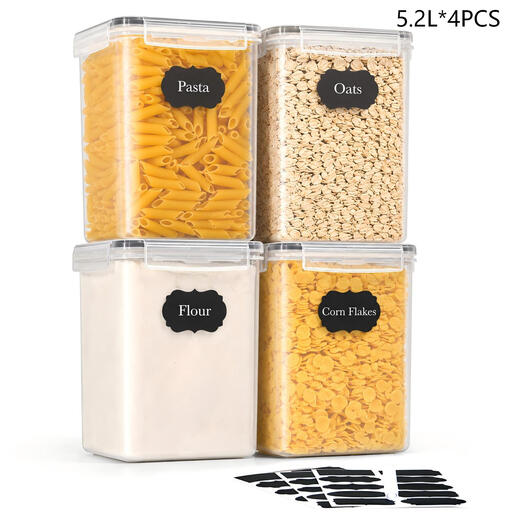
Why this choice suits this profile: This compact set lets you start organising your pantry without accumulating containers that will never get used. It's particularly suitable for pasta, rice, sugar, flour and spices.
The limited number of pieces reduces the risk of buying sizes you'll never use. The labels and markers make it easy to identify dry foods.
4-piece set, designed for dry food storage, with labels and markers included.
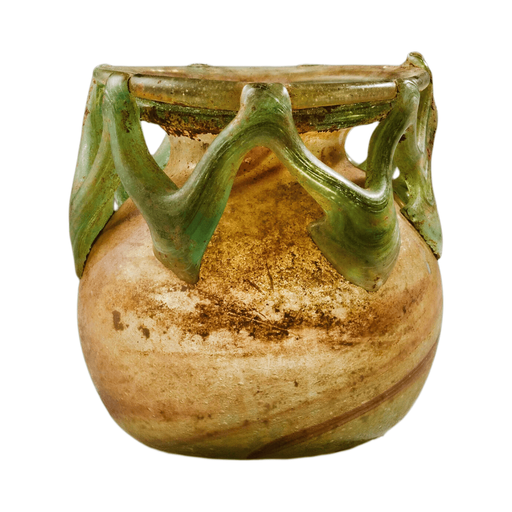
Why this choice suits this profile: Its textured glass and acacia wood lid fit perfectly into a kitchen where jars remain on display on the worktop.
The silicone seal is designed to limit exposure to moisture. The wooden lid should be hand-washed, which prevents damage in the dishwasher.
Borosilicate glass, 750 ml capacity, food-grade silicone seal, glass stated to be BPA, lead and cadmium free.
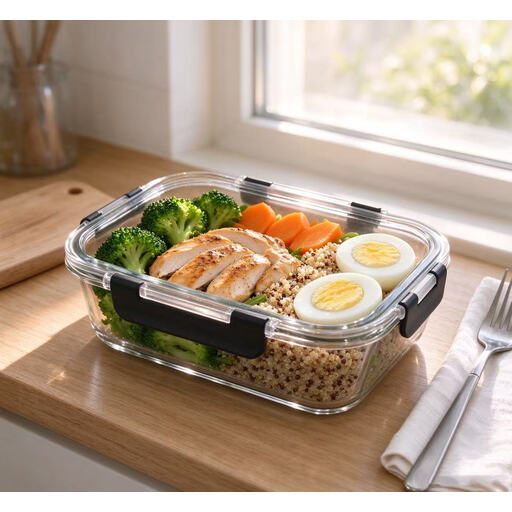
Why this choice suits this profile: The five 1,040 ml containers and five 370 ml sizes are ideal for meal prep, office lunches and preparing separate portions.
The two sizes prevent you from filling a large container for a single portion. The clip-lock closure is practical for transport, as long as you check the lid's condition before each use.
10 pieces in borosilicate glass, two capacities, sealed lids and a design suited to individual portions.
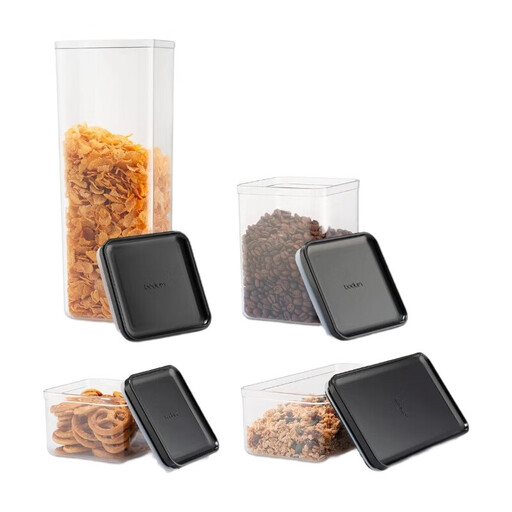
Why this choice suits this profile: This set of six transparent containers covers a good range of everyday needs, from small snacks to larger quantities of dry foods.
The four different capacities provided stop you from accumulating ill-suited containers. The transparency lets you check your pantry stock at a glance.
Six BPA-free recyclable plastic jars, airtight lids and stated dishwasher compatibility.
We've put together a comprehensive, real-time updated selection of products that meet these exacting criteria as well as European safety standards.
Glass is suitable if you want good visibility of the contents and low odour retention. BPA-free plastic is lighter and often more practical for carrying. In both cases, check the approved uses, the quality of the lid and how easy it is to clean.
Only if the manufacturer states that the product is microwave-safe. The lid should generally be removed before reheating. Plastic containers intended for storage should not be used in the oven or on a direct heat source without explicit instructions.
An airtight seal limits exposure to air and moisture, but it doesn't extend the shelf life indefinitely. Always follow the dates on packaging, storage recommendations and the cold chain. For leftovers and prepared meals, note the preparation date on a label and place the containers in the fridge promptly.