
Livraison le jour même ou le lendemain

Qualité garantie

Débloquez vos offres de bienvenue: Livraison GRATUITE | Jusqu'à -80 % | 30 jours d'essai gratuits à JoyPlus
Téléchargez l'application
A well-organised kitchen depends on more than just the number of cupboards you have. Choosing a kitchen shelf, a pull-out drawer or food storage containers can transform how you move around the room and access your utensils. On the other hand, equipment that’s the wrong size may end up unused at the back of a cupboard after just a few weeks.
Before buying your next kitchen organiser, take the time to assess the constraints of your space, the weight it needs to support and how often you’ll use it. This approach helps you distinguish a genuinely practical solution from an attractive accessory that’s not quite right for everyday use.
A shelf may look compact in a photo, but its depth or height could stop you opening a cupboard, window or appliance. Always measure:
For a microwave stand, also check the appliance’s ventilation requirements and its distance from nearby walls and units.
A high total weight capacity doesn’t mean every shelf can support the same load. A unit may hold several dozen kilograms overall, while having a different limit for the top shelf or adjustable shelf.
So check the maximum load for each level before placing a food processor, glass jars or a supply of bottles on it. Heavy items are generally easier to keep stable on lower shelves.
A tall structure needs to be completely stable, especially in a home with children or pets. Check whether it has adjustable feet, an anti-tip system or castors with brakes.
Kitchens are often prone to water splashes and grease, so an easy-to-clean surface is a practical consideration too. For food containers, check the information about the material, cleaning, freezer, oven and microwave use. An airtight container isn’t necessarily designed to be heated.
An adjustable shelf lets you change the space between levels to fit a blender, coffee maker or pans of different sizes. Models with adjustable widths may suit an uneven worktop, but check the precise adjustment range.
For a vertical unit, a depth of 36 to 40 cm can free up floor space while still accommodating everyday appliances. However, measure your microwave and allow enough room for its cable before making your choice.
Steel and metal are generally suitable for units designed to hold appliances or heavy groceries. Chipboard panels provide a flat surface and a warmer look, but they need to be protected from standing moisture.
If you choose a kitchen trolley, look for swivel castors, some of which can be locked. For a tall shelf, use the wall-fixing kit if one is supplied and follow the stated weight limits.
Choose airtight food storage containers to suit the food you plan to store. Smaller sizes are handy for spices, dried fruit and leftovers, while 1 to 2 litre containers make it easier to store rice, pasta, flour and cereal.
Transparent stackable food containers let you see what’s inside at a glance, reduce the number of open packets and make better use of cupboard height. Check the closure system, seal, cleaning recommendations and permitted uses. If you choose glass, follow the instructions carefully to avoid thermal shock.
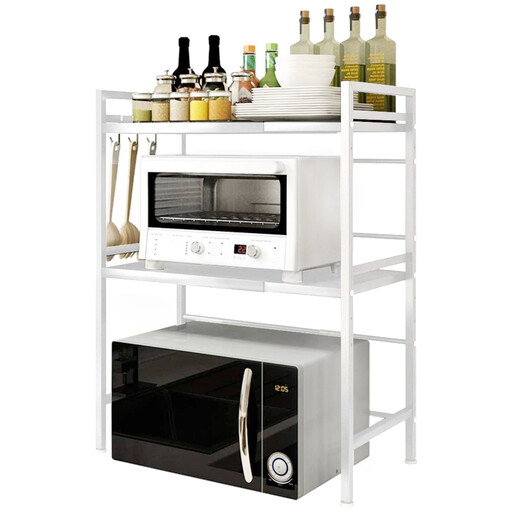
Why it suits this profile: This compact stand is a great first step towards organising your worktop, especially in a small kitchen or studio flat. Its adjustable width of 40 to 64 cm makes it easy to adapt to different spaces.
Its three adjustable levels help you avoid buying a unit with too little flexibility for appliances of different sizes.
A steel frame, adjustable width and three levels for a microwave, toaster or jars.
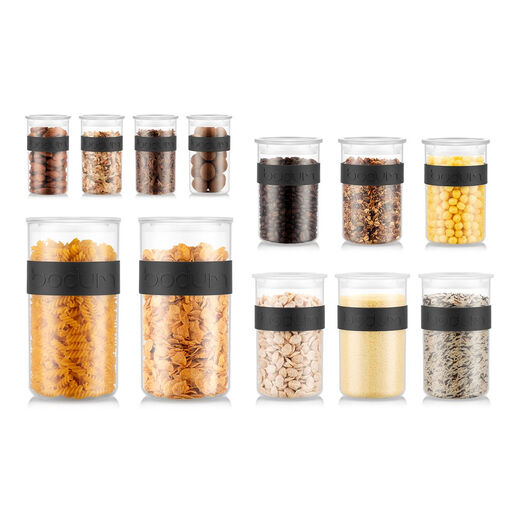
Why it suits this profile: This set includes 12 containers in four different capacities, helping you create a coordinated pantry while keeping small and large portions separate.
The range of sizes means you don’t have to squeeze all your food into one container, helping you avoid wasted cupboard space.
Capacities from 0.25 to 2 litres, airtight lids and plastic stated to be BPA-free.
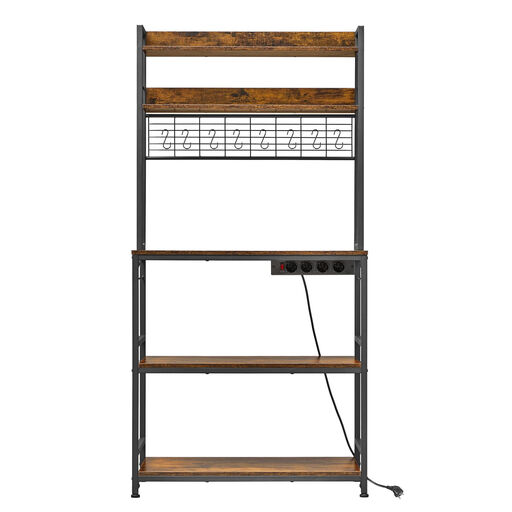
Why it suits this profile: Its five levels are ideal for households that use several appliances and want to create a vertical coffee or cooking station.
The adjustable middle shelf and hooks let you make the most of the available space instead of piling accessories on the worktop.
Measures 80 × 40 × 170 cm and includes a built-in power strip with four sockets and two USB ports, plus 14 hooks.
Start by making use of the height available with a vertical shelf or a kitchen shelf with sockets. In cupboards, a pull-out cupboard drawer makes it easier to reach pans and groceries stored at the back. Hooks and stackable containers can also help clear the worktop.
Sizes from 0.25 to 0.6 litres are suitable for small quantities, dried fruit and leftovers. Containers of 1 to 2 litres are better for pasta, cereal, flour, rice and sugar. For a well-organised pantry, choose sizes that stack and label the contents.
Wipe up splashes promptly, don’t leave water standing on the panels and follow the manufacturer’s cleaning instructions. Regularly check the screws, feet, castor brakes and wall fixings on any tall unit. For food containers, dry the lids and seals completely before closing them.