
Livraison le jour même ou le lendemain

Qualité garantie

Débloquez vos offres de bienvenue: Livraison GRATUITE | Jusqu'à -80 % | 30 jours d'essai gratuits à JoyPlus
Téléchargez l'application
A lid that leaks at the bottom of your bag, a container that absorbs the smell of curry or a box that is impossible to fit in the fridge: not all airtight food storage containers are created equal. Whether you are storing leftovers, fruit and vegetables, prepared meals or loose ingredients, a few technical details can make a real difference to your daily routine.
Before buying a set of food containers, it is therefore worth looking beyond the stated capacity and claims of leak-proof performance. Here are the most common pitfalls, the criteria to check and the models to consider for your needs.
A lid that clips on easily does not guarantee that the container will be completely leak-proof. Leaks often occur when the seal is incorrectly positioned, too thin or impossible to remove for cleaning. Multiple clips combined with a removable silicone seal generally make it easier to check that the container is properly closed.
For liquid preparations, check that every clip is securely locked before putting the container in a bag. You should also leave a little space between the contents and the lid.
A microwave-safe container does not necessarily mean that its lid can be heated in the microwave. In most cases, the lid must be removed or left slightly ajar. Oil, excessive heating times or using an empty container can also cause problems.
The manufacturer’s instructions should always take priority, particularly with stainless steel containers, glass lids and silicone seals.
A large rectangular container is ideal for family-sized dishes, but it takes up more space and is not necessarily practical for storing small portions. Conversely, a 700 to 1,100 ml container is better suited to an individual meal, a packed lunch for the office or preparing meals in advance.
A set of different sizes will often make it easier to organise your fridge and kitchen cupboards.
A BPA-free plastic food storage container is lightweight, impact-resistant and easy to transport. Polypropylene, generally identified by the marking ‘PP’, is commonly used for containers intended for contact with food. However, you should still check the temperatures it can withstand and the applicable heating instructions.
A 304 stainless steel food container has a rigid structure, no internal coating and generally offers good resistance to greasy stains. However, it is not microwave-safe. Models with a glass lid can also be fairly heavy and require extra care to avoid thermal shock.
The stated capacity does not always correspond to the volume that can actually be used, once the lid, corners and space to leave above the food are taken into account. As a guide:
A rectangular shape makes stacking easier and makes better use of fridge shelves than a very rounded container.
Even when a container is dishwasher-safe, place it in the rack recommended by the manufacturer. Removable seals should be taken out regularly to remove residue and minimise lingering smells. Always allow the container and seal to dry completely before putting the lid back on.
For a container intended for use in the fridge and freezer, check the stated temperature range. Do not fill the container completely before freezing it: food can expand. A stackable container saves space, but the stack must remain stable when the containers are full.
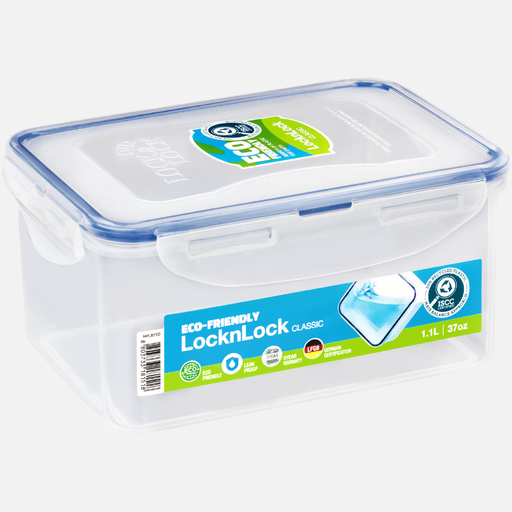
Why this size is right for you: With a capacity of 1.1 litres, this container is suitable for individual portions, snacks and everyday leftovers, without taking up unnecessary space in the fridge.
The silicone seal and four locking clips make it easy to see at a glance that the lid is securely closed.
BPA-free PP plastic, a stackable rectangular shape and stated compatibility with the fridge, freezer and dishwasher.
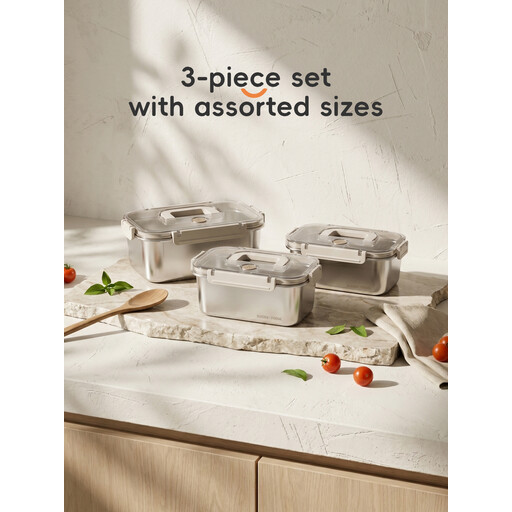
Why this model is right for you: The three sizes—1,700, 2,100 and 3,200 ml—cover the needs of a family as well as those of meals prepared in several portions.
The uncoated 304 stainless steel body does not rely on a non-stick surface to store food. The seals and lids can be removed for easier cleaning.
Three capacities, four side clips and stated dishwasher-safe cleaning. The manufacturer specifies that the lid must be removed before heating.
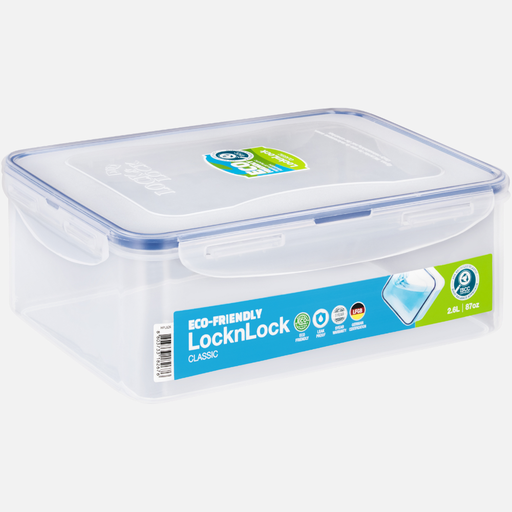
Why this size is right for you: Its generous capacity is ideal for family-sized dishes, salads and storing several portions prepared in advance.
The transparent body lets you identify the contents without opening the container. The four-sided closure helps minimise the risk of leaks when the lid is properly locked.
2.6-litre capacity, BPA-free PP plastic and stated compatibility with the fridge, freezer, dishwasher and microwave, after removing the lid.
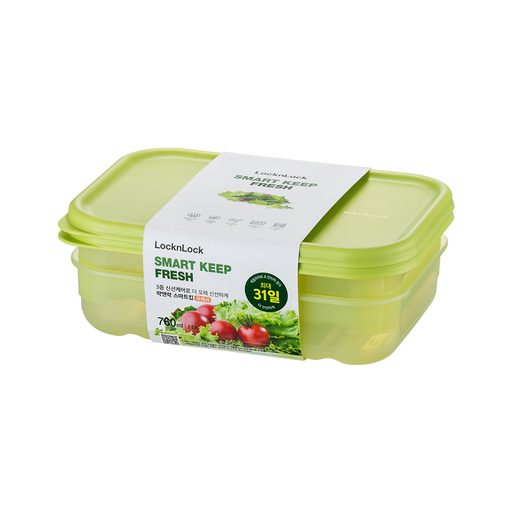
Why this model is right for you: The two 760 ml containers make it easy to sort small produce, chopped fruit and side dishes.
This modular size avoids the need for oversized containers. The product details mention a ridged base and gas-absorption technology designed for fresh produce.
Set of two, BPA-free PP plastic, modular stacking and dishwasher-safe use in the top rack, in accordance with the instructions provided.
We have brought together an up-to-date selection of products that meet these criteria, helping you organise and store food every day.
Yes, provided the manufacturer clearly states that it is suitable for freezer use. Always leave a little space to allow the food to expand, and avoid placing a very cold container directly beneath a heat source. Also check the condition of the seal after several freezing cycles.
It depends on the material, how often it is used and how well it is maintained. Replace any container that is cracked or misshapen, whose lid no longer closes properly or whose seal has become rigid. A smell that remains despite washing may also indicate that it is time to replace the container.
Remove the seal, wash each component separately with a mild cleaning product, then dry them thoroughly. Avoid leaving very strongly scented food in a plastic container for a long time if it retains aromas. For greasy preparations, 304 stainless steel can be a practical solution, provided you follow the instructions regarding the lid.