
Livraison le jour même ou le lendemain

Qualité garantie

Débloquez vos offres de bienvenue: Livraison GRATUITE | Jusqu'à -80 % | 30 jours d'essai gratuits à JoyPlus
Téléchargez l'application
A well-organised pantry often starts with good airtight food storage containers. However, some purchases can disappoint quickly: lids that are difficult to close, sizes that don't fit your cupboards, or labels that peel off after a few uses. Before choosing a kitchen storage set, a few simple checks can help you avoid unnecessary spending.
The term "airtight" sounds reassuring, but it isn't enough to guarantee a good product. Look at the lid design, whether there's a seal, and how easy it is to close. A mechanism that's too fiddly might end up at the back of a cupboard, while a lid that warps or doesn't seal properly will protect your food less effectively against moisture and odours.
For dry goods like rice, pasta, flour or sugar, choose containers with a closure that's simple to check and operate. Also check the manufacturer's information about food use, washing and temperature tolerance.
A 16- or 24-piece set might seem like good value, but not every container will necessarily fit in your kitchen. Measure the depth of your shelves, the available height and the width of your drawers before ordering. Containers for pasta and rice are generally taller than spice jars.
Also think about accessibility. A container that's too tall, placed at the back of a cupboard, can make meal prep more difficult, even if it seems to optimise pantry organisation on paper.
A transparent container isn't always enough. Flour, icing sugar, rice and some spices can look alike, especially when several people use the kitchen. Readable jar labels help prevent mistakes and let you check your supplies at a glance.
Sticky labels need to be suitable for the surface and the kitchen environment. Check their size, quantity and printing method if you use a label printer.
When choosing airtight food storage containers, examine three points:
It's best not to assume a container is dishwasher, oven or freezer safe if this information isn't clearly stated.
To organise your kitchen, combine several sizes rather than choosing only identical containers. Small containers are good for spices, seeds and toppings. Medium sizes work well for sugar, cereals and pulses. Taller models suit spaghetti, fusilli, macaroni and some products bought in bulk.
A storage set becomes truly practical when the containers can be grouped by food type. Also leave a little space around each container so you can take it out without having to empty the whole shelf.
A good label can show the product name, its opening date or preparation instructions. For everyday use, choose a size large enough to remain readable from a distance. Rolls of labels vary in dimensions and number of units: these details matter if you plan to label several jars.
For dry foods, pairing an airtight container with a clear label makes stock rotation easier and helps avoid buying duplicates.
The options below meet different needs. The features mentioned correspond to the information available in the product listings; check the care and food contact details before use.
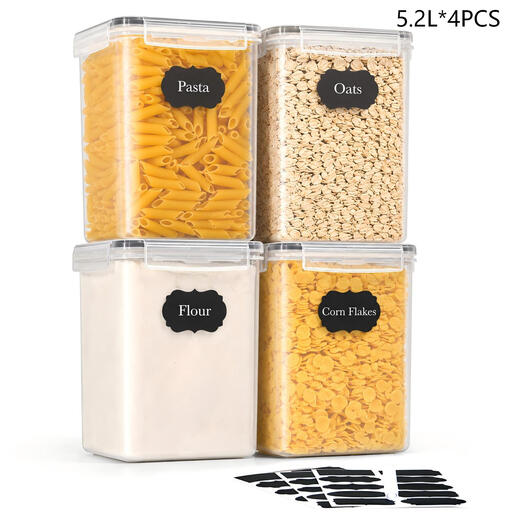
Why this choice suits this profile: This compact set lets you start organising your pantry without accumulating too many containers. It works well for essentials like rice, pasta, flour or sugar.
It stops you filling a cupboard with sizes you'll never use and includes identification elements mentioned in the product listing.
A 4-piece set, described as airtight, with labelling accessories included.
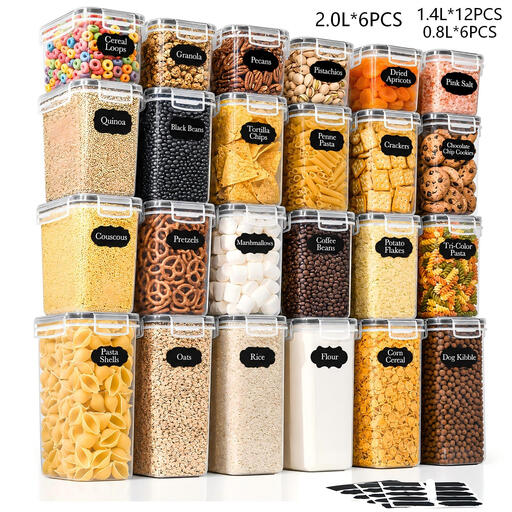
Why this choice suits this profile: This set suits kitchens where several food categories need to be stored separately, from spices to bulk dry goods.
The variety of pieces means you don't have to buy separate containers in mismatched sizes for your whole pantry.
24 pieces, suitable for storing several categories, with labels and accessories mentioned in the product name.
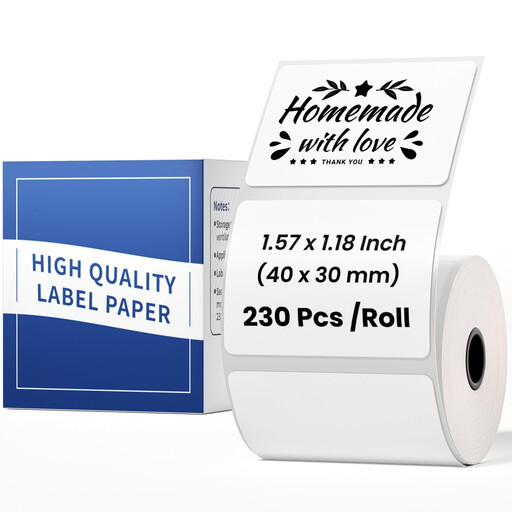
Why this choice suits this profile: This roll is ideal for people who regularly relabel their spice jars, containers and food supplies.
The stated size and quantity let you plan several labelling sessions without having to buy another roll at the slightest change.
Stated size of 1.57 × 1.18 inch, white colour and compatibility with M110 and M220 models.
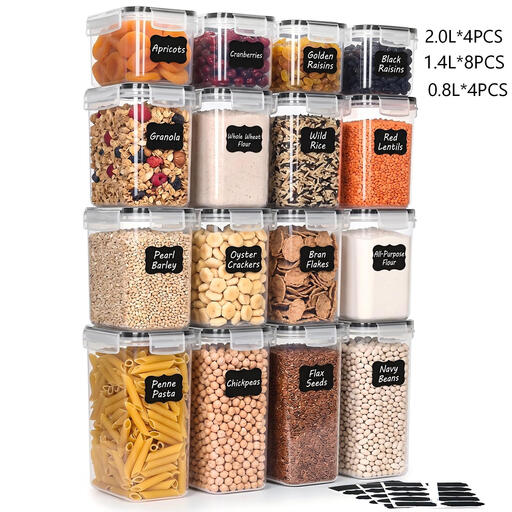
Why this choice suits this profile: This medium-sized set provides a structured base for sorting pasta, rice, flour, sugar and several spice jars.
It limits mixing sizes by offering a cohesive set to completely reorganise one or two shelves.
16 pieces, intended use for dry foods and labels and tags included in the product presentation.
We've put together a comprehensive list, updated in real time, of products that meet these strict selection criteria and European safety regulations.
Choose the size based on the quantities you usually buy and the available height in your cupboard. Tall containers suit long pasta and larger supplies, while shorter sizes fit more easily into drawers and shallow shelves. For containers for flour and sugar, allow a wide enough opening to make filling and measuring easier.
The length of time depends on the food, its best-before date, its moisture content and storage conditions. An airtight container doesn't automatically extend the date stated on the packaging. Transfer the product to a clean, dry container, then note the date on a label. Before eating it, regularly check its smell, appearance and any signs of moisture.
It depends on the model and the surface. Labels designed for dry use may peel off when they come into contact with water or steam. Remove them before washing if the product listing doesn't state they're resistant. For containers that are cleaned frequently, choose a size compatible with your labelling device and follow the manufacturer's recommendations.