
Livraison le jour même ou le lendemain

Qualité garantie

Débloquez vos offres de bienvenue: Livraison GRATUITE | Jusqu'à -80 % | 30 jours d'essai gratuits à JoyPlus
Téléchargez l'application
Between dinner leftovers, pasta, flour, biscuits and takeaways, airtight food storage containers can quickly transform the organisation of a kitchen. But you still need to choose containers that suit your habits, your cupboards and the foods you store.
Some details highlighted in product listings are worth a closer look, however.
A lid that clips on easily isn't necessarily airtight. For dry foods, go for a closure with a silicone seal or a clearly described locking system. For liquids and meals on the go, also check for side clips and that the seal is properly positioned.
The stated capacity isn't everything. A 1-litre container can be too tall for a pantry shelf, while a large container might take up unnecessary space in a drawer. Measure the depth and height you have available before ordering, especially if you're looking for stackable containers.
Glass, plastic and bamboo aren't suited to the same uses. A container may be fine for the fridge without being compatible with the oven or microwave. Similarly, a bamboo lid usually needs to be hand-washed. It's better to read the manufacturer's warnings than to rely solely on the product's appearance.
BPA-free containers are popular for everyday storage. When the manufacturer states this, it can be a deciding factor, but this mention doesn't replace checking the usage instructions. For glass, verify the type stated, its impact resistance and the permitted uses.
Plastic is lightweight and practical for lunch boxes or everyday storage. Glass is heavier, but it lets you see the contents and often works well for keeping leftovers in the fridge. In any case, avoid sudden temperature changes if the product sheet doesn't allow them.
An airtight system needs to stay effective through repeated washes. In particular, check the following points:
A poorly positioned seal can cause leaks or reduce protection against air and moisture. For storage jars and pots intended for dry foods, also leave a little space when the manufacturer recommends it.
An assortment of several capacities proves practical for rice, cereals, spices, leftovers and individual portions. Transparent containers make it easier to identify the contents, while labels let you note the food name and storage date.
For a consistent pantry storage system, group products by use: small containers for seeds and spices, medium sizes for pasta and cereals, large containers for flour or foods bought in bulk. A set of food containers will often be simpler to organise than a mix of mismatched pieces.
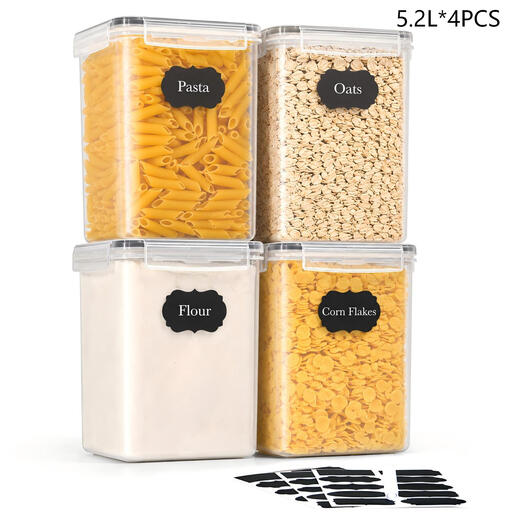
Why this choice suits this profile: This format lets you start with a few containers for pasta, rice, flour or sugar, without having to overhaul your entire kitchen organisation.
The set includes airtight lids, labels and marking accessories, so you don't have to buy these items separately.
Four pieces to organise dry foods and make it easier to see what's in your cupboard.
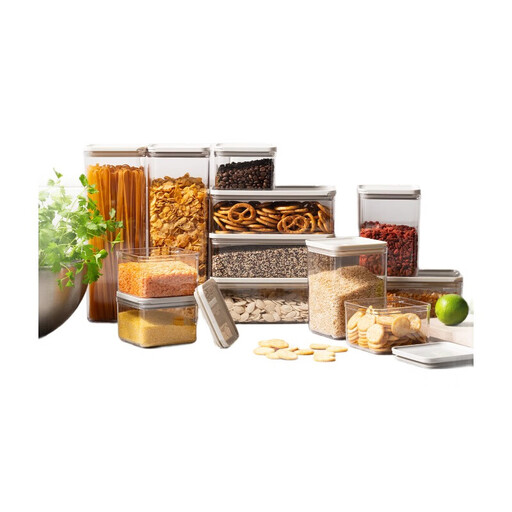
Why this choice suits this profile: Its four capacities and uniform design suit a kitchen where the look of the pantry matters as much as being able to see what's inside.
The sizes are specified: 0.5 L, 1 L, 1.2 L and 2.6 L. This makes it easier to divide up foods according to their volume.
Twelve BPA-free plastic jars according to the product sheet, with lids featuring silicone seals and a stackable design.
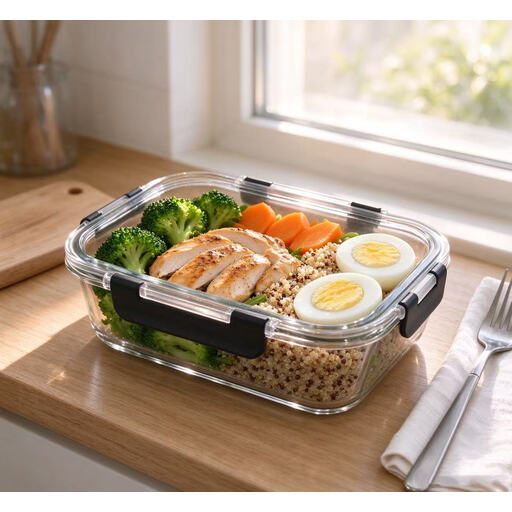
Why this choice suits this profile: The five 1,040 ml containers and five 370 ml sizes work equally well for pre-prepared portions and meals to take away.
The detailed breakdown distinguishes the two volumes. This stops you ending up with a set made up only of large containers, which are impractical for individual portions.
Stated borosilicate glass, snap-lock lids and ten pieces for alternating between meal prep and leftovers.
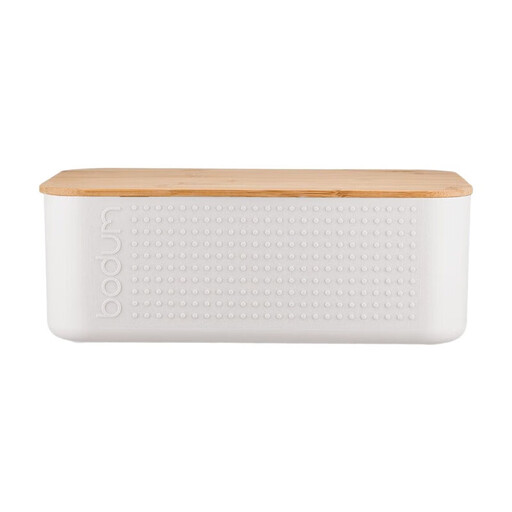
Why this choice suits this profile: This 10 L bread bin holds loaves, baguettes, rolls and pastries, while freeing up space on your worktop.
Its use is clearly defined: it's not a multi-purpose container presented as suitable for all foods.
BPA-free plastic body according to the product sheet, bamboo lid that can be used as a chopping board and a body stated as dishwasher-safe.
We've put together a comprehensive, real-time updated selection of products that meet these exacting criteria and European safety regulations.
Remove the seal when it's designed to be taken out, wash each part with a mild detergent, then leave everything to dry completely before closing again. Bamboo lids should generally stay out of the dishwasher and not be soaked for long periods.
The length of time depends on the food, its freshness, the temperature and the applicable food safety guidelines. An airtight container limits air exchange and the risk of spillage, but it doesn't replace the cold chain or the need to note the preparation date. For cooked dishes, write the date on a label.
Yes, provided they have a suitable lid and their dimensions fit your bag. Their weight and impact resistance, however, need to be taken into account. Before any use in the oven, microwave or freezer, check the product sheet for the specific model: these functions aren't automatically guaranteed.