
Livraison le jour même ou le lendemain

Qualité garantie

Débloquez vos offres de bienvenue: Livraison GRATUITE | Jusqu'à -80 % | 30 jours d'essai gratuits à JoyPlus
Téléchargez l'application
Preparing several meals, storing leftovers or bringing order to the family refrigerator involves more than simply putting on a lid. An airtight food storage container should suit your routines, appliances and available kitchen space. Between leakproof claims, “BPA-free” labels and sometimes limited compatibility, certain details can make the difference between a genuinely useful purchase and an accessory that ends up at the back of a cupboard.
A lid that is simply placed on top may be sufficient for dry foods. With soup, sauce or a meal being transported, however, it can quickly become a liability. When choosing an airtight container, check for a silicone seal and a clearly described locking system. The four clips found on many LocknLock models distribute pressure evenly around the seal, helping to reduce the risk of leaks.
The label “microwave-safe” does not mean that the container can also go in the oven. Similarly, the lid often needs to be removed before reheating food. The manufacturer’s product information should specify permitted uses: refrigerator, freezer, dishwasher, microwave or oven. If you freeze liquid foods, leave some empty space to allow for expansion.
A food container set may seem economical, but formats that are too similar or excessively large can quickly fill your cupboards. For meal prep, capacities from 450 ml to 1 L generally work well for everyday portions. Small 180 ml containers are better suited to sauces, condiments and small side dishes. The 2 L models are more useful for storing family-sized meals or dry ingredients.
A glass food container, particularly one made from borosilicate glass, generally retains very few odours and is easy to clean. Depending on the product specifications, it may be suitable for use in the oven, microwave, freezer and dishwasher. It is heavier than a plastic model, however, and requires greater care to avoid thermal shock.
A BPA-free plastic storage container is lighter and more resistant to knocks. Polypropylene, often identified by the abbreviation “PP”, is suitable for everyday use when the product is intended for food contact. Check the maximum temperatures and the instructions for the lid carefully: in many cases, only the container itself is microwave-safe.
A removable seal makes cleaning easier, as food residue tends to collect in the grooves. A food container labelled dishwasher-safe should be placed according to the manufacturer’s recommendations. For plastic components, the top rack is often preferable. After washing, dry the lid, seal and container separately before reassembling them.
When transporting soup or sauce, lock all four sides of the lid, then briefly turn the container upside down over the sink to check for leaks. This test does not replace the manufacturer’s instructions, but it can quickly reveal a poorly fitted seal.
A stackable or modular storage container can save valuable space in a narrow refrigerator. Square and rectangular containers generally make better use of shelves than round models. Also remember to measure the available height: a 4 L kitchen storage container may fit comfortably in a deep cupboard but be impossible to store in the refrigerator door.
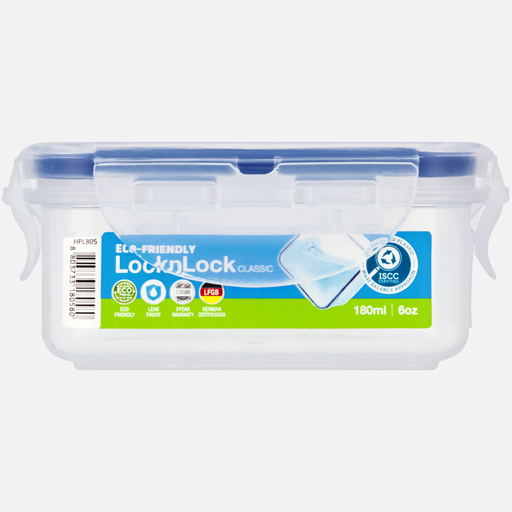
Why it suits this profile: its compact format is ideal for students, single-person households and storing sauces or individual portions.
The four clips and silicone seal help reduce the risks associated with a lid that is merely placed on top. Open the clips before placing the container in the microwave.
180 ml capacity, BPA-free PP plastic, and compatibility with the refrigerator, freezer, dishwasher and microwave according to the manufacturer’s instructions.

Why it suits this profile: this individual format is ideal for leftovers, prepared lunches and recipes that need to be reheated or cooked.
The product information states that the container can be used in the oven, microwave, freezer and dishwasher. Nevertheless, avoid thermal shock and let it return to room temperature before moving it.
Non-porous borosilicate glass, 0.8 L capacity, a stackable design and contents that are visible at a glance.
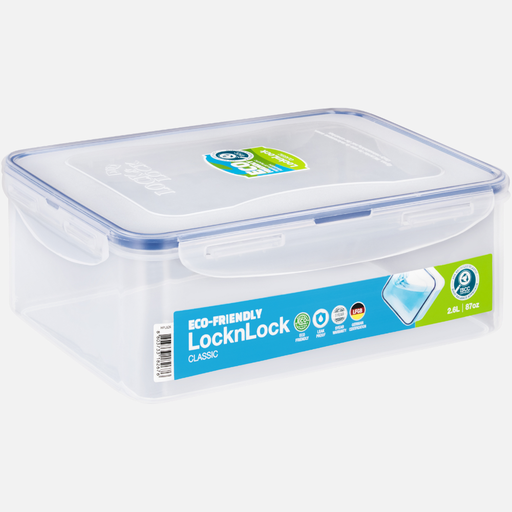
Why it suits this profile: its generous capacity is well suited to family meals, weekend leftovers and batch cooking.
The transparent body makes it easy to check portion sizes, while the four-sided closure is designed to help prevent leaks when storing liquid foods.
BPA-free PP plastic, 2.6 L capacity, and stated compatibility with the refrigerator, freezer, dishwasher and microwave.
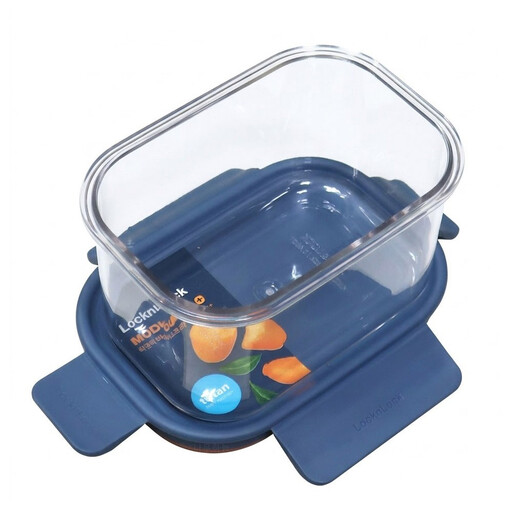
Why it suits this profile: its medium capacity is ideal for a single portion, a packed office lunch or a meal prepared for the week ahead.
Its modular design is made to stack and nest with other containers in the range, rather than leaving you with a collection of incompatible shapes.
450 ml capacity, BPA-free PP, silicone seal, four locking points and stated compatibility with the freezer, dishwasher and microwave.
If you are equipping your kitchen gradually, a few containers in different sizes are often enough to prevent duplicate purchases. The 12-piece Bodum PRESSO set includes four 0.25 L containers, three 0.6 L containers, three 1 L containers and two 2 L containers. It is suitable for dry goods, leftovers and ingredients used to prepare meals. Bodum models are advertised as BPA-free and stackable, but check the instructions for the specific reference you choose before placing it in the dishwasher. Avoid the microwave and oven unless compatibility is explicitly stated.
For larger preparations, the 2 L Ovenglass The Clear Rectangular combines a borosilicate glass body with a lid fitted with a removable seal. The product information states that it can be used in the refrigerator, freezer, microwave and dishwasher. Remove the lid before reheating food and leave sufficient space when freezing.
We have brought together an updated selection of products chosen for practical food storage, kitchen organisation and compatibility with everyday cooking needs.
Yes, provided the product information explicitly allows it. Do not fill the container completely with liquid food: leave some room for expansion. Also avoid moving a very cold container directly onto a heat source, particularly when it is made of glass.
It depends on the material and the model. With a plastic container, remove the lid or leave it slightly ajar in accordance with the instructions. Glass containers designed for microwave use should also be used without the lid unless the lid is specifically declared compatible. Never place a fully sealed container in the microwave.
Its lifespan depends primarily on the condition of the container, lid and seal rather than on a predefined period. Replace the container if it is cracked or warped, retains a persistent odour or if the seal has become loose. Gentle washing, thorough drying and respecting temperature limits will help maintain its performance.