
Same-day & Next-day Delivery

Quality Guaranteed

Unlock Your Welcome Offers: FREE Delivery | Up to 80% OFF | Free 30-day JoyPlus trial
Download the APP
Airtight food storage containers make pantry organisation, meal preparation and leftover transport much easier. However, a lid that looks securely closed in the shop may not be practical for everyday use. The wrong size, a seal that is difficult to clean or a material that is unsuitable for heat can quickly send an appealing purchase to the back of a cupboard.
Here are the key points to consider before choosing your airtight food containers, along with a selection suited to different kitchen needs.
A lid that simply sits in place mainly protects food from dust. It does little to prevent air and moisture from getting in. For dry food storage, choose a model with a silicone seal or a mechanism explicitly described as airtight.
The seal should also be easy to access for cleaning. If it is difficult to remove, food residue can build up around it and gradually reduce the effectiveness of the closure.
A 2-litre container is suitable for rice, pasta or cereal, but it takes up a great deal of space when used for a handful of nuts or a single serving. Conversely, a small container will not be large enough for a bag of flour or a complete meal.
For a well-organised pantry storage system, combine several sizes: small containers for seeds and spices, medium-sized containers for dried fruit and large containers for bulk ingredients.
Plastic and glass are not interchangeable. Some glass containers are designed to go from the refrigerator to the oven, whereas plastic pantry containers should generally not be exposed to heat.
Read the instructions for the specific model carefully. Even heat-resistant glass can crack as a result of thermal shock: never place a piping-hot container directly in the refrigerator or in cold water.
Glass food storage containers are non-porous and generally more resistant to stains and odours. They are particularly well suited to leftovers, meal preparation and reheating, where approved by the manufacturer. Their weight and potential fragility should nevertheless be taken into account, especially when carrying them in a bag.
BPA-free plastic food storage containers are lighter and often highly practical for pantry use. Check the stated material, dishwasher compatibility and temperature limits. The “BPA-free” designation applies only to the composition specified by the manufacturer: it does not automatically mean that the container is oven- or microwave-safe.
A silicone seal around the rim creates an effective barrier against air and moisture. For an airtight lunch container, also check for clips, a snap-on lid or a genuine locking mechanism. When transporting food, the closure should be secure on every side, especially if the container holds sauce.
After each wash, dry the lid and seal thoroughly before closing the container. Residual moisture encourages odours and can compromise food preservation.
Stackable storage jars help you make better use of shelf height, but their stability depends on the shape of the lid and base. Measure the depth of your cupboards before ordering. In an open pantry, transparent sides make it easier to identify the contents and save you from opening several containers to find the right one.
For coffee, the container’s dimensions should also match your consumption habits. A large airtight coffee jar that is only half full leaves more air inside and may prove less practical than a size suited to your routine.
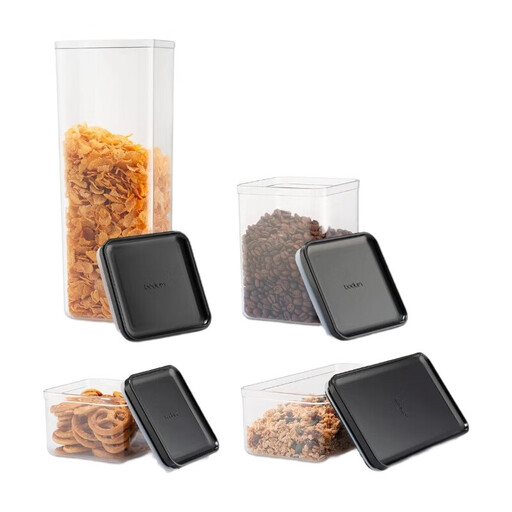
Why this choice suits this profile: A compact set for getting started with dry-food organisation without having to purchase several sizes separately.
The different capacities prevent you from using a large container for a small quantity. The manufacturer states that the lids are airtight and dishwasher-safe.
Six transparent plastic containers advertised as BPA-free, spread across four sizes, with airtight lids.

Why this choice suits this profile: This size is ideal for individual portions, leftovers and ingredients prepared in advance.
The product listing states that it is compatible with the refrigerator, freezer, microwave, oven and dishwasher. Nevertheless, follow all precautions relating to thermal shock.
Non-porous borosilicate glass, a stackable rectangular shape and a capacity of 0.8 L.
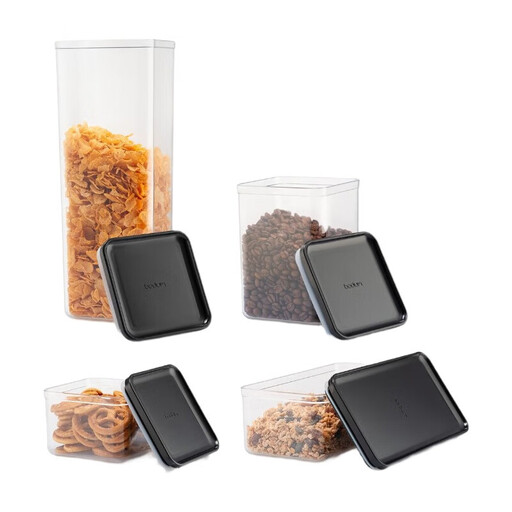
Why this choice suits this profile: With twelve pieces ranging from 0.5 L to 2.6 L, this set is suitable for a family kitchen or storing large quantities.
The stable bases and slightly recessed lids make stacking easier. The advertised BPA-free plastic also helps reduce weight compared with glass.
Twelve containers, four capacities, transparent sides and components advertised as dishwasher-safe.
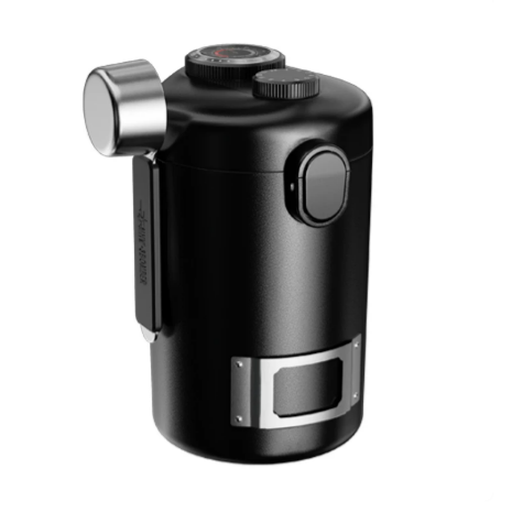
Why this choice suits this profile: A compact airtight coffee jar suited to whole beans, ground coffee and tea.
The silicone ring and built-in humidity dial make storage conditions easier to monitor. The dial is still an indicator, not a precision measuring instrument.
Dual-compartment design, materials advertised as food-contact safe and a silicone seal.
We have put together an up-to-date selection of products chosen for practical features that help you preserve and organise food in the kitchen.
A capacity of 0.6 to 1 litre is generally suitable for an individual serving, depending on the composition of the meal. Smaller sizes are practical for sauces, dried fruit and side dishes. For a family or larger-batch meal preparation, it is better to choose containers holding 1.5 to 2 litres.
They can limit exposure to air, moisture and external odours, but they do not replace proper food-storage practices. Maintain the cold chain, follow stated use-by or best-before dates and observe the recommendations for each product. For dry foods, use only a clean, completely dry container.
Remove the seal if the container’s design allows it, wash it in warm water with washing-up liquid, then leave it to air-dry. Refit it only when it is completely dry and correctly positioned. If it becomes brittle, deformed or no longer provides a reliable seal, replace it or stop using the container.