
Livraison le jour même ou le lendemain

Qualité garantie

Débloquez vos offres de bienvenue: Livraison GRATUITE | Jusqu'à -80 % | 30 jours d'essai gratuits à JoyPlus
Téléchargez l'application
An airtight food storage container is just as useful for keeping leftovers as it is for preparing meals for the week or taking your lunch with you. However, some features marketed as convenient can quickly become restrictive in everyday use. Before placing your order, pay particular attention to the material, the closure system and the uses the container is actually approved for.
With many models, only the container itself can go in the microwave. The lid, silicone seal and clips often need to be removed. For example, a borosilicate glass food container may withstand heat, while its plastic lid must never be placed in a conventional oven.
Check the instructions separately for the body, lid and seal. This precaution is particularly important for a container advertised as suitable for use in both the oven and freezer.
Even a heat-resistant glass storage container can suffer thermal shock. Moving it straight from the freezer into a preheated oven, or plunging a hot container into cold water, increases the risk of cracking.
To avoid this, allow the container to return gradually to room temperature. Also inspect the glass before each use and set aside any container with a crack, chip or deep scratch.
Airtightness depends on several elements : a correctly positioned seal, a suitable lid, properly closed clips and regular care. A removable seal that has not been cleaned properly can retain odours or prevent the lid from closing evenly.
An airtight container with four clips, one on each side, provides reassuring visual and mechanical confirmation. When carrying soup or sauce, close each clip, then carry out a quick check before putting the container in your bag.
A glass storage container is transparent, generally retains very few odours and can be used for both storage and preparation when it is advertised as oven-safe. Borosilicate glass withstands temperature changes better than some ordinary glass, but you should still avoid extreme temperature differences.
Food-grade plastic, particularly polypropylene or Tritan depending on the model, is lighter and less likely to break. It is especially suitable for transporting food, freezer storage and reheating when authorised by the manufacturer. Look for the statements BPA-free, “food contact safe” and the specific instructions for the lid.
The shape also matters. A rectangular, stackable food container makes better use of space in both the fridge and freezer. Within the same range, different sizes may also fit inside one another or stack more easily.
Before ordering, consult a product page that sets out each compatibility clearly. “Microwave-safe” and “oven-safe” are not interchangeable. In both cases, the lid will generally need to be removed unless there is an explicit indication to the contrary.
For the dishwasher, check whether the instruction applies to every part. Some manufacturers recommend washing the lid and seal by hand to preserve their shape and airtightness.
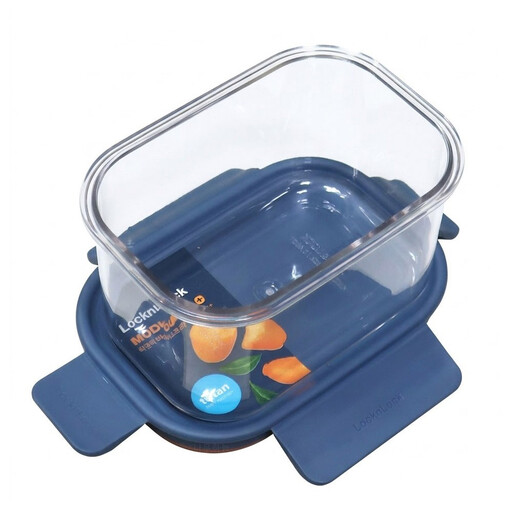
Why this choice suits this type of user : With its 450 ml capacity, this model is ideal for individual portions. Its polypropylene body is lightweight and easy to carry on your daily journeys.
The four-sided closure and silicone seal help minimise the risk of leaks, provided each clip is closed correctly.
Compatible with the fridge, freezer, microwave and dishwasher according to the product information. Its rectangular format fits easily into a modular range.

Why this choice suits this type of user : Its non-porous borosilicate glass and 0.8 litre capacity make it suitable for storage, reheating and prepared portions.
The product information details how the container can be used in the oven, microwave, fridge, freezer and dishwasher, while also highlighting the precautions required to avoid thermal shock.
Transparent glass, stackable design and a container material advertised as PFOA-free.

Why this choice suits this type of user : With its 2 litre capacity, this container is ideal for family meals, large batches and preparing meals for several days.
The removable seal makes cleaning easier. However, the manufacturer specifies that the lid must be removed when using the microwave and that the container must not be used in a conventional oven.
Borosilicate glass, an airtight lid and compatibility with the dishwasher, freezer and microwave according to the instructions provided.

Why this choice suits this type of user : Its rectangular 630 ml format offers a good balance between an individual portion, leftovers and a packed lunch.
The four clips and removable silicone seal make it possible to check the closure and cleanliness of the whole container separately.
Borosilicate glass body advertised as suitable for use in the oven, microwave, freezer and dishwasher. The lid must be kept out of the oven and microwave.
We have put together a complete, real-time updated list of products that meet these demanding selection criteria and European safety regulations.
To maintain the performance of an airtight container with a lid :
A 630 to 910 ml format is generally suitable for a complete individual meal. For a family or large-batch preparation, a 2 L food container provides more space. Rectangular, stackable models make it easier to organise the fridge.
It is best to avoid this. Even a container that is suitable for both the oven and freezer will generally need to return gradually to room temperature. Check the manufacturer’s instructions: thermal resistance varies according to the type of glass and the design of the container.
The container’s usable life depends on the condition of the glass or plastic, the clips and the seal. Replace the container or the affected components if they are cracked, deformed, permanently stained or no longer close properly. Regular cleaning and following the approved temperature guidelines help prevent premature wear.