
Same-day & Next-day Delivery

Quality Guaranteed

Unlock Your Welcome Offers: FREE Delivery | Up to 80% OFF | Free 30-day JoyPlus trial
Download the APP
A leaky lid in the fridge, a box that's too bulky for the cupboard, or a seal that holds onto smells after just a few uses: not all airtight food containers are created equal. Their appearance or the simple mention of "airtight" isn't enough to guarantee a purchase that suits your habits.
Before choosing a storage container, check its material, its closure system and the uses it's approved for. These criteria affect everything from preserving dry goods to meal prep and organising your pantry.
A lid that's simply placed on top keeps dust out, but it won't necessarily stop air or moisture from getting in. For a truly airtight container, look for a silicone seal or a clearly described locking system. Ideally, the seal should be removable for cleaning – food residue can quickly build up in there.
A BPA-free plastic box is lightweight and practical, but it isn't necessarily designed for the oven, freezer or hot food. Conversely, a food-grade glass container can sometimes withstand temperature changes better, though it comes with extra weight and greater fragility if dropped.
Indications like "microwave-safe", "freezer-safe" or "dishwasher-safe" should be checked separately. They don't necessarily mean that all parts of the container can be used under the same conditions.
A large storage jar might seem handy, but its height could stop a cupboard door from closing. Measure the depth of your shelves, the height under your units and the space available in your fridge. For organising a pantry, several stackable sizes are often easier to work with than a set of identical containers.
The mention food-contact safe is essential. It indicates that the product is intended to hold food under the intended conditions. However, it doesn't replace the usage and care instructions.
A good airtight container should still be easy to open every day. Examine the design of the seal, whether there are any clips, and whether the different parts can be removed for washing. A complex mechanism can improve the seal, but it also adds nooks and crannies to clean.
For an airtight lunch box, check its resistance to leaks during transport above all else. For storing dry goods, the main concern is protecting them from moisture and cupboard odours.
Small sizes are ideal for spices, dried fruit and individual portions. Containers of 1 to 2 litres can hold leftovers, cooked grains or meals to share. Beyond that, the base and lid need to be stable enough for safe handling.
Rectangular shapes generally make better use of fridge space, while cylindrical jars fit neatly on a shelf. In any case, leave a little room when freezing liquids – their volume can increase.

Why this choice suits this profile: Its 2-litre size works for several everyday uses: leftovers, meal prep and family portions. The clear glass lets you check the contents without opening the box.
The silicone seal is removable, making it easy to clean the areas that could hold onto odours.
Borosilicate glass, 2-litre capacity, claimed dishwasher, freezer and microwave compatibility. Remove the lid before reheating.
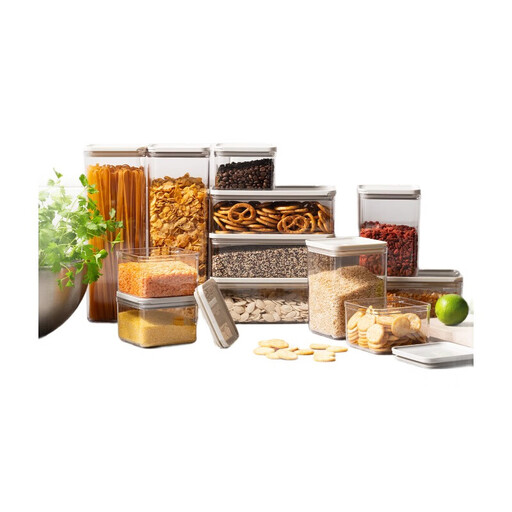
Why this choice suits this profile: This set offers four capacities to organise a pantry in a uniform way, from small ingredients to bulk supplies.
The varied sizes stop you from filling a large jar with a small amount and wasting shelf space.
12 jars of 0.5, 1, 1.2 and 2.6 litres, transparent bodies, lids with silicone seals and a stackable design.
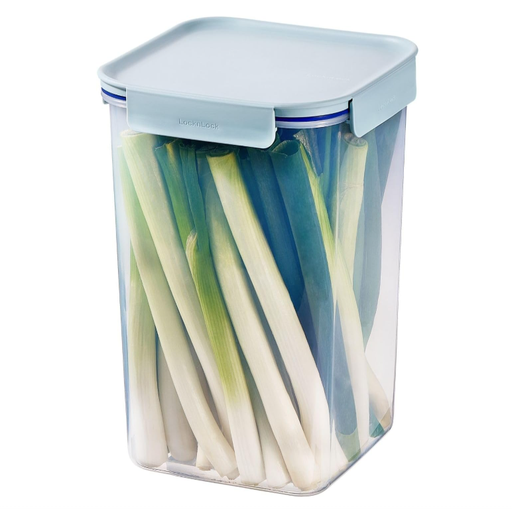
Why this choice suits this profile: Its 4-litre capacity is ideal for storing large quantities of dry ingredients or preparing dishes to share.
The lightweight plastic reduces the weight during frequent handling, unlike a large glass container when full.
4-litre capacity, claimed BPA-free plastic, airtight closure and dishwasher compatibility.
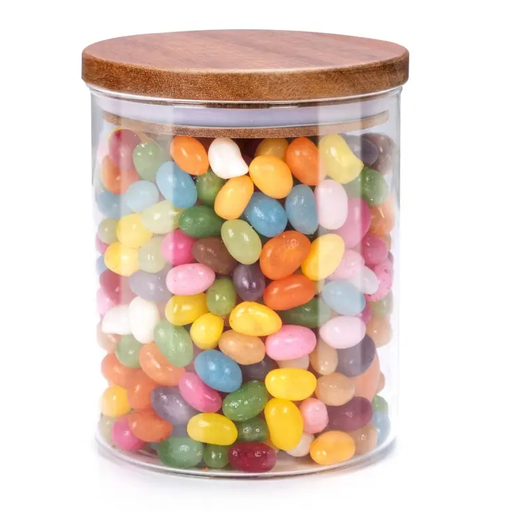
Why this choice suits this profile: Its 600 ml volume is ideal for spices, seeds, dried fruit and small ingredients you use regularly.
The compact size stops you from dedicating a large space to a small amount. The clear glass also lets you quickly identify the contents.
600 ml capacity, glass body and claimed airtight acacia wood lid. Clean the lid with a damp cloth.
We've put together a comprehensive, real-time updated list of products that meet these strict selection criteria as well as European safety regulations.
To keep your food storage container performing well, adopt a few simple habits:
The MHW-3BOMBER Coffee Manual Vacuum Storage Canister can also suit an organisation focused on coffee and ingredients that need storage with manual air extraction. However, check its product page for its dimensions, capacity and conditions of use before buying.
Glass is suitable if you want to see the contents and limit odour retention. BPA-free plastic is lighter and more practical to carry. The choice therefore depends on the intended use, the acceptable weight and the temperatures the container will be exposed to.
Clean the seal, dry it thoroughly and avoid abrasive products. Don't force the lid and replace the container if it develops a crack or warping. Regular care helps preserve the seal, though it doesn't guarantee the same lifespan for all products.
Not always. Only use these functions when the product page explicitly allows them. Generally, remove the lid before reheating the contents and leave enough space to allow for food expansion when freezing.