
Same-day & Next-day Delivery

Quality Guaranteed

Unlock Your Welcome Offers: FREE Delivery | Up to 80% OFF | Free 30-day JoyPlus trial
Download the APP
Taking your lunch to work, storing leftovers or organising a cupboard involves more than simply choosing a lid. An airtight food container should suit the quantity of food, how you plan to transport it and your cleaning routine. Your needs will differ depending on whether it is for a child at school, a student, an employee or a family.
Before buying a lunch box or a set of food containers, three common mistakes are worth avoiding:
The material determines the weight, durability, transparency and possible uses.
Check the manufacturer’s instructions and, where available, information relating to food contact. The label “BPA-free” does not automatically mean that the box can go in the oven or withstand all temperatures.
For an individual meal, a container of 600 to 1 000 ml may be suitable, depending on your appetite and the menu. Small boxes are ideal for dried fruit, sauces or snack portions. A set in several sizes means you do not need to use a large box for a small quantity.
Also consider the external dimensions. A 900 ml box can offer plenty of capacity while still fitting easily into a school bag if it has a rectangular shape. For kitchen storage boxes, choose stackable or nestable models to reduce clutter in cupboards.
An airtight box or food container with a lid should be properly closed all the way around. When transporting soup, sauce or saucy dishes, check for a seal and enough clips to hold the lid securely. For dry foods, a simpler closure may be perfectly adequate.
A compartmented box keeps foods separate and stops raw vegetables or fruit from touching the main dish. However, this does not necessarily mean that each compartment is individually airtight. This is an important distinction to remember if you want to avoid unpleasant surprises at the bottom of your bag.
Also check:
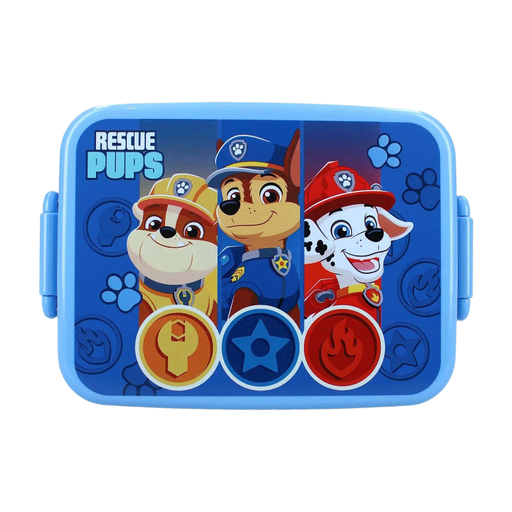
Why this choice suits this profile: This 16 × 13 × 5 cm plastic model is suitable for children aged 3 and over. Lightweight and compact, it is designed for sandwiches, small pieces of fruit and school snacks.
The press-fit closure is easy to use. The instructions recommend hand washing and prohibit microwave use, helping to prevent unsuitable use.
Durable plastic, a smooth finish, low weight and PAW Patrol designs. The manufacturer recommends checking the condition of the box before each use.

Why this choice suits this profile: With eight capacities ranging from 150 ml to 1 040 ml, this set covers individual portions, leftovers and meal preparation. The glass makes it easy to see what each box contains at a glance.
The different sizes mean you do not always have to use a large box. Before placing hot food inside, check the instructions for the glass and lids.
Borosilicate glass, eight capacities and removable lids. The set is equally suitable for organising your fridge and transporting prepared meals.

Why this choice suits this profile: Its five compartments are ideal for varied meals, keeping portions separate and enjoying picnics. 316L stainless steel is suited to users looking for a lunch box that can withstand frequent use.
The four fasteners hold the lid firmly in place. The manufacturer recommends hand washing and advises against microwave use and prolonged storage of highly acidic or salty foods.
316L stainless steel, five compartments, a PP lid and four-fastener closure. The astronaut design on the lid adds a fun touch to children’s meals.
We have put together a complete, real-time updated list of products that fully meet these strict selection criteria and European safety regulations.
To store dry foods, pasta, rice, flour or sugar, a set of containers with airtight lids helps organise your pantry and makes it easy to find your supplies at a glance. Sets of 4, 9, 10 or 12 pieces make it easier to create a coordinated look among your kitchen storage boxes. However, check their dimensions before placing them in a drawer or cupboard.
The Bodum PRESSO set contains 12 BPA-free plastic containers in 0.25, 0.6, 1 and 2-litre sizes. It is designed to organise your pantry and store dry foods. The manufacturer states that they are dishwasher-safe, but advises against using them in the microwave, oven or near direct heat sources.
For meals prepared at the office, a set of glass boxes in different capacities can help you avoid using multiple containers. If you want to keep foods separate, a bento or compartmented box can also eliminate the need for several small packages.
Not necessarily. Check for a seal, the design of the lid and the manufacturer’s instructions. Always close the box on a stable surface, then carry it upright in a suitable bag.
It depends on the material, how often it is used and the condition of the lid. Replace the container if it is cracked, deformed, permanently stained or if the closure no longer holds properly. You should also inspect the seals and clips regularly.
Only if the manufacturer explicitly allows it. Stainless steel and other metal components must never be placed in the microwave. For plastic and glass, remove the lid if the instructions require it and follow the stated temperature limits.