
Livraison le jour même ou le lendemain

Qualité garantie

Débloquez vos offres de bienvenue: Livraison GRATUITE | Jusqu'à -80 % | 30 jours d'essai gratuits à JoyPlus
Téléchargez l'application
Whether you're meal prepping for the week, saving leftovers to reduce waste, or just packing lunch for the office, the airtight food container has become a kitchen essential. Yet, with countless models on the market, buying one can quickly become a headache. Between broken promises of a perfect seal and materials that degrade over time, it's easy to get lost.
As a product expert at Joybuy, my role is to help you see things more clearly. Let's cut through the marketing jargon and focus on the criteria that truly matter for making a smart, long-lasting choice.
Before you choose, it's crucial to know the hidden flaws that can make a storage container useless after just a few months.
To make the right choice, focus on these three technical aspects. They are what make the difference between a short-lived gadget and a true everyday ally.
The choice of material directly impacts your container's lifespan, food safety, and versatility.
The effectiveness of an airtight container all comes down to its lid. A good system consists of two essential components:
Check the compatibility icons: freezer, dishwasher, microwave, and oven. For a glass dish with a lid, the golden rule is simple: only the glass container goes in the oven and microwave. The plastic lid and silicone gasket must always be removed before exposing them to high temperatures to prevent them from melting or warping.
Everyone's needs are different. Here is a selection of products that meet specific use cases while adhering to the quality criteria we've just discussed.

Why it's a perfect match: Ideal for cooking single-serving dishes (like gratins or individual lasagnas) and storing them without transferring containers. It goes from the oven to the table, then to the fridge with total ease.
Its borosilicate glass body withstands high oven temperatures and thermal shock, avoiding the pitfall of standard glass that can crack.
Absolute versatility: oven, microwave (without lid), freezer, and dishwasher safe. Its 4-clip locking system ensures an excellent seal.

Why it's a perfect match: Perfect for those who want to eliminate plastic from their kitchen and organise their fridge with healthy, lightweight, and stackable containers. Ideal for keeping salads, fruits, or leftovers fresh.
Food-grade 304 stainless steel won't stain, retain odours, or scratch, unlike plastics that degrade quickly.
Unbreakable, lightweight, and easy to clean. Its stackable design optimises space in the fridge or cupboards. The transparent lid lets you see the contents at a glance.
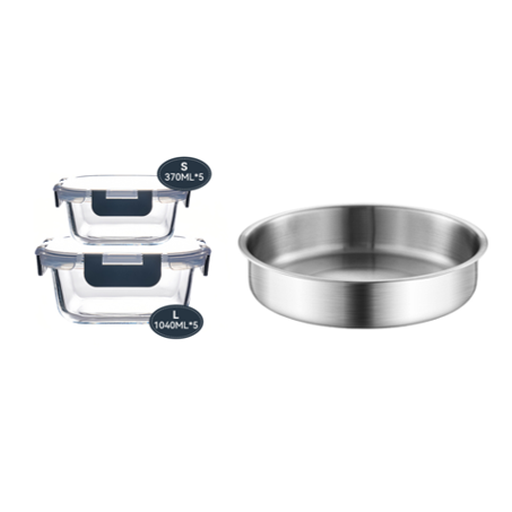
Why it's a perfect match: Designed for batch cooking fans who prepare all their meals for the week. This comprehensive meal prep container set offers multiple sizes for main dishes, sides, and snacks.
The "snap-lock" clip system is designed to be robust and reliable, even after multiple uses. No more leaky lids in your bag!
A complete and cohesive set for top-notch organisation. The borosilicate glass containers can go directly into the microwave to reheat meals.
Discover our full selection of products that meet these quality criteria and current safety standards.
This is a tricky manoeuvre. Even borosilicate glass has its limits. Moving a dish directly from a freezing temperature (freezer, -18°C / 0°F) to a preheated oven (180°C / 350°F) creates extreme thermal shock that can cause it to shatter. The best practice: let the dish thaw for a few hours in the refrigerator or at room temperature before putting it in the oven.
The secret is to gently remove the gasket from the lid after each use. Wash it by hand with hot water and dish soap, then rinse it thoroughly. The crucial point: let it air dry completely before putting it back in place. This prevents moisture from getting trapped and stops mould from forming.
No, absolutely never. Stainless steel, like all metals, should not be placed in a microwave oven. The metal reflects the microwaves, which can cause sparks (arcing), damage your appliance, and even pose a fire risk. Reserve stainless steel for cold storage and transport.