
Livraison le jour même ou le lendemain

Qualité garantie

Débloquez vos offres de bienvenue: Livraison GRATUITE | Jusqu'à -80 % | 30 jours d'essai gratuits à JoyPlus
Téléchargez l'application
A box that leaks in your bag, a lid that’s hard to clean, or a container that takes up too much space in the fridge can quickly turn a practical purchase into a waste of money. Whether it’s for a lunch at the office, the kids’ meals, a picnic, or batch-prepping several portions, choosing an airtight food container deserves a bit of careful thought.
Some marketing claims can also be confusing. A box advertised as “leak-proof” may require precise locking, while a material presented as particularly durable might not be suitable for the oven or microwave. Here are the criteria to check before comparing models.
A clip-on or latch lid can reduce leaks, but its effectiveness depends on the condition of the seal, how the lid is positioned, and the type of food being carried. Very liquid preparations need more care than dry foods.
Before slipping a leak-proof lunch box into your bag, make sure all the clips are properly closed. If the box is going to be carried upright, a separate pouch is still a sensible precaution.
Stainless steel is generally fine for carrying and storing food, but metal parts should never go in the microwave. Borosilicate glass can be handy for reheating certain dishes, when the manufacturer allows it, but it is heavier and more prone to breakage.
The phrase “dishwasher safe” doesn’t necessarily mean that all parts – especially the lid and its seal – can go in the dishwasher. Check the instructions separately for the container and its accessories.
A large capacity doesn’t guarantee comfortable use. A box that is too tall may not fit well in a bag or on a fridge shelf, while compartments that are too small limit portion sizes. For meal prep, a set of food containers in identical sizes makes stacking and storing much easier.
Look for a clear description of the material that comes into contact with food, along with precise care instructions. Models made from 304 or 316L stainless steel are valued for their durability and low odour retention. 316L is particularly known for better corrosion resistance, but that doesn’t mean you can skip rinsing and drying the box properly.
For glass, the term borosilicate refers to a type of glass designed to handle temperature changes better than some ordinary glasses. That doesn’t make it unbreakable, though. Always check the guidelines for the freezer, oven and microwave.
In every case, choose products that clearly state the manufacturer, importer or responsible person within the European Union, as well as the usage instructions.
A good airtight food container should be easy to close and open. Removable seals make cleaning simpler, but they can trap residue if not taken out regularly. Also consider the type of closure: clips, latches or a press-on lid.
A compartmentalised bento box separates foods and stops sides from mixing together. It works especially well for varied meals, controlled portions and children’s lunches. However, it isn’t always suitable for sauces and very liquid foods if each compartment doesn’t have its own independent seal.
For daily use, dishwasher compatibility saves valuable time. The phrase food container suitable for freezer and dishwasher should still be checked separately for the container and the lid.
Allow food to cool before closing the box, unless the manufacturer says otherwise. Don’t fill a container destined for the freezer completely: food needs a little space to expand. After washing, dry the container and seal thoroughly before storing them.
The products below suit different uses. The features listed are taken from the information available on their product pages.
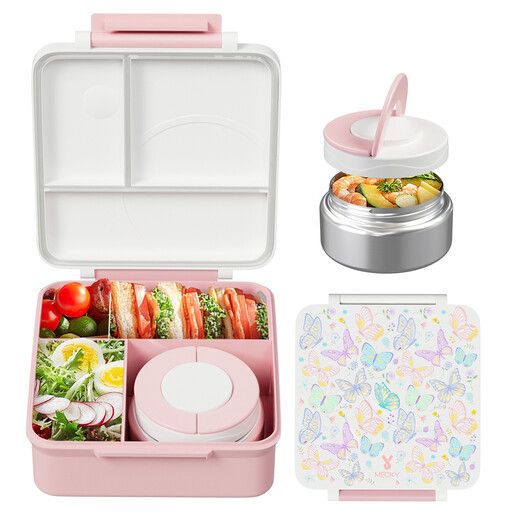
Why this choice suits this profile: Its compartmentalised design and single-latch closure make it a good first lunch box for the office, studies or short outings.
The compartments mean you don’t need to buy several containers to separate your food. Still, check the closure before travelling and consult the product page for permitted dishwasher and freezer use.
Divided box, latch closure and white butterfly design. The stated capacity is 54 oz, approximately 1.6 litres.
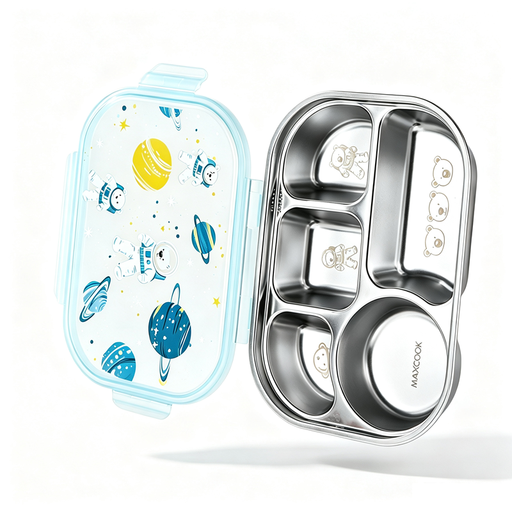
Why this choice suits this profile: Its five compartments let you organise a complete meal, snacks or different portions without needing multiple boxes.
The four loops make the locking mechanism visible at a glance. The product page recommends hand washing and advises against microwave and oven use, which prevents unsuitable usage.
316L stainless steel, five compartments, PP lid and four locking loops.
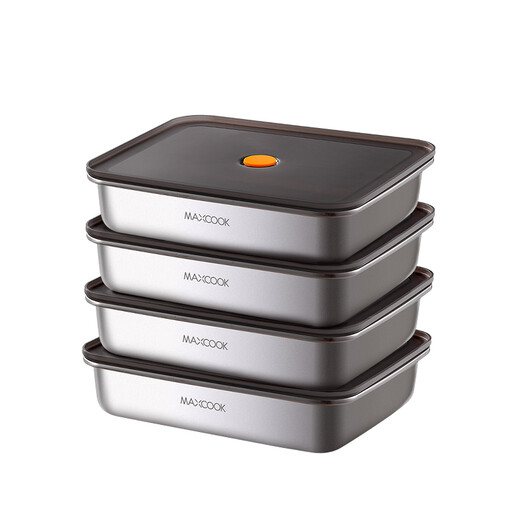
Why this choice suits this profile: Its four identical 1.6-litre containers are ideal for those who prepare several meals, store leftovers or regularly reorganise their fridge.
The uniform size minimises stacking and storage issues. The product page states freezer and dishwasher compatibility, but this should be confirmed separately for the lids.
Set of four 316L stainless steel containers, 1,600 ml capacity per box and secure-fit lids.
We’ve put together a comprehensive, real-time updated list of products that meet these strict selection criteria and European safety regulations.
An insulated lunch box or a vacuum food jar is better suited to dishes you want to keep from cooling down. The Maxcook MCTG0164 and Maxcook MCTG0856 models, both with a 1.5-litre capacity, feature vacuum insulation, a wide opening and a closure designed for travel. The manufacturer states heat retention of 4 to 6 hours under appropriate usage conditions. It is recommended to preheat or pre-cool the container before filling it.
A borosilicate glass container lets you see the contents easily and can be suitable for fridge or freezer storage when the product page allows it. The JORDAN&JUDY sets come in several capacities, including an eight-piece set ranging from 150 to 1,040 ml and a ten-piece set made up of 370 ml and 1,040 ml boxes. However, their weight and potential fragility should be considered for daily transport.
There is no universal lifespan. It depends on how often you use it, knocks and drops, exposure to heat, and how well you look after it. Replace a cracked lid, a deformed seal or a container that shows visible damage. To extend the life of your box, avoid abrasive sponges on stainless steel, dry the parts separately and stick to the stated limits for the oven, microwave, dishwasher and freezer.