
Same-day & Next-day Delivery

Quality Guaranteed

Unlock Your Welcome Offers: FREE Delivery | Up to 80% OFF | Free 30-day JoyPlus trial
Download the APP
Between office lunches, children’s packed meals and batch-preparing several portions in advance, an airtight food container needs to be practical, sturdy and suited to its actual use. However, some of the claims highlighted on product pages can be confusing. A lid described as “secure” does not necessarily mean the container is suitable for the freezer, oven or dishwasher.
Here are the key criteria to check before buying, along with a selection of models to suit different needs.
A clip-lock lid can help reduce leaks, but its effectiveness also depends on the quality of the seal, how well the parts fit together and the position of the container during transport. For soup or sauce, make sure the closure system is clearly designed for liquid foods and do not fill the container to the brim.
Borosilicate glass is valued for its resistance to temperature changes, but each model has its own limits. Stainless steel, on the other hand, cannot go in the microwave. Plastic lids may also have different restrictions from the container itself.
Claims such as freezer and dishwasher safe, oven safe or suitable for reheating must be confirmed on the product page. They cannot be assumed from the material alone.
A lunch box that is too large takes up unnecessary space in your bag and may encourage you to prepare oversized portions. Conversely, a small model quickly becomes impractical for carrying a full meal. Lid grooves, removable seals and any compartments also need to be easy to clean. Tedious maintenance can shorten the lifespan of the container, even if it is made from a robust material.
The manufacturer or seller must state the material compliance. In France and the European Union, items intended for food contact must meet the relevant regulations for that category. This does not replace the need to check the instructions for each individual model.
For an individual lunch, a capacity of 600 to 1,100 ml can work depending on what the meal contains. Smaller sizes are handy for sauces, chopped fruit or side dishes. A set of containers in different capacities makes it easier to prepare portions suited to each use.
A compartmentalised bento box stops foods from mixing together, but its dividers do not necessarily guarantee that there will be no leakage between compartments. For transporting a liquid dish, it is better to choose a container whose lid is specifically designed for that purpose.
Check the number of clips, whether there is a seal and whether the different parts can be removed for washing. Even a well-fitting lid must be properly closed before you put the container in your bag. The product page should also state whether the container can go in the dishwasher, freezer or oven.
For very salty or acidic foods, the manufacturer may recommend a limited storage time in certain metal containers. Follow the cleaning instructions and dry the containers thoroughly before stacking them.
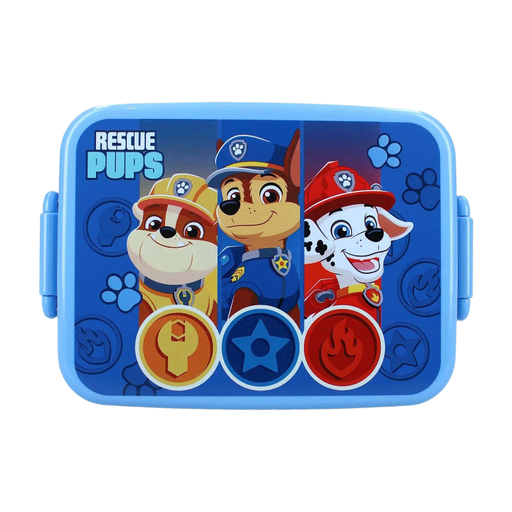
Why this choice suits this profile: This lightweight lunch box is suitable for children aged 3 and up for carrying a sandwich, fruit or a few snacks to school.
The press-to-close lid is clearly described. The instructions do specify hand washing only and that it is not microwave-safe, which reduces the risk of misuse.
Size 16 × 13 × 5 cm, durable plastic, featherlight and PAW Patrol design.

Why this choice suits this profile: The three different capacities make it easy to organise your fridge, freezer and daily meals on the go.
The product page specifies freezer and dishwasher use. However, the steel means it cannot go in the microwave.
316 stainless steel, capacities of 600, 1,100 and 2,200 ml, lids included.

Why this choice suits this profile: This set is ideal for a family or anyone who regularly switches between storing, transporting and preparing meals in advance.
The eight capacities are clearly listed, from 150 to 1,040 ml. This variety means you do not have to use one oversized container for everything.
Borosilicate glass, varied sizes, removable lids and blue colour.
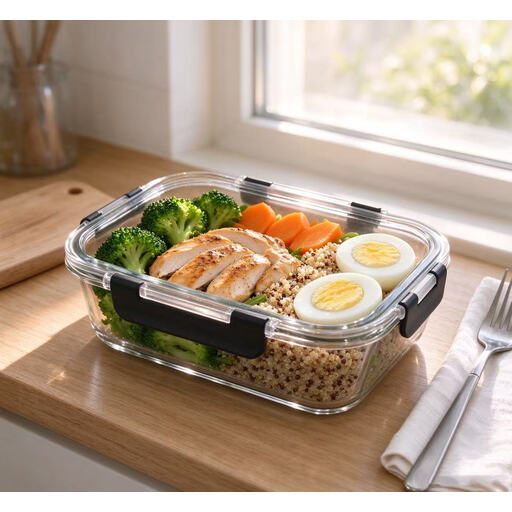
Why this choice suits this profile: The five 1,040 ml containers and five 370 ml ones allow you to prepare several days’ worth of meals in a single session.
The distribution of sizes is clearly stated and the clip-lock lids are designed for storing and transporting lunches.
Ten pieces, borosilicate glass, airtight lids and capacities suited to both main courses and side dishes.
We have put together a comprehensive, real-time selection of products that meet these demanding criteria and European safety regulations.
A lunch box is not always enough to cover every need. For fans of Japanese drinks, the TEANAGOO 7-piece matcha kit includes a 510 ml ceramic bowl, a bamboo whisk, a spoon, a strainer and a stand. The bamboo items should be hand washed and then dried thoroughly.
For organising a sociable evening at home, the HAIDILAO Chinese fondue set brings together several broth bases, sauces, vermicelli, soya-based products and a separate 28 cm stainless steel appliance. Before using it, check the allergen list and storage conditions.
For a snack or side dish, 300 to 600 ml is usually enough. For a full meal, allow between 700 and 1,100 ml, depending on the food and portion sizes. A set of several sizes makes it easier to match the container to the contents.
It depends on the model and the manufacturer’s instructions. Borosilicate glass is often used for cold storage, but always check the information provided. Also remove the lid if it is not designed for the freezer or dishwasher.
Wash the container following the manufacturer’s recommendations, dry the seal thoroughly and avoid abrasive sponges. Do not overload the container, check it regularly for any cracks or warping, and replace any lid that no longer closes properly.