
Livraison le jour même ou le lendemain

Qualité garantie

Débloquez vos offres de bienvenue: Livraison GRATUITE | Jusqu'à -80 % | 30 jours d'essai gratuits à JoyPlus
Téléchargez l'application
Carrying your lunch to the office, prepping meals for the week, or organising the kids’ snacks seems simple enough… until the first leak in your bag. An airtight food container should be chosen based on how you plan to use it, not just on how it looks or what the packaging promises.
Side clips or a lid that snaps firmly shut aren’t always enough to guarantee no leaks. If you’re transporting sauce, dressed salad, or a dish in gravy, check for a silicone seal, the type of closure, and the manufacturer’s specific instructions.
A food container can be perfectly fine for dry foods while being less suitable for liquids. When in doubt, store it upright in a separate bag for the first trip, with a paper towel wrapped around the lid.
A bento box or a compartmentalised lunch box lets you separate different foods, but its dividers aren’t necessarily watertight. Fruit, carbs, and biscuits will stay nicely apart, but a sauce can seep from one compartment to another.
For complete meals, check whether the dividers are fixed, removable, or fitted with individual seals. This detail also affects how easy the container is to clean.
A BPA-free lunch box isn’t automatically compatible with every appliance. Plastic, glass, and stainless steel each have different uses:
Always read the product’s pictograms and instructions regarding the fridge, freezer, dishwasher, microwave, and oven.
For an adult lunch, a capacity between 700 and 1,200 ml should work, depending on what the meal contains. Smaller sizes are suitable for fruit, snacks, and children’s portions. Conversely, a meal prep box of 1,600 ml or more is better for storing generous portions and batch-cooking.
Also measure the space available in your bag, fridge, and locker. A leakproof food container that’s too bulky or heavy may end up at the back of a cupboard.
A four-clip closure, two side latches, or a simple snap-on lid each offer a different daily experience. The seal should be correctly positioned, removable if possible, and easy to dry to prevent lingering odours.
For a picnic, a lunch box with a lid that stays firmly attached will be more practical than one that simply sits on the container. For school, choose an opening that a child can manage without forcing it.
A product advertised as dishwasher-safe should still be washed according to the manufacturer’s recommendations. Some lids need to go on the top rack, while seals require separate cleaning.
In the microwave, generally remove the lid unless stated otherwise. Metal containers, especially stainless steel ones, are not suitable for the microwave. In the freezer, leave enough headroom for liquid foods that may expand as they freeze.
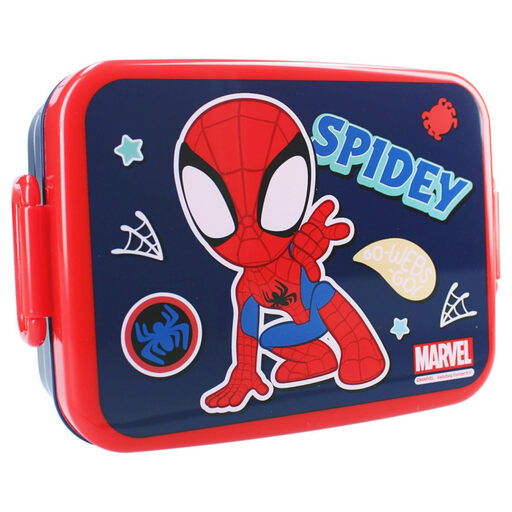
Why this choice suits this profile: Its 16 × 13 × 5 cm size and two press-stud closures are suitable for children from 3 years old, for school, outings, and trips.
The dimensions and closure type are clearly stated. However, the manufacturer recommends hand washing and the product is not suitable for the microwave.
Compact size, two side latches, and an interior suited to sandwiches, snacks, and small containers.
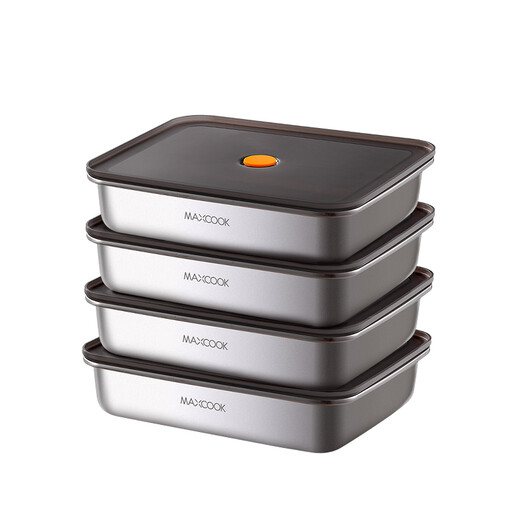
Why this choice suits this profile: This set is aimed at households that prepare multiple portions and want consistent organisation in the fridge or freezer.
The material, number of pieces, and capacity of each container are specified. However, they must not be used in the microwave or oven.
316L stainless steel, four identical containers, snug-fitting lids, and dishwasher and freezer compatibility according to the product sheet.
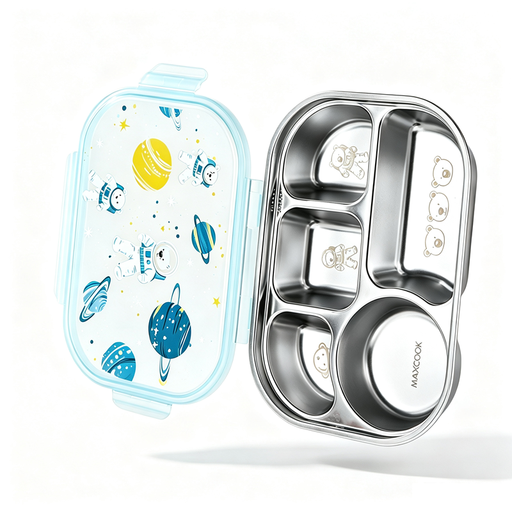
Why this choice suits this profile: Its five compartments are ideal for preparing separate portions for the office, outings, picnics, or children’s meals.
Food separation is built into the design. However, the manufacturer recommends hand washing and excludes the microwave and oven.
316L stainless steel construction, four closure loops, compartmentalised tray, and PP lid.
We’ve put together a comprehensive, real-time updated list of products that meet these demanding selection criteria and European safety regulations.
Wash the container before its first use, then dry the lid, seal, and box separately. Bad smells often develop when the seal stays damp or when greasy foods are stored for too long.
Before each trip, check that the clips are properly closed and that the seal hasn’t shifted or cracked. Replace the container if it shows any warping, cracks, or a closure that no longer holds securely. Its lifespan depends on how often it’s washed, any knocks it takes, and whether you stick to the permitted temperatures.
For a child, avoid very hot foods and make sure the opening is suitable for their age. For an adult, choose a capacity that matches the meal so you don’t have to force the lid or fill the compartments to the brim.
Yes, if the manufacturer states a watertight or leakproof closure and the seal is correctly fitted. The internal compartments aren’t always watertight between each other. When this isn’t specified, it’s better to transport sauces separately.
It depends entirely on the material and model. Stainless steel boxes cannot go in the microwave. For plastic or glass models, remove the lid if the instructions say so, and stick to the stated time and temperature limits.
A size of 600 to 900 ml is suitable for a light single portion or a side dish. For a full meal, allow between 1,000 and 1,600 ml, depending on the foods. Sets containing several containers let you adapt portions without having to buy multiple sizes separately.