
Livraison le jour même ou le lendemain

Qualité garantie

Débloquez vos offres de bienvenue: Livraison GRATUITE | Jusqu'à -80 % | 30 jours d'essai gratuits à JoyPlus
Téléchargez l'application
An airtight food container makes it easier to store leftovers, organise your fridge and prepare meals in advance. But the claims made on product pages aren’t always enough to guarantee a model that truly suits your daily routine.
Before comparing different options, start by identifying your needs: freezing, microwaving, transporting, stacking or storing family-sized dishes. Here are the key criteria to consider, along with a selection of products to match different requirements.
A lid that simply clips on won’t necessarily protect against leaks. For transporting soups, sauces or saucy dishes, choose a container with a silicone seal and multiple locking points. A removable seal also makes cleaning easier and helps prevent stubborn odours.
Microwave compatibility usually applies to the container itself, not its lid. For the models featured here, the lid must be removed before reheating. It’s also important to distinguish between a microwave, a conventional oven, an appliance with a grill function and direct heat sources – these uses are not interchangeable.
A container that’s too large takes up unnecessary room in the fridge, while one that’s too small means you’ll need multiple boxes. For meal prep, sizes from 450 to 910 ml are often suitable for individual portions. A 500 ml food container can hold a side dish, a dessert or a light lunch. For family meals, a 2-litre food container will be more appropriate, provided you have a deep enough shelf.
A glass food container lets you see the contents at a glance and generally retains fewer odours than marked plastic. Borosilicate glass is designed to withstand the temperature changes specified by the manufacturer, but it remains vulnerable to knocks and drops.
A BPA-free plastic food container is lighter and more practical for everyday use on the go. Several products in this selection use Tritan or polypropylene. Always check the product page and instructions for permitted uses – the appearance of the container alone isn’t enough to determine them.
A freezer-safe container should be left partially empty when you pour in a liquid preparation – it will expand as it freezes. In the microwave, remove the lid and follow the limits stated by the manufacturer. Also avoid thermal shock, especially moving the container directly from the freezer onto a very hot surface.
A stackable food container helps keep your fridge or cupboard well organised. Square shapes often make better use of corners, while rectangular formats tend to fit shelves and prepared dishes more easily. For regular use, compare the external dimensions rather than just the stated capacity.
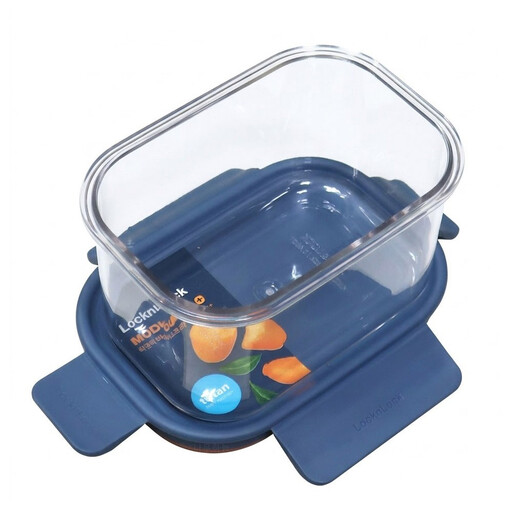
Why this choice suits this profile: At 450 ml, this model is ideal for small portions, leftovers and packed lunches. Its polypropylene construction keeps it lightweight for everyday use.
The four-sided closure and silicone seal help prevent leaks, provided each side is locked securely.
450 ml capacity, stackable design, BPA-free according to the product page, compatible with the fridge, freezer, dishwasher and microwave reheating without the lid.
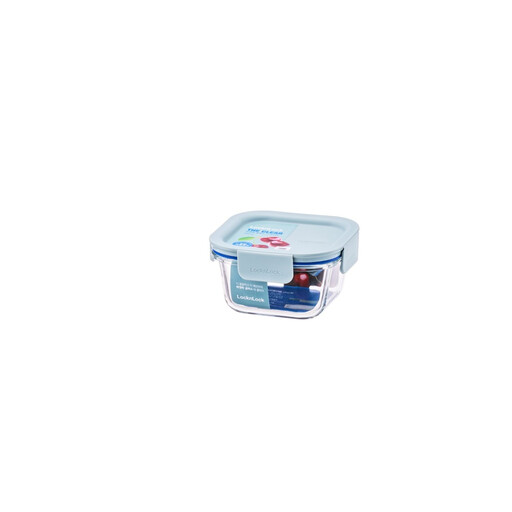
Why this choice suits this profile: Transparent borosilicate glass makes it easy to check portions, and it will suit anyone looking for a durable container for both the fridge and the table.
The clip closure and airtight design reduce the risk of odours and spills. However, the lid must be removed before microwaving.
500 ml, borosilicate glass, stated compatibility with the freezer, microwave and dishwasher, BPA-free according to the product page.

Why this choice suits this profile: Its 2-litre capacity is ideal for family meals, large batch cooking and storing multiple meal prep portions.
The removable silicone seal can be cleaned separately, making maintenance easier for a container used with sauces or particularly strong-smelling dishes.
2-litre capacity, dimensions 25.4 × 19.4 × 8.7 cm, borosilicate glass, stated resistance to thermal changes up to 200 °C.
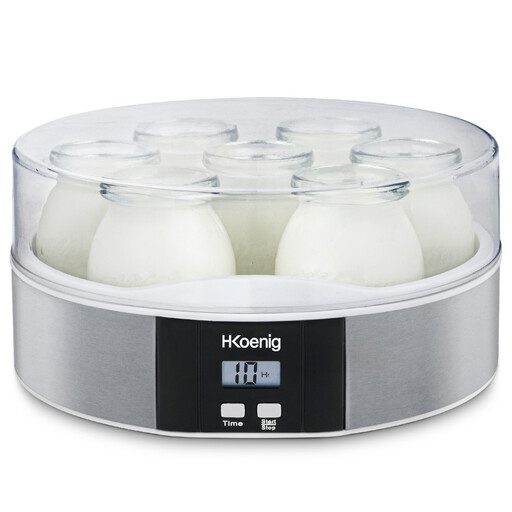
Why this choice suits this profile: This yoghurt maker is designed for households that want to prepare seven individual portions of homemade yoghurt and then store them in sealed pots.
The timer can be set for up to 15 hours via the LCD screen, and the automatic shut-off helps prevent over-fermentation. The base must not be submerged.
Seven 160 ml glass pots, airtight lids, audible alert and pots compatible with the dishwasher according to the product page.
We’ve put together a comprehensive, real-time selection of products that meet these demanding criteria and comply with European safety regulations.
Between 450 and 750 ml, you’ll generally have a suitable volume for an individual portion, a salad or a leftover. For a side dish or dessert, 380 to 500 ml may be enough. It all depends on the recipe and the quantity you need to transport.
Glass is transparent, withstands the uses stated in its instructions and retains fewer odours. Plastic is lighter and less likely to break during travel. The choice therefore depends on where you’ll use it, the weight you’re willing to carry and how often you’re on the move.
The lifespan depends on the condition of the material and the seal, not on a fixed number of months. A well-maintained container can remain usable as long as it has no cracks, distortion or persistent odour, and its closure works properly. Seals can be replaced separately when they lose their flexibility or airtightness.