
Same-day & Next-day Delivery

Quality Guaranteed

Unlock Your Welcome Offers: FREE Delivery | Up to 80% OFF | Free 30-day JoyPlus trial
Download the APP
A good airtight food container can be a game-changer in your kitchen. It preserves freshness, reduces waste, and makes meal prep easier. But the market is flooded with products that make tempting promises, only to disappoint in practice. A lid that warps, a seal that fails after a few washes, or plastic that stains at the first sign of tomato sauce–we’ve all been there. As Head of Product Recommendations at Joybuy, my role is to help you make an informed choice. We'll break down the common pitfalls and highlight the criteria that truly matter, so you can buy with confidence.
Before you buy, it's essential to know how to spot the hidden flaws that can turn a good deal into something destined for the bin after just a few months.
You don't need to be an engineer to avoid these disappointments. Just check a few key points.
The airtightness of an airtight food container relies on an inseparable duo: the lid and its gasket. The most reliable systems are undoubtedly those that use four sturdy locking clips, one on each side. This design ensures perfectly uniform pressure around the entire perimeter of the lid.
The gasket is just as crucial. Opt for silicone seals, which are far more flexible and durable than simple rubber. Ideally, the gasket should be removable to allow for deep cleaning—the only way to prevent residue and mould build-up. Brands like LocknLock have built their reputation on this type of patented, time-tested system.
The type of plastic in your food container is critical. Polypropylene (PP), identified by the number 5 inside a triangle, is the gold standard. It is known for its durability, heat resistance, and food-safe properties.
Make sure the container is labelled as “BPA-free” (Bisphenol A). Although regulations have evolved, the precautionary principle still applies. Choosing a product guaranteed to be free of this substance is a smart health choice. A good PP container will be compatible with:
To maximise space in a fridge or cupboard, shape isn't a detail—it's a strategic criterion. Rectangular or square containers are unbeatable for optimising space compared to round models. They stack without wasted room and allow you to create a truly coherent storage system. Check that the bases and lids are designed to nest securely.
To illustrate these tips, here are a few models that serve specific purposes, all selected based on the quality and practicality criteria we've just covered.
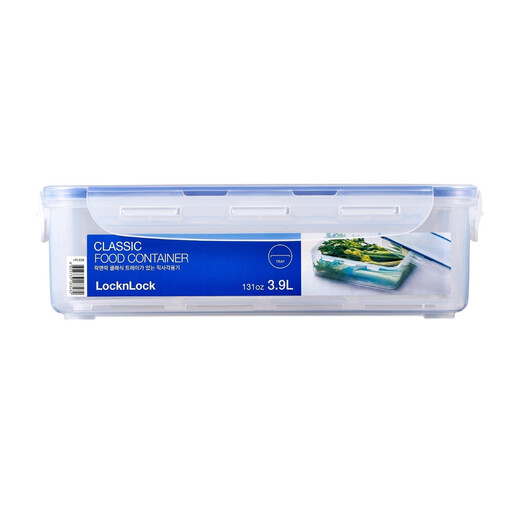
Why we chose it: Perfect for meal preppers or for storing large quantities (mixed salads, soups, saucy dishes). Its rectangular shape optimises every square inch of your fridge.
Its 4-clip locking system and dual-chamber silicone seal guarantee a reliable, long-lasting airtightness, avoiding the pitfall of closures that loosen over time.
Its large 3.9-litre capacity and BPA-free polypropylene construction ensure full compatibility: freezer, microwave (without the lid), and dishwasher.
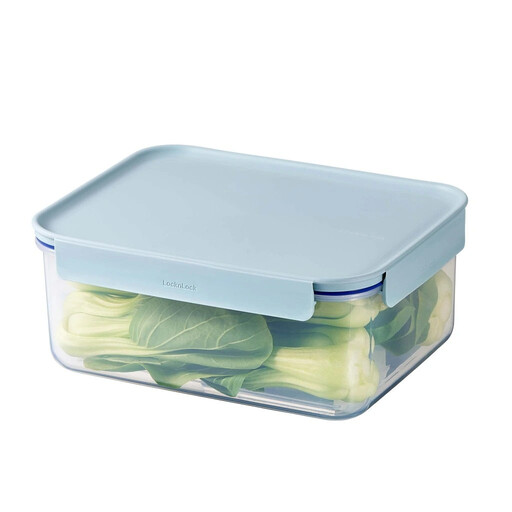
Why we chose it: The perfect all-rounder, ideal for dinner leftovers, a generous packed lunch, or storing dry goods (pasta, rice, flour...). Its stackable design is a real bonus for kitchens where space is at a premium.
Its high-quality polypropylene perfectly withstands microwave heat (without its lid) and tomato sauce stains, preventing the premature ageing typical of low-grade plastics.
Its total versatility (freezer, microwave, dishwasher) and modular design make storage easy. The Lock&Lock closure system is a hallmark of reliability.
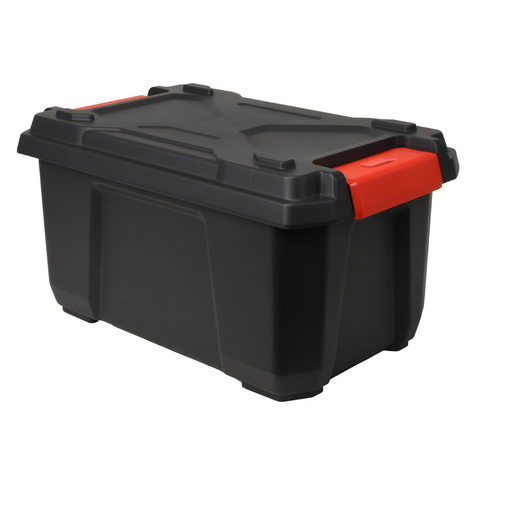
Why we chose it: When your needs go beyond the kitchen: storing pet food, tools, camping gear, or archives in a garage or cellar. Its design is engineered for maximum protection against moisture and dust.
It is made from ultra-durable recycled plastic, designed to withstand impacts and harsh conditions—the opposite of the brittle plastic found in budget boxes.
Its XXL 40-litre capacity, its water and dust-proof seal, and its French manufacturing from recycled plastic.
We have curated a complete selection of products that meet our quality criteria and European safety standards.
Maintenance is simple but essential. Wash the container after each use, either by hand or in the dishwasher. The one step you should never skip is cleaning the silicone gasket: remove it from the lid at least once a week to clean it separately, and let both parts dry completely before reassembling. This is the secret to preventing odours and mould, ensuring a perfect seal in the long run.
Absolutely not; caution is advised. Always check for the "microwave-safe" symbol (often represented by wavy lines). Most importantly, always remove the lid or, at the very least, unlatch a clip to allow steam to escape. Never microwave a hermetically sealed lid. Also, avoid using your microwave's "grill" or "crisp" functions, as they could melt the plastic.
Bisphenol A (BPA) is a chemical compound used in the manufacturing of certain plastics. Studies have highlighted the risks associated with it leaching into food, especially when heated. As a precautionary measure, health authorities have restricted its use in food containers. Opting for a BPA-free container has therefore become a standard safety reflex for most consumers.