
Livraison le jour même ou le lendemain

Qualité garantie

Débloquez vos offres de bienvenue: Livraison GRATUITE | Jusqu'à -80 % | 30 jours d'essai gratuits à JoyPlus
Téléchargez l'application
An air purifier can be useful in a bedroom, home office, living room or home with pets. The problem is that product specifications sometimes combine several indicators that are difficult to compare. A large stated coverage area does not necessarily guarantee rapid air purification. Similarly, a HEPA filter will not remove odours unless it is complemented by an activated carbon layer.
Before buying, three pitfalls are particularly common.
CADR — Clean Air Delivery Rate — is measured in m³/h. This indicator gives you an idea of the amount of air treated by the appliance. However, it should be compared with the room’s volume and the desired number of air changes.
For a small bedroom or home office, the Blueair Blue Pure 511 has a stated airflow rate and coverage for spaces of up to 432 pi², depending on the conditions specified by the brand. The ROUNY AP-T1, meanwhile, states a CADR of 150 m³/h and coverage of 20 to 50 m². These figures are not directly comparable: calculation methods and measurement conditions may vary from one manufacturer to another.
In a large room, the Jafända JF260S states a CADR of 260 m³/h, compared with 450 m³/h for the TRULIVA KJ450. Also check the noise level at high speed: a powerful appliance can become noticeably less discreet when running at full capacity.
A HEPA air purifier is designed to capture a large proportion of fine particles, such as dust, pollen and pet dander. Models fitted with an H13 filter generally state 99.97 % filtration under certain measurement conditions defined by the manufacturer. This figure does not mean that every particle will be removed from the entire room instantly.
A multi-stage filtration system is often more practical for everyday use:
Please note: a washable filter is not necessarily a washable HEPA filter. Check the instructions before cleaning it. Some high-efficiency filters must be replaced and should never be rinsed.
For an air purifier intended for a bedroom, night mode and noise level are essential. The Blueair Blue Pure 511i Max states 19 dB at the lowest setting, while ROUNY indicates 25 dB or less in sleep mode. These figures come from the manufacturers and may vary depending on the measurement distance, selected speed and room acoustics.
A particle sensor, automatic mode or air-quality display makes the appliance easier to use. Connecting to an app can also let you schedule operating times or receive an alert when the filter needs replacing. However, this remains optional for an appliance used mainly with manual settings.
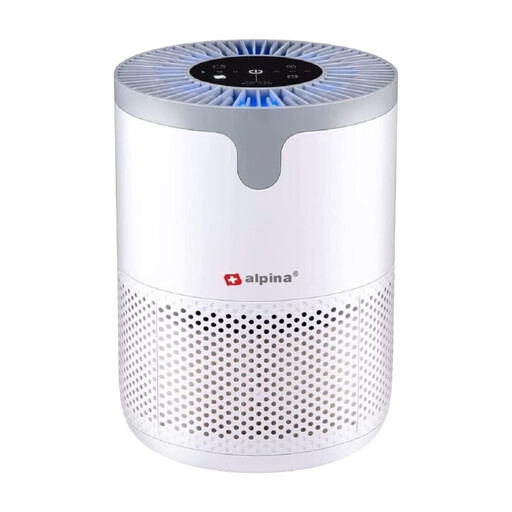
Why it suits this profile : Its compact design and stated coverage of 5 to 10 m² make it suitable for a small bedroom, home office or personal space.
The stated coverage area is limited and clearly specified, reducing the risk of choosing an appliance that is too small for a living room.
H13 HEPA filter, timer, night mode and three speeds, according to the product listing.
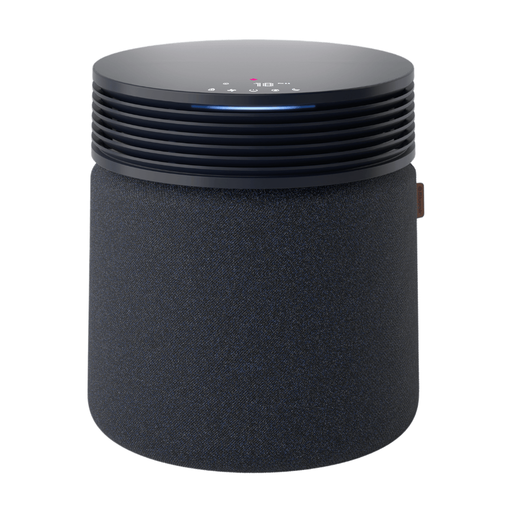
Why it suits this profile : With a stated airflow rate of over 700 m³/h, app control and compatibility with voice assistants, it is designed for large connected spaces.
The listing distinguishes between airflow rate, coverage area and filtration technologies. This means you can check these details before buying.
HEPASilent technology, sensors, automatic mode, remote control and OdorFence filter, as stated by the brand.
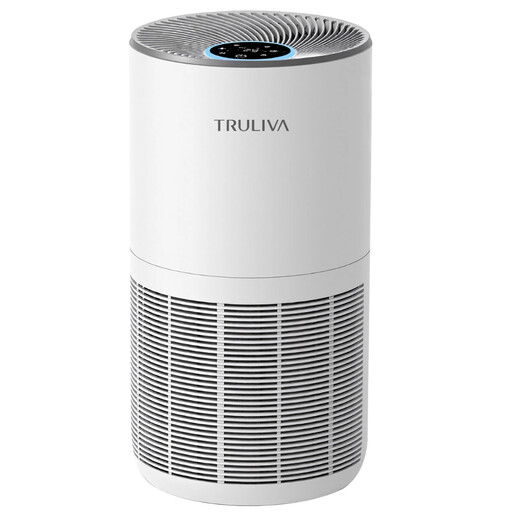
Why it suits this profile : Pet owners and households exposed to dust, pollen or smoke may appreciate its three-stage filtration and 360° air circulation.
The pre-filter, H13 HEPA filter and activated carbon are presented separately. This makes it easier to distinguish particle filtration from odour treatment.
Stated CADR of 450 m³/h, PM2.5 display, 24-hour timer and child lock.
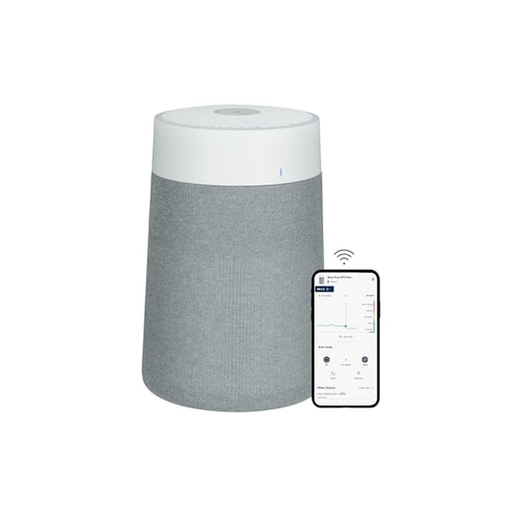
Why it suits this profile : Its compact design, stated night mode at 19 dB and child lock meet the requirements of a bedroom or nursery.
Noise levels are specified according to the selected speed, rather than being reduced to a single figure without context.
Stated coverage of up to 43 m², mobile app, air-quality monitoring and scheduling.
We have put together a complete, real-time selection of products that meet these demanding criteria, as well as European safety standards.
Place the air purifier on a stable surface and leave enough space around the air inlets and outlets. Keep it away from curtains and furniture positioned against the appliance, and avoid damp rooms such as the bathroom. In a bedroom, you can run it before going to bed to minimise noise during the night.
Dust the grille regularly and monitor the filter replacement indicator. Stated filter life varies depending on usage, indoor air quality and operating time. A saturated filter can reduce airflow. Always unplug the appliance before cleaning it or replacing the filter, and never operate it without a correctly installed filter.
Place it away from walls and furniture, without blocking its grilles. An unobstructed position helps air circulate. Also avoid placing it right next to your face or on an unstable surface.
Consumption depends on the appliance’s power, the selected mode and the number of hours it runs. To estimate the cost, multiply the power in watts by the operating time, then apply your electricity tariff. Also consider the cost of replacement filters, which can have a significant impact on the total long-term cost.
Not always. A HEPA filter mainly targets particles. For smoke, cooking or pet odours, choose a model combining a HEPA filter and activated carbon. Also ventilate your home when outdoor conditions allow: an air purifier does not replace household ventilation.