
Livraison le jour même ou le lendemain

Qualité garantie

Débloquez vos offres de bienvenue: Livraison GRATUITE | Jusqu'à -80 % | 30 jours d'essai gratuits à JoyPlus
Téléchargez l'application
Dust, pollen, cooking smoke, lingering odours or particles left behind by pets: an air purifier can complement your home's day-to-day ventilation. However, technical specifications can sometimes be difficult to interpret, as they combine several different indicators. The right choice will not be the same for a bedroom, living room or home office.
Before placing your order, three common pitfalls are worth keeping in mind:
Here are the key criteria to consider when choosing an air purifier for your home, without paying for features that do not match your needs.
Expressed in m³/h, CADR indicates the volume of air filtered and then redistributed by the device under specific conditions. This indicator is generally more informative than a simple promise of ‘up to X m²’.
For a small bedroom or home office, the Blueair Blue Pure Mini Max states a CADR of 117 m³/h and coverage of up to 20 m² in 30 minutes. At the other end of the scale, the TRULIVA KJ450 lists a CADR of 450 m³/h, for a stated area of 32 to 55 m², depending on the product specifications.
Ceiling height, room layout and how often windows are opened also affect real-world performance. In a large open-plan living space, it is better to opt for a higher airflow rate or install several devices in different areas of the home.
An air purifier fitted with a HEPA filter generally combines several layers:
The H13 HEPA filter corresponds to a specific technical class, which should be distinguished from a simple marketing term. The TRULIVA, ROUNY, Jafända and Alpina products state H13 filtration in their respective specifications. However, advertised percentages must be considered in context: effectiveness measured on particles of a particular size does not mean that the device removes every substance present in the air.
For an air purifier intended for allergy sufferers or homes with pets, prioritise an easily accessible pre-filter, a clearly identified replacement filter and, if odours are a priority, an activated carbon layer whose quantity is documented.
When choosing a quiet air purifier, do not focus solely on the figure given for the lowest setting: look at performance across several speeds. The Blueair Blue Pure 511i Max states 19 dB on the lowest setting and up to 48 dB at high speed. The HomerunPET D1 lists a sleep mode that can reach 25 dB, while the ROUNY AP-T1 states that its sleep mode is 25 dB or below.
These figures are not always measured under the same conditions. So check whether the device has a night mode, whether the indicator lights can be switched off and whether the unit remains stable during operation.
The filter is an ongoing expense. Its lifespan varies according to the amount of dust, exposure to tobacco smoke or pets, and the number of hours the device runs each day. Some models recommend replacement every 6 to 9 months, while others specify approximately 3,000 hours. Before ordering, look for the exact filter reference, its price and the reset procedure.
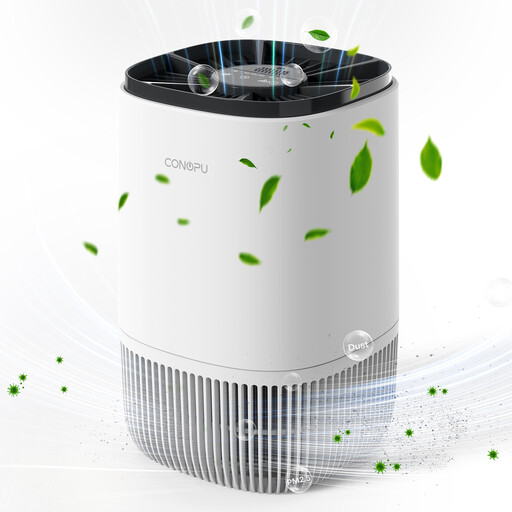
Why this choice suits this profile : Measuring 17 × 17 × 26 cm and with a stated power consumption of 5 W, it is a good compact first option for a bedroom, home office or small room.
The specifications mention three-stage filtration and replaceable filters. Nevertheless, check its actual coverage before installing it in a large living room.
Easy-to-move format, stated H13 filter and three operating modes.
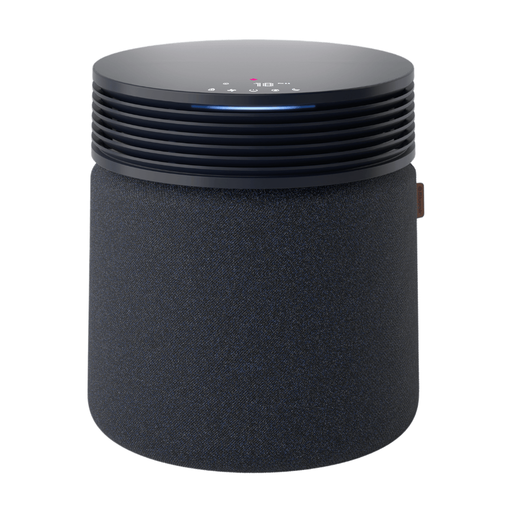
Why this choice suits this profile : Its specifications state a CADR of over 700 m³/h, app control and coverage of up to 154 m² in 30 minutes.
Its high airflow rate and automatic mode reduce the risk of choosing a device that is underpowered for a large room, subject to the layout of your home.
Air quality sensor, app, voice control and a dedicated odour layer according to the specifications.
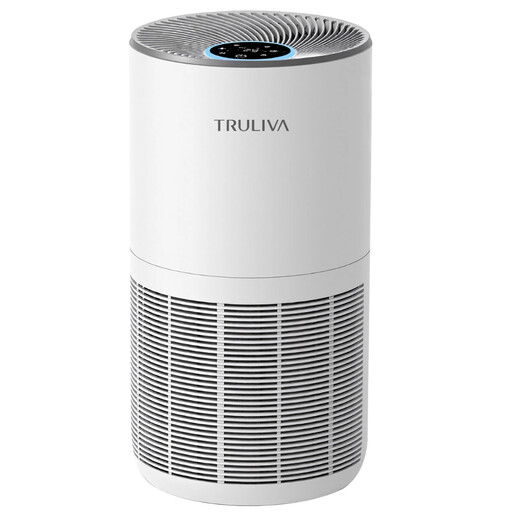
Why this choice suits this profile : With its stated CADR of 450 m³/h, 360° air intake and H13 filter, it is suitable for homes with pets or rooms regularly exposed to dust and odours.
The combination of a pre-filter, HEPA filter and activated carbon targets several sources of pollution, without presenting the device as a medical device.
PM2.5 level display, child lock, 24-hour timer and sleep mode.
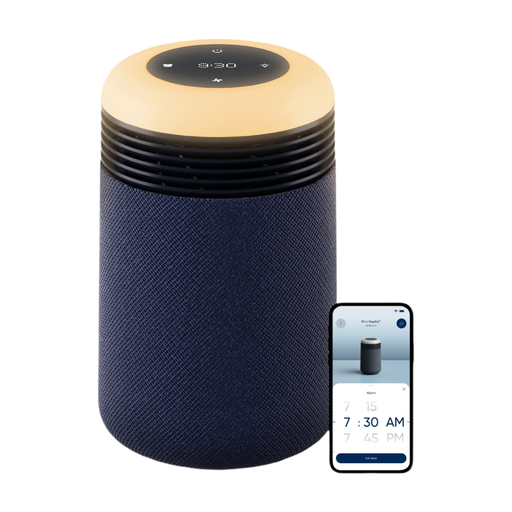
Why this choice suits this profile : This compact model covers a stated area of up to 13 m² and combines air purification, a clock display and a gradual light.
The specifications state a noise level as low as 21 dB and a night mode: two features worth checking when the device will operate near your bed.
Compact footprint, filter replacement reminder, app and USB-C port.
We have put together a comprehensive, real-time updated selection of products that meet these demanding criteria and European safety standards.
Place it on a stable surface, leaving enough space around the air inlets and outlets. Keep it away from curtains and radiators, and avoid damp areas and very cluttered corners. In a bedroom, a night mode and the option to switch off the indicator lights are particularly useful.
It depends on the room's volume, the CADR and the level of indoor pollution. Running the device for longer at a low speed or in automatic mode may be more comfortable than switching it on occasionally at full power. Remember to ventilate your home when outdoor conditions are suitable.
The main costs are electricity consumption and filter replacement. Compare the rated power, filter reference and stated replacement interval. A low-energy device fitted with a filter that is difficult to find may ultimately cost more over time. Before buying, also consult the user manual, the contact details of the European responsible person and the applicable safety instructions.