When choosing a bar to eat at the airport, start with the ingredient you need to avoid. A ‘gluten-free’ label doesn’t guarantee that the bar is free from milk, soya, peanuts or tree nuts. Keep the packaging legible until you’re ready to eat, so you can check the exact ingredients and any warnings about traces. A convenient format doesn’t replace this check.
Who is this guide for?
Travellers avoiding a specific allergen
If you need to avoid peanuts, tree nuts, milk or soya, check every recipe against your dietary requirements. A ‘gluten-free’ label doesn’t tell you whether these ingredients are present, or whether traces have been flagged.
Travellers who need to strictly avoid gluten
Look for a ‘gluten-free’ label on the bar you choose, then check its other ingredients and allergens separately. EU regulations govern this claim, but it doesn’t guarantee that a product is free from all allergens.
Travellers looking for a handy snack
If you’re waiting at the airport, sealed, legible packaging makes it easy to check the ingredients when you’re ready to eat. Check the serving size and nutritional information if you’re thinking of having the bar instead of a meal.
What should you check before buying?
First, choose according to the ingredient you need to avoid, then check the packaging is suitable for your journey.
| Criterion |
What to check |
Who is it for? |
| Specific allergen |
The ingredients, highlighted allergens and any warnings about traces on the exact product. |
If you need to avoid an ingredient, the ingredients list for each bar matters more than a general claim: around 50% of consumers prioritise avoiding a specific ingredient. |
| Gluten-free |
The ‘gluten-free’ label on the product you buy. Under Regulation (EU) No 828/2014, this means the food sold to the final consumer contains no more than 20 mg/kg of gluten. |
If you need to avoid gluten, a list of cereals alone is no substitute for this label; around 30% of consumers prioritise strictly gluten-free products. |
| Travel-friendly packaging |
A sealed pack with an accessible label, storage instructions and the rules that apply to cabin baggage. |
If the bar is mainly for snacking while you wait, being able to carry it and reread the label matters more; around 20% of consumers prioritise this practical use. |
Mistakes to avoid before you travel
-
Assuming ‘gluten-free’ means ‘free from allergens’
Gluten-free bars may contain peanuts, almonds or soya, or carry warnings about traces of other allergens. Avoiding gluten and avoiding these ingredients are two separate checks.
Check the ingredients list and precautionary warnings on the product you’re buying for the allergen you need to avoid.
-
Choosing a nut-based recipe without checking the ingredients
A bar labelled gluten-free may contain almonds or peanuts. It isn’t suitable for anyone who needs to avoid the ingredient in question.
Avoid recipes that list it as an ingredient, and check for any warnings about traces too.
-
Leaving the packaging behind before you travel
Without the packaging, it can be difficult to check the ingredients, date and storage instructions when you’re ready to eat the bar.
Keep the original packaging, especially if you need to strictly avoid an ingredient.
-
Applying the same cabin-baggage rule to every snack
Paris Aéroport states a limit of 100 ml per container for liquids, gels and aerosols. This guidance alone doesn’t set out the rules that apply to every solid food.
Check the guidance from your departure airport and airline, particularly if you’re also taking a drink or a fruit purée pouch.
Brands to use as a guide
Gerblé
Gerblé’s gluten-free cereal bar range gives you a product specifically made for people avoiding gluten to consider.
- Gerblé describes its chocolate cereal bars as guaranteed gluten-free.
- The product information for this bar lists soya and warns of possible traces of milk, peanuts and tree nuts. Check it against the allergen you need to avoid.
Auchan
Auchan’s gluten-free almond and honey bar is an example of a supermarket product whose ingredients need to be checked beyond its ‘gluten-free’ label.
- Its product information describes a gluten-free recipe containing gluten-free oat flakes.
- It contains almonds and warns that it may contain traces of milk, peanuts and other tree nuts.
A bar to consider on Joybuy
This Eat Natural bar is labelled gluten-free and could be a handy snack to take with you, as long as peanuts and almonds aren’t among the ingredients you need to avoid.
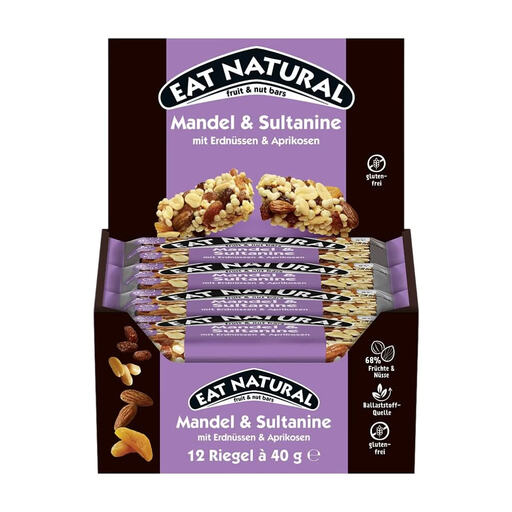 Image unavailable
Eat Natural, almond, raisin and apricot bar (40 g)
Worth considering as an airport snack if you’re looking for a gluten-free label and don’t need to avoid peanuts or almonds.
Carrefour’s product information for this bar lists peanuts and almonds among its ingredients. Before eating it, check the ingredients and any warnings about traces on the packaging you buy.
View on Joybuy
Frequently asked questions
Is a ‘gluten-free’ bar also free from other allergens?
No. Gluten-free recipes may contain peanuts, almonds or soya, or carry warnings about traces of other allergens. Check the packaging of the bar you’ve chosen for the ingredient you need to avoid.
What does ‘gluten-free’ mean on a bar?
Under Implementing Regulation (EU) No 828/2014, this claim can be used if the food sold to the final consumer contains no more than 20 mg/kg of gluten. It doesn’t guarantee that the product is free from milk, soya, peanuts or tree nuts.
Can a bar replace a meal at the airport?
It can work as a snack or a back-up option, but don’t assume that a bar will meet your needs for a meal. Check the serving size, ingredients, allergens and nutritional information for the exact product.
Does the 100 ml cabin limit apply to bars?
Paris Aéroport states that the per-container limit applies to liquids, gels and aerosols; it isn’t a specific rule for solid bars. Check the guidance from your departure airport and airline, especially if your snack also includes a drink or a fruit purée pouch.


