People cleaning or vacuuming at home
If cleaning stirs up dust, start by ventilating the room. ADEME recommends airing rooms after cleaning and vacuuming; an air purifier, if you choose to use one, should be an additional measure.


After cleaning or DIY, start by reducing emissions, ventilating the room and making sure your ventilation system is working properly. As ADEME points out, an air purifier is no substitute for these steps. If particles regularly remain airborne in a particular room, you could consider an air purifier as an additional measure, comparing its clean air delivery rate and the stated coverage conditions. For active technologies, Anses advises caution about performance and safety in real-world conditions.
If cleaning stirs up dust, start by ventilating the room. ADEME recommends airing rooms after cleaning and vacuuming; an air purifier, if you choose to use one, should be an additional measure.
For occasional jobs that create dust or odours, first reduce emissions and ventilate the room. The French ministry responsible for the environment recommends, in particular, opening windows while doing DIY.
If you’re buying one to meet a regular need in a particular room, check the clean air delivery rate, coverage conditions and filter. The HEPA classification set out in standard NF EN 1822-1 applies to the filter alone, not the complete appliance.
ADEME recommends reducing sources of pollution and renewing the air before treating indoor air. If an appliance is still right for your room, compare the function you need — removing particles or certain gases and odours — and check the stated measurement conditions.
| What matters to you | What to check | Who is it for? |
|---|---|---|
| Whether you need an appliance | Consider whether the incident is occasional and whether you can reduce the source; check the room’s ventilation and existing ventilation system. | If dust mainly appears while I’m cleaning, I want to know whether my usual steps already meet my needs. The need for an appliance would be the main concern for around 36% of consumers. |
| Particle filtration | Compare the clean air delivery rate in m³/h and the measurement and coverage conditions for the room in question; don’t rely on the HEPA label alone. | In a room where DIY regularly stirs up dust, I’m looking for a filtration capacity I can compare. Around 29% of consumers would put this need first. |
| Odours and filters | Check whether it has a filter medium designed for gases or odours, and find the replacement filter reference that’s compatible with the appliance. | After using products with strong odours, I want to understand the difference between what a particle filter does and what another filter medium might do. Managing odours and filters would be a priority for around 21% of consumers. |
| Active technologies | For ionisation, ozonation, plasma or photocatalysis, ask for relevant tests on the complete appliance, including any potential by-products. | When a product promises to destroy pollutants, I want to understand the limitations of the feature before using it at home. Checking these technologies would come ahead of other criteria for around 14% of consumers. |
An air purifier doesn’t renew the air in your home or fix a faulty ventilation system. ADEME recommends ventilating after cleaning and vacuuming.
Reduce emissions where possible and ventilate. Only then consider whether additional filtration would be useful in a particular room.
Standard NF EN 1822-1 classifies high-efficiency filters. The air delivery rate, how the filter is fitted and the conditions of use also matter when assessing an air purifier.
Ask for the filter class or test method, then check the measured clean air delivery rate and the conditions linked to the stated room coverage.
For the technologies examined, including ionisation and ozonation, Anses reported in 2017 that the available data did not demonstrate their effectiveness or safety in real-world conditions.
Ask for relevant independent tests on the complete appliance under the intended conditions of use. If there isn’t enough evidence, don’t make this feature the reason for buying.
The filter reference and replacement interval depend on the model. Dyson and Rowenta publish recommendations for some of their filters; these don’t automatically apply to other appliances.
Check the compatible filter reference, its availability and the care instructions for the model you’re considering.
You’ll also need to plan for sourcing replacement filters and maintaining the appliance.
Philips offers filter-based air purifiers, as well as models that combine air purification with comfort features.
The range mentioned includes the Pure Air Mini, which Rowenta presents as suitable for smaller rooms.
Xiaomi offers connected air purifiers; the Smart Air Purifier 4 also features advertised ionisation.
These appliances are options for adding filtration in a room where a need has been identified, after reducing sources of pollution and ventilating. The coverage areas, air delivery rates and features below are product-specific details. Check the measurement conditions before comparing models.
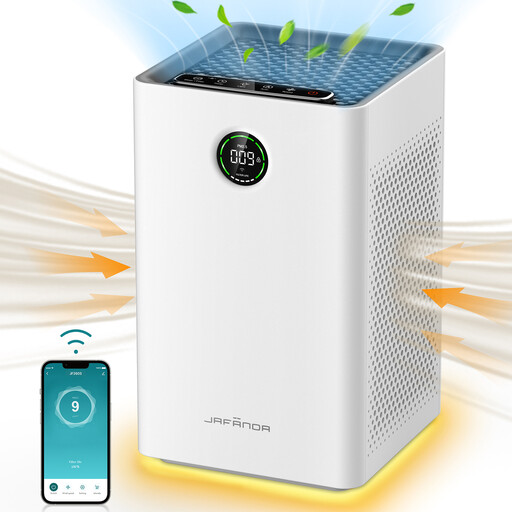 Image unavailable
Worth considering if you’re looking for particle filtration and an activated carbon medium for a particular room. The product title states coverage of up to 1190 ft², as well as WiFi and Alexa control; check the coverage conditions and compatible filter.
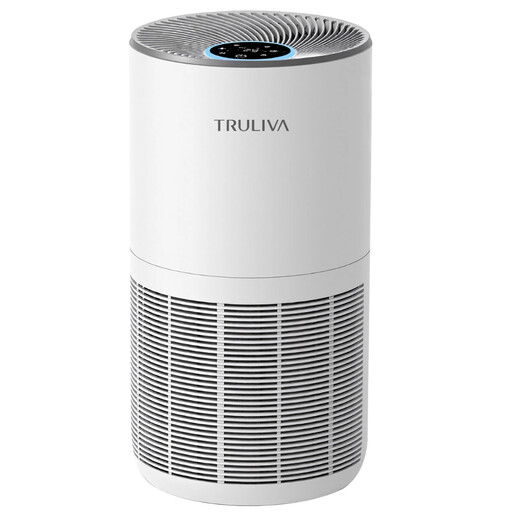 Image unavailable
Worth comparing for a room where particle filtration is the main priority. The title states an H13 HEPA filter, 360° air circulation and a clean air delivery rate of 450 m³/h; check the test protocol, the setting used for this measurement and the replacement filter.
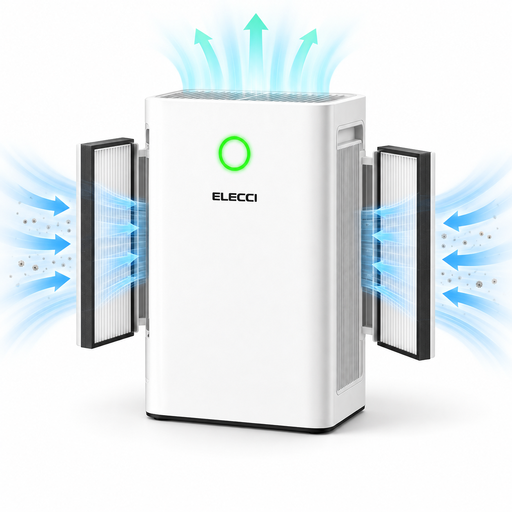 Image unavailable
Worth considering if you want to compare a room’s stated size with the air delivery rate. The title mentions up to 48 m², 120 m³ and a clean air delivery rate of 550 m³/h, but doesn’t specify how these figures relate to one another; check the conditions before choosing. A claim about viruses is not a health guarantee.
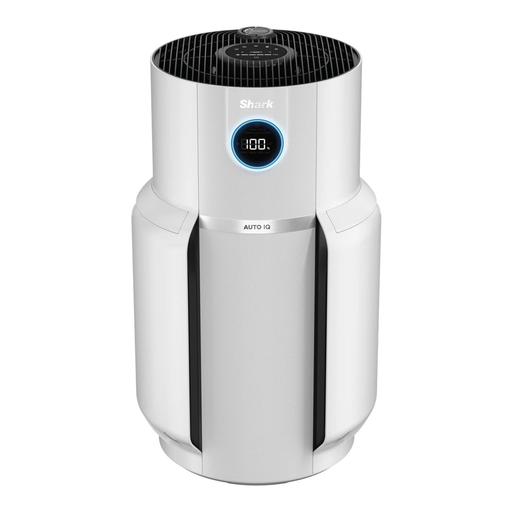 Image unavailable
Worth considering if you’re looking for an air purifier for a large room, but don’t assume it can replace ventilation. The title states a HEPA filter, an automatic mode and coverage of up to 130 m²; check the conditions for this coverage and the filter replacement instructions.
No. ADEME prioritises reducing sources of pollution and renewing the air, and recommends ventilating after cleaning or vacuuming. A filter-based air purifier may be considered as an additional measure for a specific need; it won’t fix a faulty ventilation system.
Check the clean air delivery rate, its unit, the setting and measurement protocol, then the conditions linked to the stated coverage area. Standard NF EN 1822-1 classifies HEPA filters, but the filter class alone doesn’t measure the air delivery rate of the complete appliance.
Don’t choose these features based on their name alone or a promise to destroy pollutants. For the devices it examined, Anses reported in 2017 that the available data did not demonstrate their effectiveness or safety in real-world conditions. Ask for relevant tests on the complete appliance, the pollutants it targets and any potential by-products.
No. According to the European Union’s Your Europe portal, the CE marking indicates that the manufacturer declares the product meets the applicable European requirements. It doesn’t replace measurements that let you compare air purification in the room in question.
Identify the compatible filter reference, check its availability and read the replacement instructions for the model you choose. Dyson and Rowenta provide replacement intervals for some of their filters, but these manufacturers’ recommendations aren’t a universal lifespan for all air purifiers.